
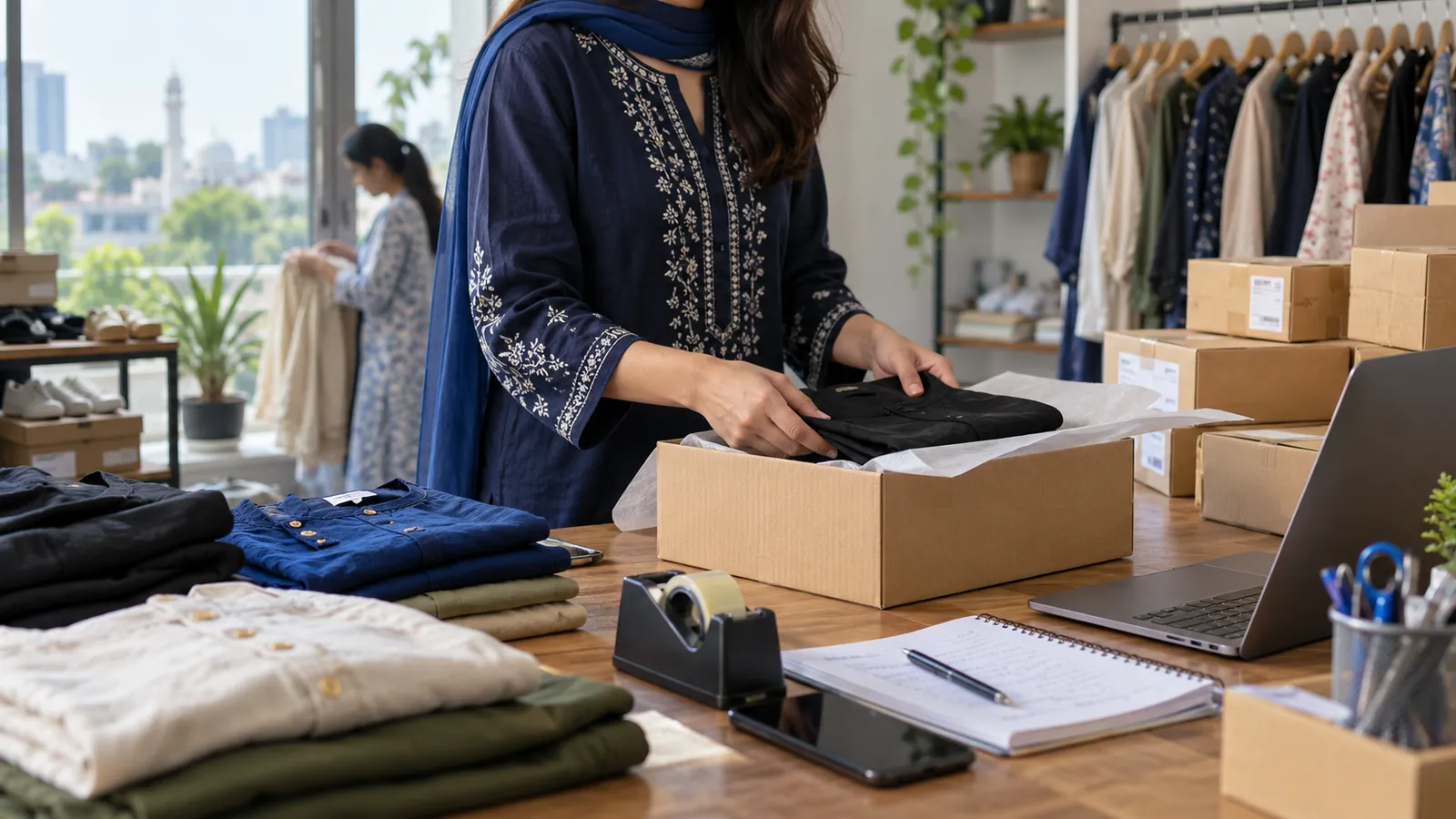
Your clothing, shoes or skincare brand grew on Instagram. Customers send a DM, someone replies with the price and asks for an address, and the order goes into a notebook or a sheet. Then a reel does well, two hundred DMs arrive, and the medium in black was sold yesterday but nobody updated the post. Courier slips are typed by hand, cash on delivery comes back from the courier weeks later, and refused parcels pile up. This is the point where an own website stops being a nice idea.
What changes when you add a website
| DMs and WhatsApp only | Own website | |
|---|---|---|
| Taking an order | Staff reply one by one | Customer orders at any hour |
| Stock | Checked by memory or a sheet | Shown live by size and colour |
| Customer details | Scattered across chats | One customer record with past orders |
| Payment | Mostly COD, some transfers | COD, cards, wallets where a gateway is set up |
| Courier | Slips typed by hand | Booking from the order, tracking number saved |
Instagram and Facebook stay important. They are where people discover you. The website becomes the place where the order, the stock and the money are kept straight, and every post or story links to the exact product page.
Stock by size and colour
Apparel and footwear sell in variants. One kurta in four sizes and three colours is twelve stock lines. The admin panel should let you add new stock when a lot arrives from the stitching unit, mark damaged pieces, and see what is selling. When a variant hits zero, the site shows it as sold out, and staff answering DMs see the same number. Our guide to inventory management software covers the counting side, and the ecommerce product page checklist covers what each product page should show.
Cash on delivery without the losses
Most Pakistani online orders are still cash on delivery. That brings refused parcels and fake orders. A few rules help: confirm each COD order by call or WhatsApp before booking the courier, flag numbers that refused before, and keep a list of orders waiting for COD money from each courier. When the courier's payment arrives, mark those orders as paid. Bank transfers, JazzCash and EasyPaisa can be offered as prepaid options.
Order arrives
The customer orders on the website; stock for that size and colour is reserved.
Confirm the order
Staff confirm the address and the order by WhatsApp or a call, and mark it confirmed.
Book the courier
Create the courier booking from the order, so the tracking number is saved on it.
Follow the parcel
Delivered, refused or returned is updated on the order; a returned piece goes back into stock.
Reconcile COD
When the courier pays, tick off the delivered orders in that payment and note any shortfall.
Courier booking
Whether a courier can be booked directly from your admin depends on what that courier offers. Where a connection exists, the order becomes a booking in one click; where it does not, the admin exports the day's orders in the courier's format. Either way, nobody types addresses twice.
Launches, drops and sale days
Brands that sell in drops, such as a new lawn collection, an Eid edit or a limited sneaker run, see most orders in the first hours. The site should hold stock the moment a customer checks out, so two people cannot buy the last piece, and staff should see a live list of orders waiting for confirmation. A sale price set with a start and end time switches back on its own, instead of someone remembering at midnight.
Customers you can reach again
Every website order leaves a customer record: name, phone, city, sizes bought and whether they paid COD or prepaid. That list is yours, unlike followers on a platform. It lets you tell repeat buyers about a new drop and spot cities where refusals run high.
A real example: Raah Fits
Raah Fits is an online store for a Karachi streetwear brand, with its own admin for products, orders and customers. It is the kind of setup described here: the brand keeps its social pages, and the store holds the products, orders and customer records. We do not publish client sales figures.
When you do not need a website yet
If you handle a handful of orders a day and know every piece of stock by heart, keep selling on Instagram with a tidy sheet. Build the website when DMs go unanswered, stock mistakes cost you customers, or you want to sell abroad. Our global ecommerce checklist covers selling outside Pakistan.
Operix builds ecommerce websites in Pakistan from Old Clifton, Karachi. Contact us with your Instagram handle and a rough count of your products.
Questions people ask
Should I use Shopify or a custom website?
Shopify suits many stores and is quick to start. A custom store makes sense when you need your own COD confirmation flow, courier connections or admin screens built around how your team works.
Can the website take online payments in Pakistan?
Yes, through a payment gateway agreed with your bank or provider, alongside cash on delivery. Which methods are available depends on the gateway you sign up for.
Will my Instagram shop still work?
Yes. Instagram and Facebook stay your shop window; posts and stories link to product pages on your site, where stock and orders are kept.
Do you work with brands outside Karachi?
Yes, online. Operix works from Old Clifton, Karachi; brands in Lahore, Islamabad and other cities are served online on the same WhatsApp number.