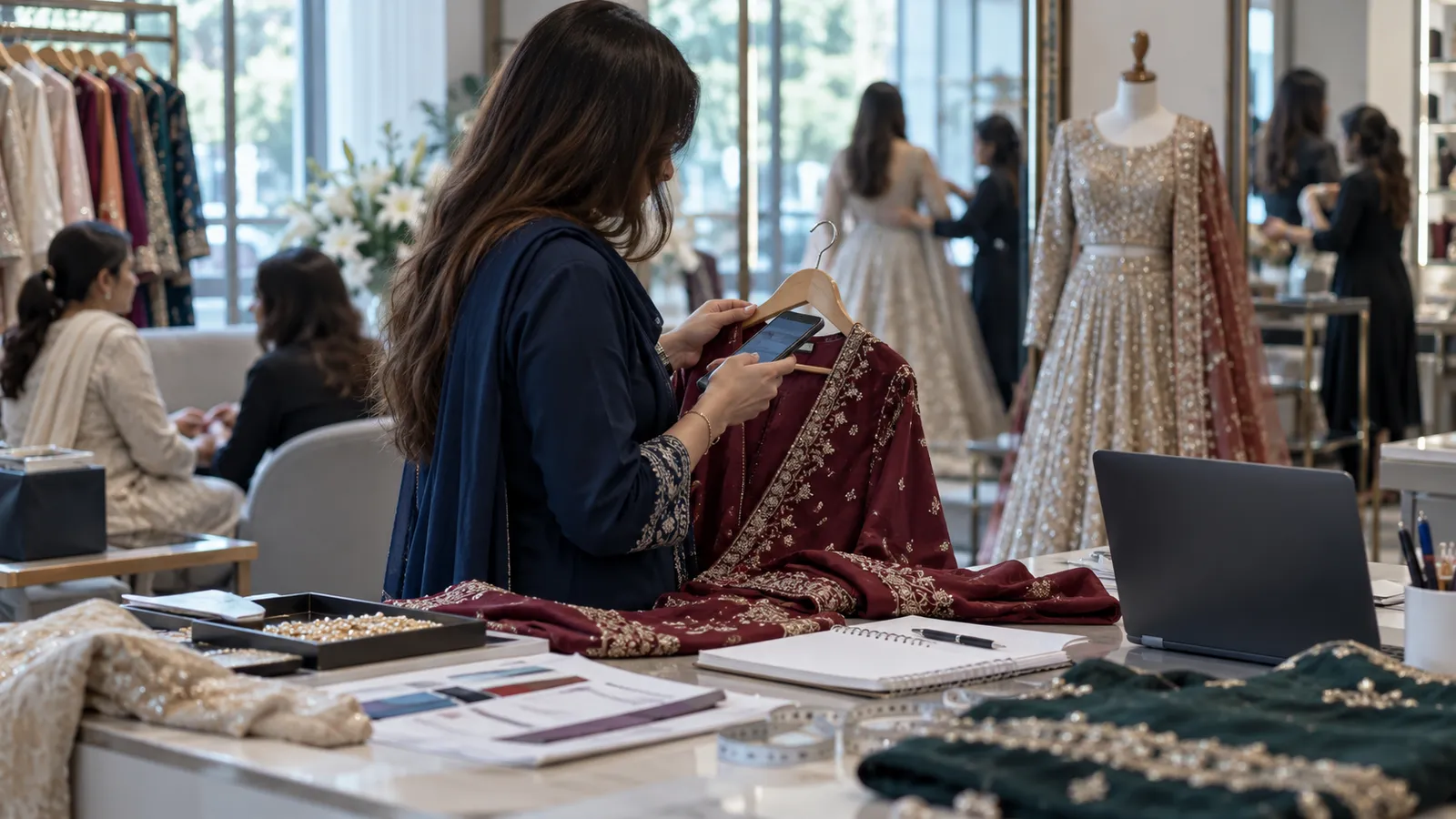
A boutique owner in Zamzama, Gulberg or F-7 knows the feeling: a customer sends a screenshot on WhatsApp asking if the maroon kurta is there in medium, a bride's mother is at the counter for the second trial, and the karigar has called to say the dupatta work needs two more days. None of this fits into a basic billing app that only knows item, price and quantity.
Ready-to-wear: stock by size and colour
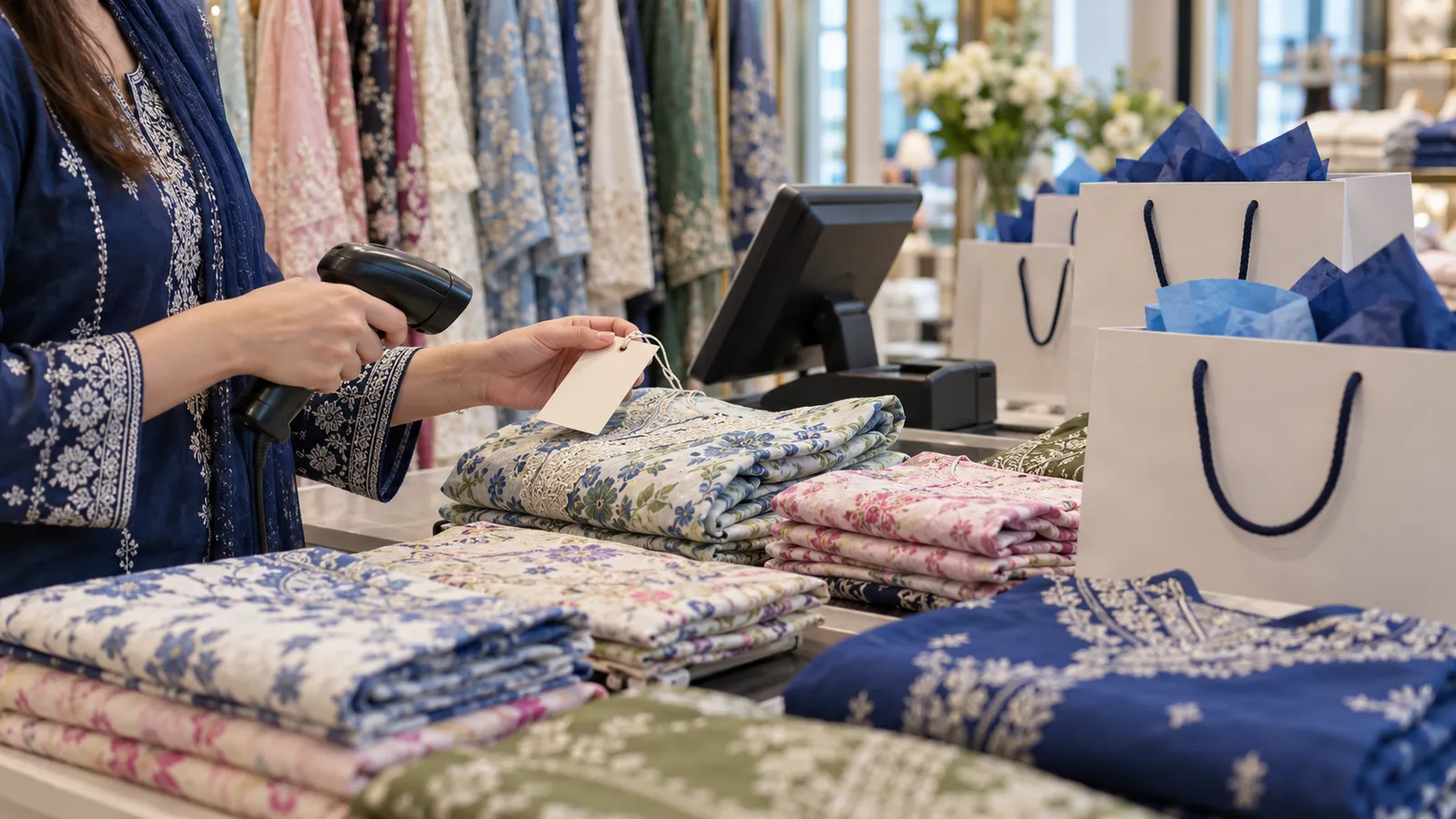
Each design in a boutique is really a small grid. One article might come in four sizes and three colours, so that is twelve stock lines under one design code. Good boutique software shows that grid on one screen, so staff can answer the WhatsApp question in seconds and see at a glance which sizes are running out. Labels should carry a barcode that includes size and colour, so the counter cannot sell a small when the customer took a large.
Season matters too. Lawn launches, Eid collections and winter wear move fast and then stop. Tag each design with its collection, so at the end of the season you can see what is left and plan a sale instead of guessing.
Custom, bridal and abaya orders
Made-to-order work is where most boutiques lose track. An order slip in a register, an advance written on the back, and measurements in someone's phone. The software should treat a custom order as its own record:
- Customer name, phone and saved measurements, so a repeat customer is not measured from zero.
- Design, fabric, colour and any embroidery or adda work, with a reference photo.
- Advance received, balance due and how each part was paid.
- Trial dates and the final delivery date, with a reminder a day before.
- Status as the piece moves: cutting, with the karigar, embroidery, finishing, ready.
Abaya stores often take orders for a set length and sleeve style on a standard design. The same order record works; it simply has fewer fields.
| Ready piece | Custom or bridal piece | |
|---|---|---|
| Stock | Reduced at the counter | Fabric and trims reserved when the order is booked |
| Payment | Full at sale | Advance now, balance on delivery |
| Dates | None | Trials and delivery date |
| Who handles it | Counter staff | Order desk and karigar or stitching unit |
| What the customer gets | Receipt | Order slip with balance, then final bill |
Karigar hisaab and stitching costs
If you send work out to karigars, record each piece given and returned against the karigar's name, with the agreed rate. That gives you a running balance per karigar and stops arguments at month end over what was delivered. It also shows the true cost of a custom piece, which helps you price the next one.
Online orders from Instagram and WhatsApp
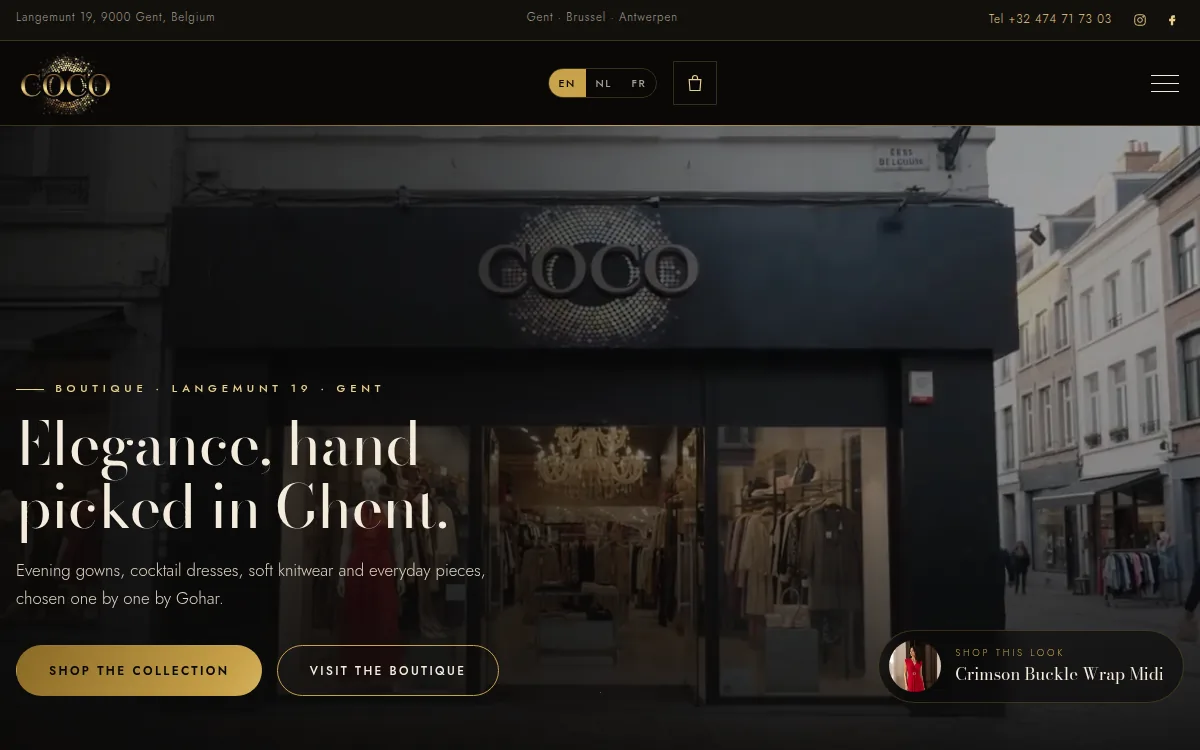
Many boutiques sell more through Instagram and WhatsApp than over the counter. When an online order is confirmed, the piece should be reserved so the shop does not sell it again. Add the courier and tracking number to the order, and mark cash on delivery orders so you can follow up on returns. If you later want a proper online store, Zoya Couture shows the kind of fashion store we build: a Belgian label selling in Dutch, French and English.
Give every design a code
One code per design, then sizes and colours under it. Print new labels for stock on the floor.
Move open orders across
Enter every custom and bridal order that is still open, with advance taken and dates promised.
Save measurements
Enter measurements for regular customers as they come in, rather than all at once.
List your karigars
Add each karigar or unit with their rates and the pieces they hold today.
Train the order desk
One person books orders and updates status; the counter only sells and collects balances.
Alterations and after-sale work
Ready pieces often need a hem taken up or sleeves shortened. Book alterations as small orders with a charge, or free if that is your policy, and a collection date. The piece stays on the customer's record, so the counter never hands the wrong bag to the wrong person on a busy Chaand Raat evening.
Staff permissions matter in a boutique too. Counter staff should sell and collect balances, but only the owner or manager should cancel an order, refund an advance or change a price. Each of these actions should be logged with the user's name and time, so a missing advance is traced in minutes instead of turning into a week of suspicion between staff members.
Operix builds POS systems in Pakistan for retail stores, with on-site setup in Karachi and online support elsewhere. If you also run a fabric or garment unit, see textile ERP in Pakistan, and for stock across two shops, multi-branch business software. When you are ready, book a demo and bring one open bridal order.
Questions people ask
Can the software keep customer measurements?
Yes. Measurements are saved against the customer and can be updated at each order. Staff see them when booking a new piece.
Can we track pieces given to karigars?
Yes. Each piece given and returned is recorded against the karigar with the agreed rate, so there is a running balance per karigar.
Does it work for Instagram and WhatsApp orders?
Yes. Confirmed online orders reserve stock, carry courier details and show cash on delivery status, so the shop never sells the same piece twice.
Do you have an office outside Karachi?
No. Operix works from Old Clifton, Karachi. Lahore, Islamabad and other cities are served online, with visits when the project needs them.