
A trading company in Deira gets its leads on WhatsApp from buyers in Africa and Central Asia, a brokerage in Business Bay gets them from property portals and walk-ins in five languages, and a service firm in JLT gets them from its website and referrals. All three have tried a packaged CRM, and all three went back to WhatsApp groups and Excel because the tool did not speak their process. Custom CRM development in Dubai is the answer for some of them, and an expensive mistake for the rest. This guide helps you tell which you are.
Custom CRM development in Dubai: three businesses, three CRMs
A trading company in Deira or Jebel Ali
Enquiries come as WhatsApp messages and emails asking for prices on a list of products, often for re-export. The CRM needs a quotation that can be in AED with 5% VAT for a local buyer or in USD for an overseas one, with the exchange rate stored on the document, and a link from the won quotation to the sales order in the ERP.
A real-estate brokerage in Business Bay or Dubai Marina
Leads come from portals, social media, walk-ins and referrals, and each one wants a different kind of unit at a different budget. The CRM should match leads to listings, record viewings, keep the paperwork each deal needs against that deal, and split commission between agents without a dispute at month-end.
A service company in JLT or Dubai Silicon Oasis
Proposals, retainers and renewals. The CRM tracks a proposal through the client's approval, converts it to a contract with a start and end date, raises a renewal before the end date, and hands billing milestones to accounts.
When a packaged CRM is enough
- One sales pipeline, one language, fewer than a handful of users.
- Quotations are made elsewhere and only the value is recorded in the CRM.
- No ERP or accounting hand-over is needed, or the deal volume is low enough to retype.
- Leads come from one or two sources and one person follows them up.
If that is your business, buy the package, connect WhatsApp and move on. The trade-off is set out in custom versus off-the-shelf software, and the case for leaving Excel at all is in CRM versus Excel.
| Question | Packaged CRM | Custom CRM |
|---|---|---|
| Leads in several languages | A language field you add yourself; routing by hand | Language tagged on arrival; lead routed to a speaker |
| Quotations with 5% VAT in AED and USD | Usually an add-on, or done in Excel | Built in, versioned, with the exchange rate on the document |
| Hand-over to your ERP | Depends on a connector existing | Designed as a step: a won deal becomes a sales order |
| Fit to your process | You adapt your process to the tool | The tool is built around the process you draw |
| Time to start | Days | Weeks, not months, for the first release |
| Ownership | Subscription; data exported when you leave | Code and data are yours under the written quote |
WhatsApp leads in five languages
Dubai's buyers write in English, Arabic, Hindi, Urdu, Russian and Chinese, sometimes in the same hour. A custom CRM connected to the WhatsApp Business API creates a lead from the first message, tags its language, and assigns it to a salesperson who speaks it, with reply templates in each language. Chats are kept on the lead, so a manager can read the whole thread when the salesperson is away. The routes for doing this, with and without the API, are in CRM for sales teams on WhatsApp.
Quotations, currencies and VAT
A Dubai quotation is in AED with 5% VAT and your TRN for a mainland customer, and often in USD for a buyer abroad; whether a sale to a free-zone or overseas customer is treated differently for VAT is for your tax adviser to confirm. The CRM should store the currency and the exchange rate used on each quotation, keep every revision as a version, and show which one the customer accepted, so that accounts invoice the right figure.
Sort one week of real leads
Take every lead from one week and list its source, language and what happened to it.
Write the stages one deal goes through
From first message to invoice, with the person responsible at each stage.
List the documents each stage produces
Quotation, listing form, viewing report, proposal, contract; note the language and currency of each.
Mark what goes to accounts or the ERP
Decide whether a won deal creates a sales order, an invoice or a contract, and who confirms it.
Approve the screens before the build
Every screen is designed and signed off first, so the first release matches the process you drew.
Go live with one team
One pipeline and one group of users first; add the second business line in a later release.
Where Operix stands
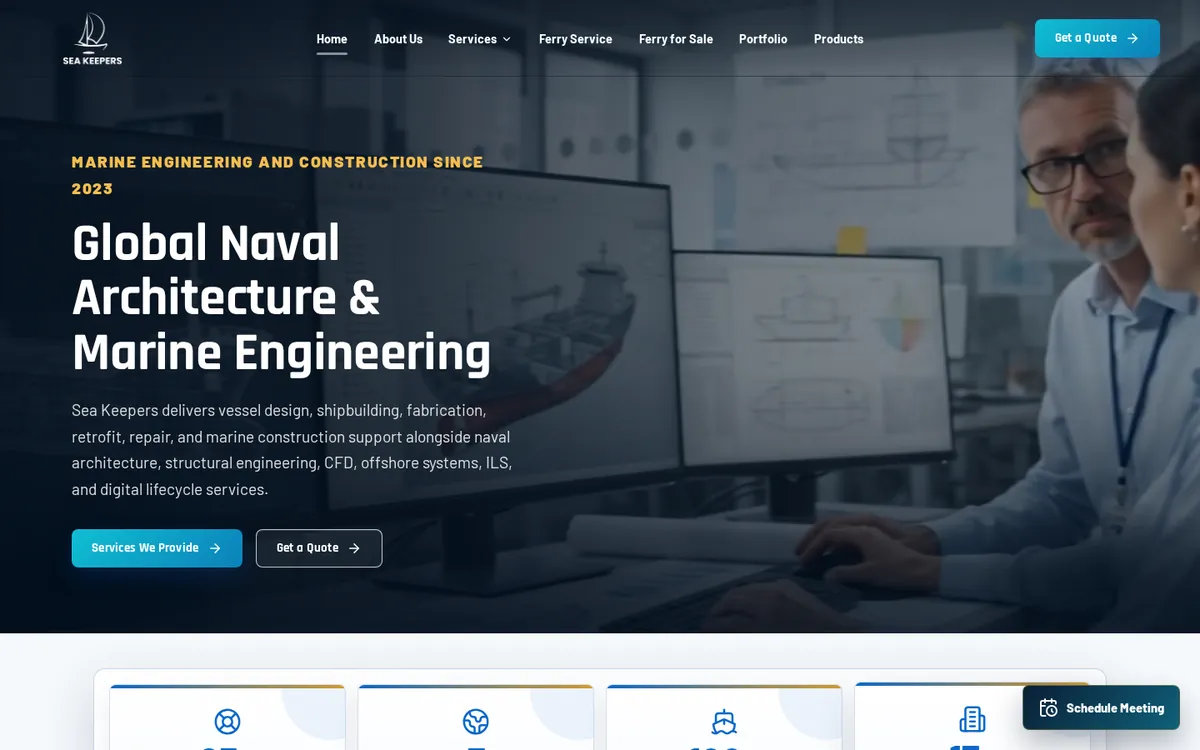
Operix Systems develops CRM software for Dubai and the UAE remotely from Karachi, one hour ahead of Dubai, with no office in the UAE. Our Dubai work so far is websites, including NHK Logistics, a Dubai freight forwarder's site with a page for every service, shipment tracking and an instant quote form. The CRM you can inspect is Sea Keepers in Karachi, where email enquiries become quotations, purchase orders and delivery documents. Book a demo and bring one week of leads.
Questions people ask
When is a packaged CRM enough for a Dubai company?
When you run one pipeline in one language with a few users, make quotations elsewhere and do not need a hand-over to an ERP. In that case a packaged CRM with WhatsApp connected is cheaper and faster, and we will say so.
Can the CRM handle leads in Arabic, Hindi, Russian and Chinese?
Yes. Each lead carries a language tag, is routed to a salesperson who speaks it, and uses reply templates in that language; the screens themselves run in English or Arabic per user.
Can quotations be in AED and USD?
Yes. A quotation is issued in AED with 5% VAT or in another currency with the exchange rate recorded on it; each revision is kept as a version and the accepted one goes to accounts.
Do you have an office in Dubai?
No. Operix works from Karachi, one hour ahead, and delivers Dubai CRM projects remotely with video-call discovery, approved screens, weekly releases and support on one WhatsApp number.
Who owns the code and the data?
You do, under the written quote. The source code and the database are handed over, and the data can be exported at any time.