We build custom ERP systems, so you might expect this page to argue for them. It does, but only for some readers. A fair share of the businesses that ask us for a quote would be well served by a package they could start using almost at once, and it costs us nothing to tell them. What follows is the comparison we would want if we were the ones buying.
The two options in plain terms
Off-the-shelf ERP, also called packaged ERP, is software written once and sold to many companies. Odoo is a widely known example, and there are local products made for a single trade. You configure a package; you do not design it. A custom ERP, sometimes called bespoke, is written for one company. Its screens, steps and reports follow how that company already works.
Custom ERP vs off-the-shelf, side by side
| Question | Off-the-shelf ERP | Custom ERP |
|---|---|---|
| How soon can we start? | Quickly; the software already exists | Later; it is designed and built in phases |
| How well does it fit our process? | Fits standard practice; you adjust where you differ | Built around your steps, documents and approvals |
| How do we pay? | Usually a licence or subscription per user, plus setup | A build paid by milestones, then hosting and support |
| What happens when we need a change? | Limited to the settings, or paid customisation that can complicate upgrades | Changed for you, at an agreed cost |
| Who owns it? | The vendor owns the software; you own your data | Set by the contract; get code and data ownership in writing |
| How proven is it? | Tested by many users before you | New; proven as each release is tried on your data |
| What does it ask of us? | Willingness to change how you work | Time for discovery, screen reviews and testing |
| Main risk | Paying for workarounds and modules nobody opens | Depending on one vendor's quality and continuity |
When packaged software is the right answer
- Your process matches the usual pattern in your trade: buy, stock, sell, collect.
- You need it working soon and cannot spare staff for design meetings.
- Your main need is accounts and invoicing, with little happening before the invoice.
- A product exists for your exact trade, and firms like yours use it without complaint.
- You have few users, so a per-user licence stays small.
If most of these describe you, buy the package. Put your effort into clean data and training, which decide the outcome with either kind of system.
When custom is worth it
- A step that sets you apart, such as how you quote, price or deliver, fits no package without an Excel sheet kept beside it.
- Your documents must follow a customer's or a regulator's format exactly.
- The ERP has to join something specific: a salesman app, a website, a machine, a mailbox.
- User numbers are growing, and a per-user licence will grow with them.
- You have already tried a package and are living with workarounds.
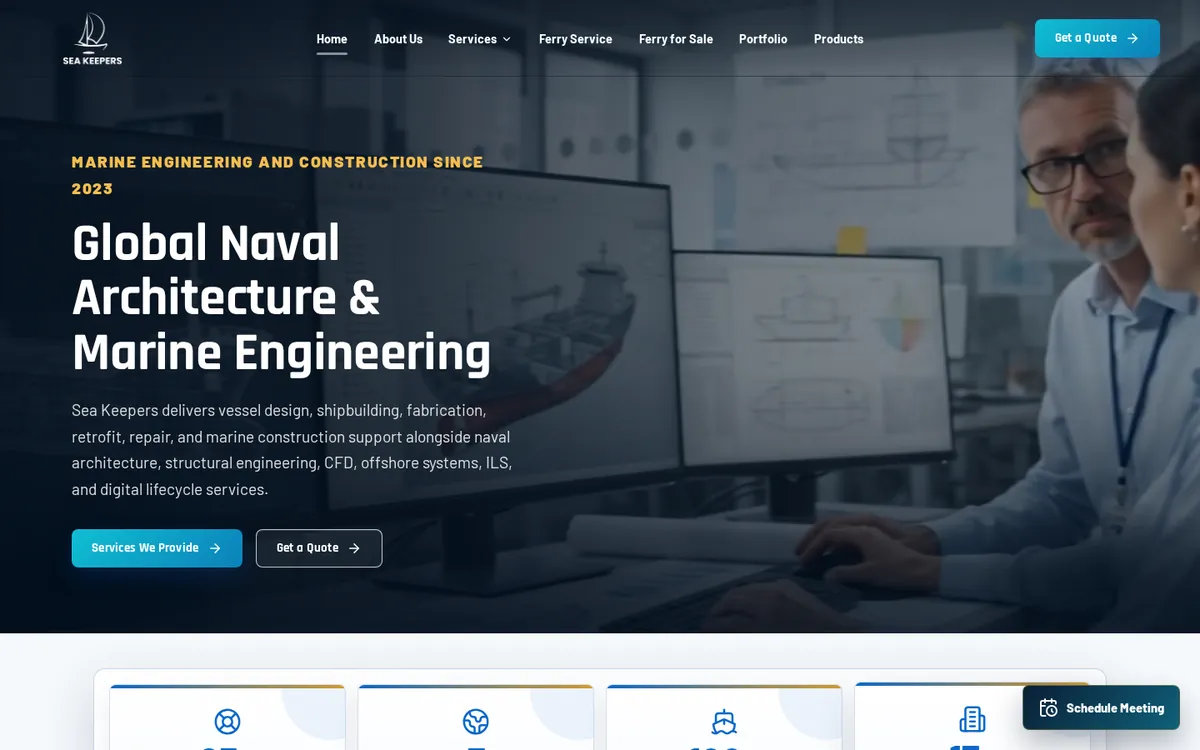
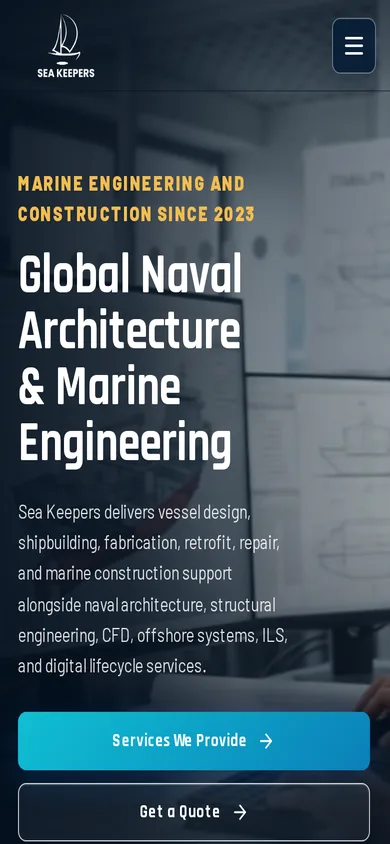
Sea Keepers is a case of this kind: a marine engineering company whose ERP runs its work from the first enquiry email to the final delivery documents. More signs are listed in signs you need custom software.
The cost pattern, without the numbers
The two are paid for differently, so comparing the first invoice misleads. A package usually charges per user, every month or year, for as long as you use it, with setup and any customisation on top. A custom build costs more at the start, is paid by milestones, and then carries hosting and support. Set the two side by side over several years, using the number of users you expect to have by then. Our note on what drives ERP software cost lists the parts of a quote.
The middle route
The choice is less stark than the heading suggests. Many custom projects are a standard core, since items, invoices, stock and ledgers work much the same everywhere, with custom work only on the screens where the business differs. A package can be extended too, though heavy customisation of a package brings the costs of both approaches. Ask any vendor, of either kind, which parts of the proposal are standard and which are being made for you.
Questions to put to either vendor
- Can you run one of our real orders in a demo, start to finish?
- If we stop working with you, what do we take with us?
- What will this cost in a later year, with more users?
- Who do we call when something breaks, and how?
- Which of our current steps would we have to change?
Operix builds custom ERP software for companies in Pakistan and the UAE, with every screen shown before it is built. If a package would serve you better, we would rather say so at the first meeting. For the wider decision, read the ERP buyer's guide. For a second opinion on your own case, book a demo.
Questions people ask
Is custom ERP better than off-the-shelf?
Not in general. Packaged ERP is better for standard processes and quick starts; custom is better when your process is unusual or needs specific integrations. The answer depends on how far your work differs from the norm in your trade.
Is custom ERP more expensive?
It usually costs more at the start, because it is built for you. Over several years a per-user licence can narrow the gap, so compare totals over the period you expect to use the system.
Can off-the-shelf ERP be customised?
Most can, within limits. Light changes are fine; heavy customisation can make upgrades difficult and brings the costs of both approaches.
Who owns a custom ERP?
The contract decides, so get it in writing: who owns the code, the data and the hosting account. With a package, the vendor owns the software and you own your data.
How long does a custom ERP take to build?
It depends on the modules and branches. Operix agrees the timeline module by module in the written quote, and the first module usually goes live while later ones are still being built.