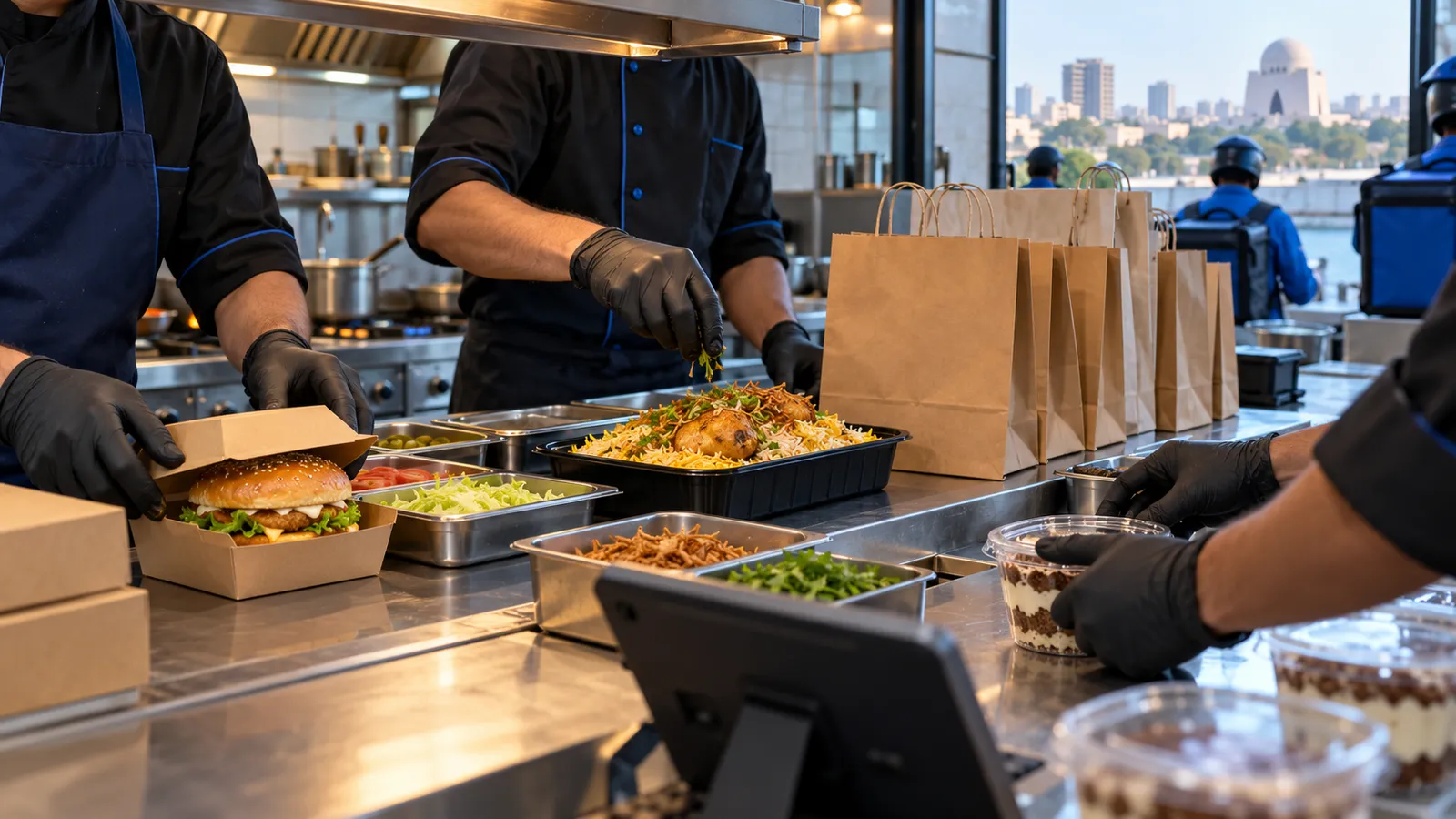
You rent a small kitchen in Gulshan, Bahadurabad or Johar Town, and from it you sell burgers under one name, biryani under another and desserts under a third. Orders arrive on two delivery apps, on WhatsApp, on Instagram messages and by phone. At nine on a Friday night the rider is waiting, the tablet is beeping, and somebody is reading an order off a phone screen to the cook. This guide is for that kitchen, and for the home chef who is about to become one.
Where a multi-brand kitchen loses money
- Orders are missed because one tablet was on silent or a WhatsApp message was read and forgotten.
- Nobody knows which brand actually makes money, because the cash and app payouts are mixed.
- Chicken, oil and buns run out mid-service because stock is shared but counted per brand, or not at all.
- Delivery app commissions and discounts are never matched against what was actually paid out.
- A cook makes an item from the wrong brand's recipe because the slip did not say which brand it was.
One board for every channel
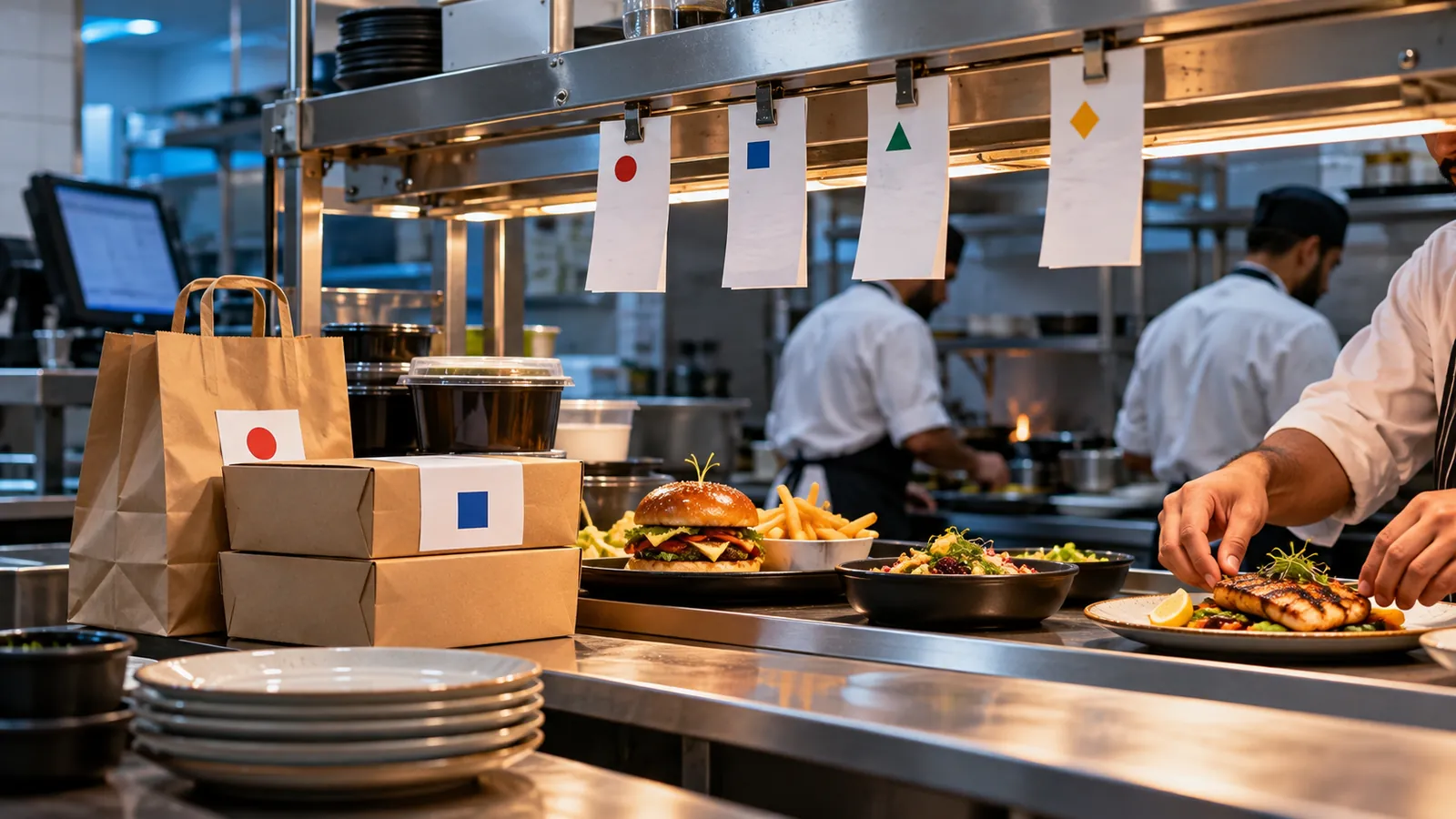
The core of cloud kitchen software is a single order board. Every order, whatever its source, appears as one ticket with the brand name, the channel, the items and the promised time. The kitchen works from that board or from printed KOTs; the packer ticks it off; the rider handover is recorded. WhatsApp and phone orders are typed in by the person on the phone, in a few taps, so they are counted like every other order.
Delivery app integration depends on what each app allows. Where an app offers no connection, the order is entered from the app tablet, which still beats keeping it outside the system. Your own ordering website is the channel you control fully, and it can drop orders straight onto the board. That is how The Roll Palace works: website orders land on the same order board as counter and table sales.
| Channel | How the order arrives | What to record |
|---|---|---|
| Delivery app | App tablet; entered or connected where the app allows | App order number, commission, discount borne by you |
| Message or voice note, typed in by staff | Customer number, address, cash or transfer | |
| Own website | Lands on the board automatically | Payment status, delivery area |
| Phone call | Typed in during the call | Caller number for repeat orders |
| Instagram or Facebook | Direct message, typed in by staff | Which brand page it came from |
Brands, recipes and shared stock
Each brand gets its own menu, prices, logo on the bill and sales report. Behind them sits one store room. A recipe for each item tells the system how much chicken, oil, bun and packaging it uses, so a sale on any brand reduces the same stock. At closing you see what was used, what should have been used, and the gap. Our guide to inventory management software explains the counting side in more detail.
Payments and app payouts
Cash with riders, bank transfers, JazzCash and EasyPaisa, and delivery app payouts each settle differently. Record the expected amount per order, then match the payout when it arrives. The difference between what the app sold and what it paid you is the number most kitchen owners never see.
When the internet or electricity drops
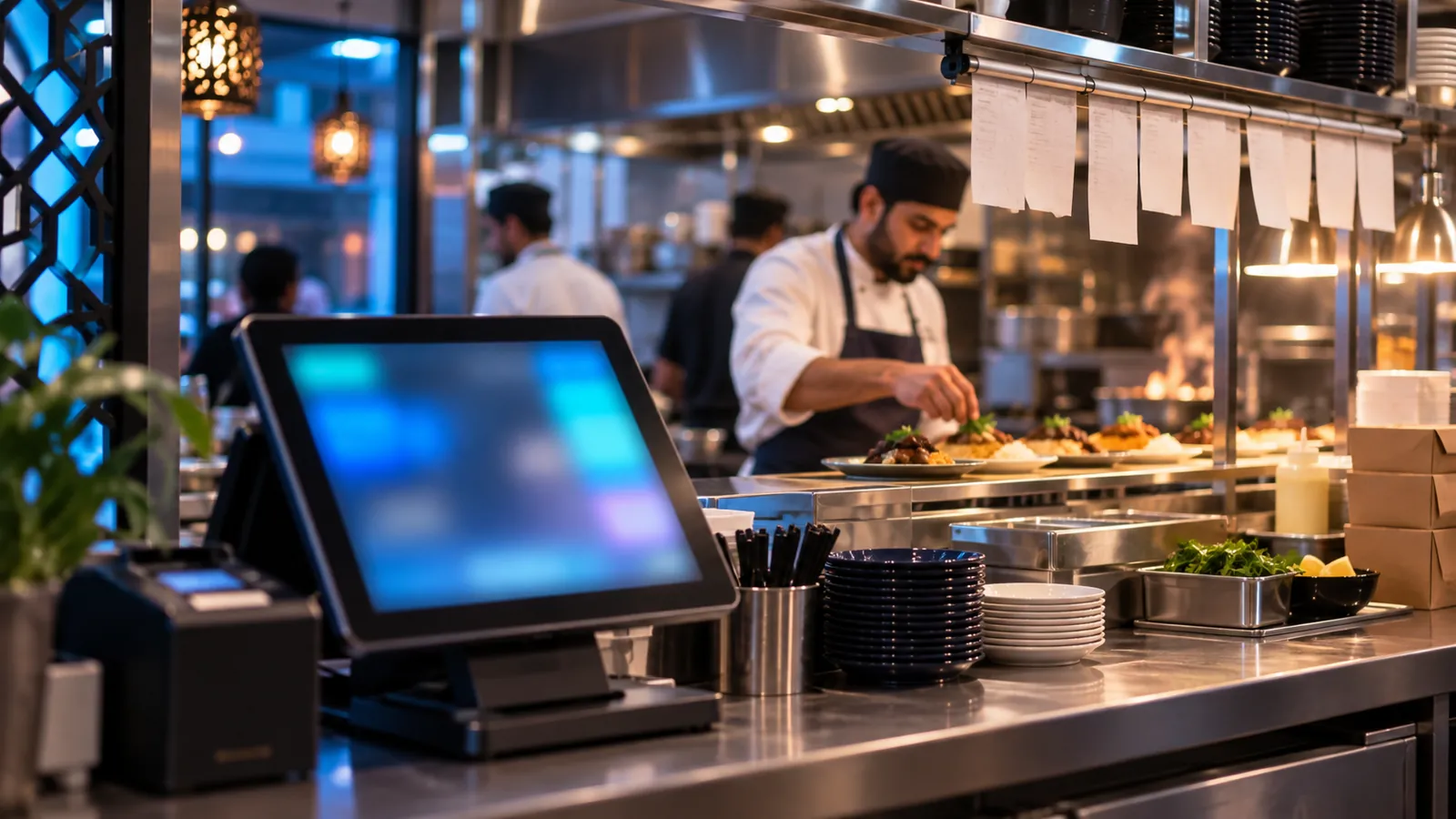
Load shedding does not stop the dinner rush. The POS should keep taking and printing orders offline and sync when the connection returns, so a UPS on the router and the counter machine matters as much as the software.
List every brand and channel
Write down each brand name and every way orders reach it, including the owner's personal WhatsApp.
Write recipes for the top items
Start with the twenty items that sell most and note the grams of each ingredient and the packaging used.
Choose one person per channel
Decide who types in WhatsApp and phone orders during each shift, so nothing is left to whoever is free.
Run one week on the board
Put every order through the system for a full week, including the slow days, before judging it.
Compare brand reports
At the end of the week, look at sales, food cost and app commission per brand and decide what to push.
When a home chef does not need this yet
If you cook one menu from home and take fifteen orders a day on WhatsApp, a notebook or a shared sheet is enough. Software starts paying for itself when you add a second brand, a second channel or staff who take orders when you are not there. Our restaurant POS guide for Pakistan covers the dine-in side, and fast food and dhaba POS covers counter speed.
Operix builds POS systems in Pakistan and ordering websites from Old Clifton, Karachi, with on-site setup in Karachi and online setup elsewhere. Book a POS demo and bring last Friday's orders.
Questions people ask
Can one POS run several restaurant brands?
Yes. Each brand has its own menu, prices, bill header and sales report, while the kitchen sees one combined board. Stock is shared and deducted through each item's recipe.
Can delivery app orders come in automatically?
It depends on what each app allows at the time. Where there is no connection, staff enter the app order on the board, which still keeps it in your reports and stock.
Do I need my own website if I am on delivery apps?
Not on day one. An own website becomes useful when you have regular customers you want to order from you directly, because those orders carry no app commission and come with the customer's number.
Do you have an office in Lahore or Islamabad?
No. Operix works from Old Clifton, Karachi. Karachi kitchens get on-site setup and training; kitchens in other cities are set up and trained online, with visits when the project needs them.