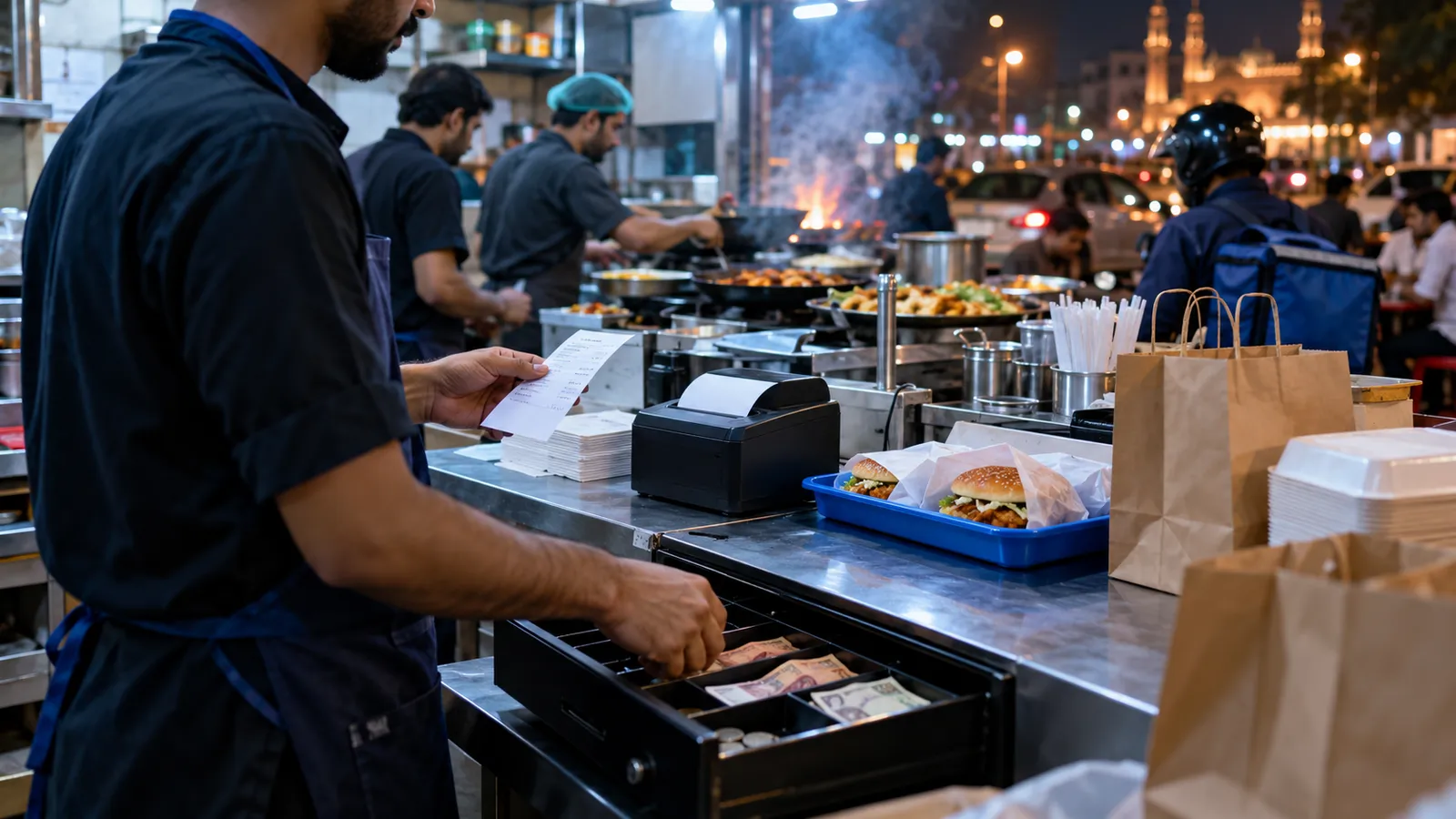
It is past midnight on Burns Road, Food Street or a highway stop, and the counter has a queue. One customer wants two zinger burgers to take away, a family at table six wants karahi and naan, and a rider is waiting for an order called in on the phone. The cashier is shouting orders to the kitchen and writing totals on a slip. When the shift ends, the cash in the drawer and the slips do not match, and nobody knows why. A fast food or dhaba POS is built for exactly this hour.
Speed: what a busy counter needs from the screen
- Big buttons for the top items, grouped as the menu board is grouped, so a burger and fries is three taps.
- Deals and combos as single buttons, with the parts still deducted from stock.
- Quick notes for no mayo, extra spicy or less oil, printed on the KOT.
- One tap to mark the order as takeaway, dine-in with a table number, or delivery with a phone number.
- A receipt and a kitchen ticket printed together, without the cashier pressing anything else.
KOT: the kitchen cooks from paper, not from shouting
A kitchen order ticket goes to the kitchen printer the moment the order is saved. If the grill and the karahi station are separate, each gets only its own items. When a table adds two more naan, a new KOT prints for just those. A void after the KOT has printed needs a manager's PIN, which removes one of the oldest tricks at a busy counter: cancel the bill after the food has gone out and keep the cash.
| Takeaway | Dine-in | Delivery | |
|---|---|---|---|
| Order taken by | Cashier at counter | Waiter or cashier, by table | Phone, WhatsApp or website |
| When it is paid | Before or at pickup | At the end, table bill | Cash with rider or prepaid |
| Ticket | KOT plus receipt | KOT per round, bill at end | KOT plus delivery slip with address |
| Watch out for | Unpaid pickups | Items added but not billed | Rider cash not handed in |
Cash closing at the end of each shift
Most leakage in a fast food shop happens in cash. Each cashier should log in, open the drawer with a counted float, and close it by counting notes. The POS shows what the drawer should hold, split into cash, card, JazzCash and EasyPaisa, and rider cash still outstanding. The difference is recorded with the cashier's name. Our guide to restaurant POS in Pakistan goes further into table service and reports.
Load shedding and internet
The POS must bill, print and save offline. Put the counter PC, the receipt printer and the kitchen printer on a UPS, and choose a system that syncs to the owner's phone when the internet returns rather than one that stops when it drops.
Stop new orders on that login
The outgoing cashier finishes the last bill and ends the shift on the POS.
Collect rider cash
Every delivery still marked with a rider is settled or listed as pending by name.
Count the drawer
Count the notes in front of the manager and enter the amount by denomination.
Check digital payments
Match card, JazzCash and EasyPaisa totals against the phone or terminal.
Sign off the difference
Any shortage or excess is recorded with a reason before the next cashier opens a fresh float.
Keep the menu on the POS identical to the board on the wall. When a price changes, change both on the same day, or the cashier will start typing prices by hand and the reports will drift.
Two Karachi examples
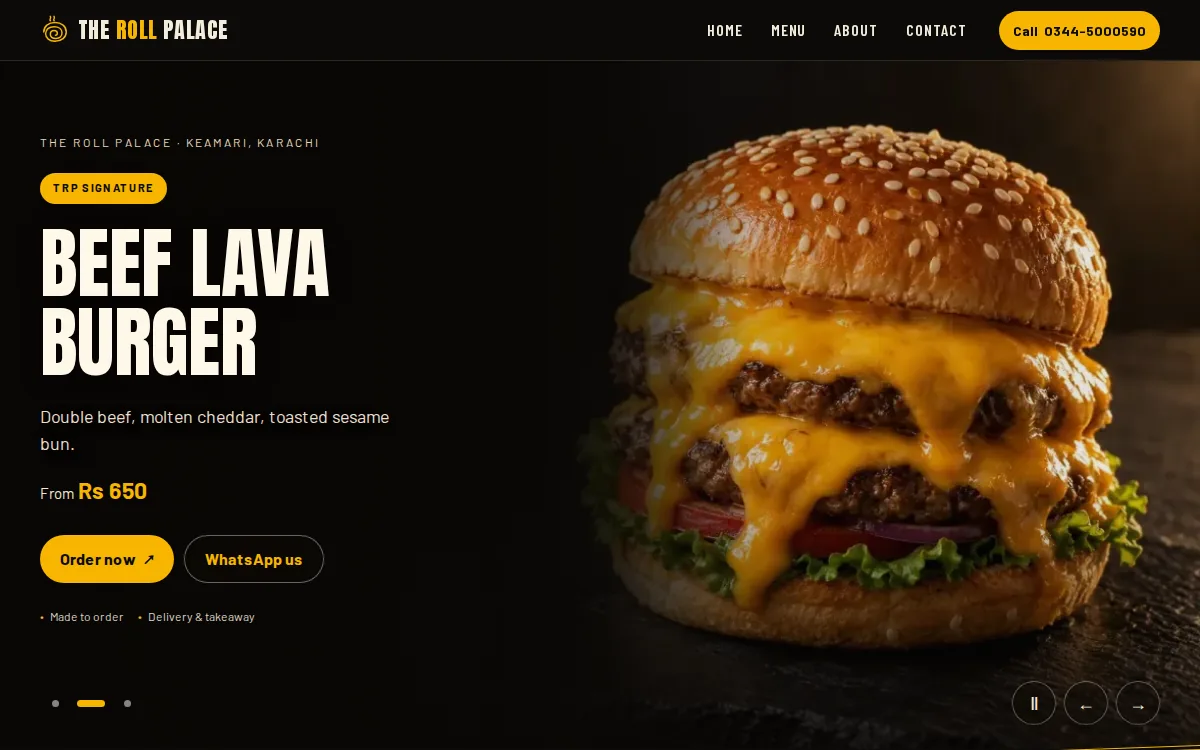
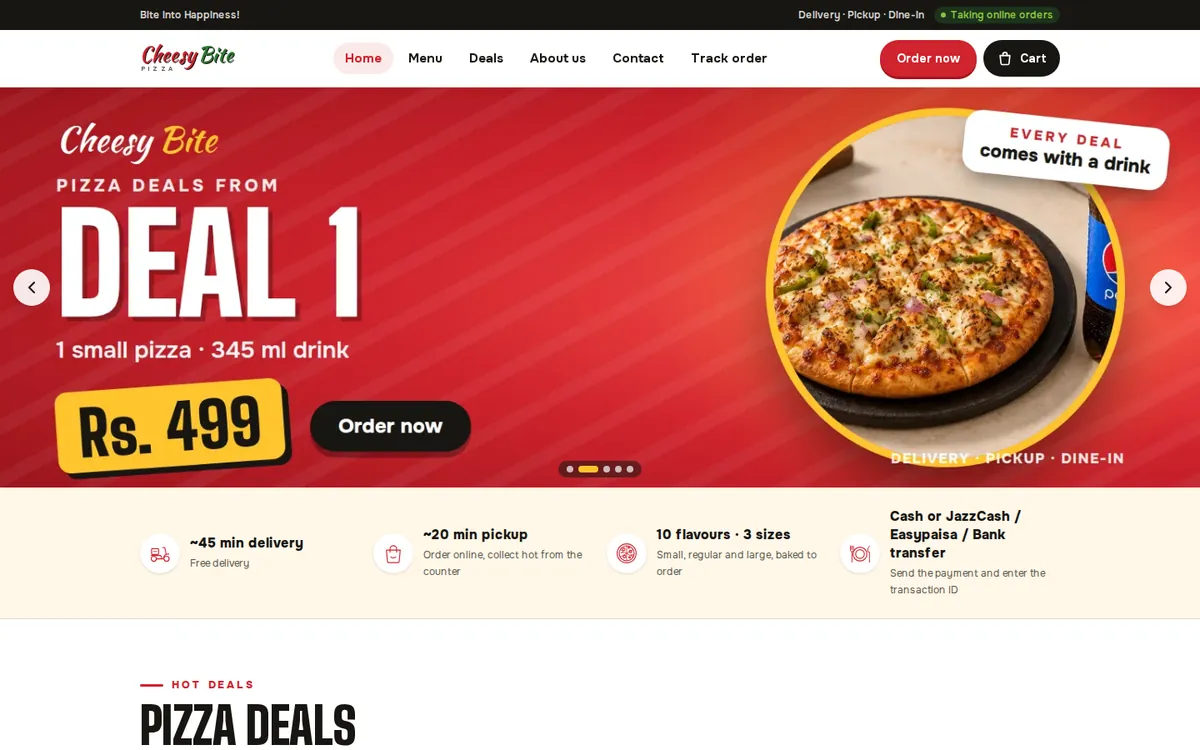
The Roll Palace in Keamari is a rolls-and-burgers restaurant with a menu and online-ordering website and a POS behind it, where website orders land on the same order board as counter and table sales. Cheesy Bite is a pizza restaurant with an online ordering website, a staff dashboard and a POS. Both started from the same question: how does the counter stay fast when orders come from more than one place?
When a simple billing app is enough
A roadside dhaba with ten dishes, one cashier and no kitchen printer can run on a simple billing app. A full POS earns its cost once you have a kitchen printer, more than one cashier, deliveries, or a second outlet. If you sell from several brands in one kitchen, read cloud kitchen software; if you franchise, read franchise POS software.
Operix builds POS systems in Pakistan from Old Clifton, Karachi, and installs them on site in Karachi. Book a POS demo and time how long your current counter takes for one deal.
Questions people ask
Does a fast food POS need a kitchen printer?
If the kitchen is out of the cashier's sight, yes. A KOT printer stops orders being forgotten or misheard, and separate printers can serve the grill and the karahi station.
Can the POS print in Urdu?
Yes. Menu items can carry Urdu names for the kitchen ticket and English names for the customer receipt, or both on one slip.
What happens to orders during load shedding?
The POS keeps billing and printing on UPS power and saves everything locally. When the internet returns, it syncs sales to the owner's phone and reports.
Do you install outside Karachi?
Yes, online. Operix works from Old Clifton, Karachi; Karachi shops get on-site installation and training, and shops in other cities are set up and trained online.
How much does a fast food POS cost?
It depends on counters, printers, outlets and whether you need delivery or website orders. Operix does not publish prices; you get a written quote after a discovery call.