
Every advert for web design in Karachi says custom. The freelancer selling a ready theme says it, and so does the software house quoting several times more. The word has stopped meaning anything to the buyer, which is a problem when the two quotes on your desk are for different things. Here is what custom should mean, when you need it, and when you do not.
What does custom website development actually mean?
Custom means the website is designed and built from your business outward. The layout is drawn for your pages and your sales process, not picked from a theme gallery. The admin panel matches the way your staff work. Any connection to your POS, ERP or order board is planned into the build. A theme site works the other way round: a ready design exists, and your logo, colours and text are placed into it. A customised theme sits in between, with a developer changing parts of a ready design.
A rule of thumb: if the developer can show you the same layout on another client's site, it is a theme, however the proposal describes it.
When is a template or WordPress enough?
Often. A brochure site your team edits every week, a standard catalogue with no special rules, or a quick page to test a new market can all run well on a theme or on WordPress. Paying for a custom build there buys nothing a buyer will notice. The full comparison is in WordPress vs a custom website, so this guide will not repeat it.
What are the signs you need a custom build?
- Website orders must land on the same POS or order board as counter sales.
- Checkout has rules a platform handles awkwardly: delivery areas, promo codes, bank-transfer confirmation, per-guest links.
- The site needs several languages with their own content and search setup, not a translation plug-in.
- Speed on mobile data decides sales, and a theme loaded with plug-ins is too slow.
- There is a workflow specific to your business: a customer portal, a quotation request with uploads, a design tool.
- Staff need an admin that matches their work, not a general editor they must learn around.
| Option | What you get | Who it suits | What to watch |
|---|---|---|---|
| Template or theme site | A ready design with your logo, colours and text placed in | A brochure site, a first site, a tight budget | The same look as other sites on the theme, and plug-ins to keep updated |
| Customised theme | A ready design with sections changed and features added by a developer | A content site that needs a few things the theme lacks | Each change fights the theme, and updates can break the changes |
| Fully custom build | Screens, admin and integrations designed and coded for your business | Sites tied to a POS or ERP, unusual checkout, several languages, portals | Needs a partner who keeps the code and will maintain it after launch |
What should I ask a custom development company?
- Who owns the code, and where does it live? It should be in a repository your company can access.
- Will I see every screen designed before anything is built?
- What is built for us and what is bought in: hosted services, plug-ins, payment gateways?
- What happens after launch: who fixes, who maintains, on what terms?
- How do my staff change text, prices and images without you?
- Can I open live sites you built that do what mine must do?
A company that answers these in writing is easier to work with than one that answers them on a call. Writing the scope first helps you compare the answers; how to write a software requirements document shows what to put in it.
How does a custom website project run at Operix?
Discovery first: we list the pages, the workflow and what the site must connect to. Then design: every screen is drawn and approved on your phone before code is written. The build is released in stages so you see progress on your own content, and payment follows milestones agreed in a written quote. At launch your staff are trained on the admin in Urdu or English, and support runs on one WhatsApp number. Domain, hosting and code are in your name. What a project covers is set out on our web development service page, and our custom web development company in Karachi page explains how we work from I.I. Chundrigar Road, with on-site meetings in Karachi and other cities served online.
What custom websites has Operix built?
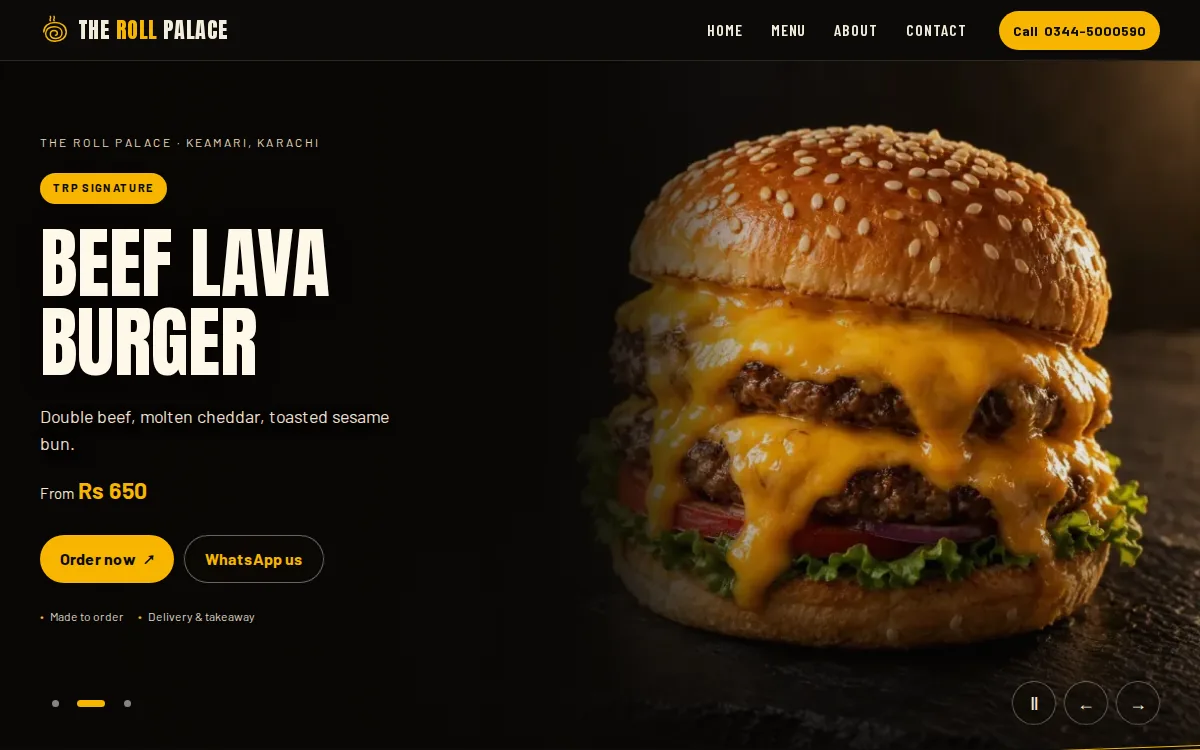
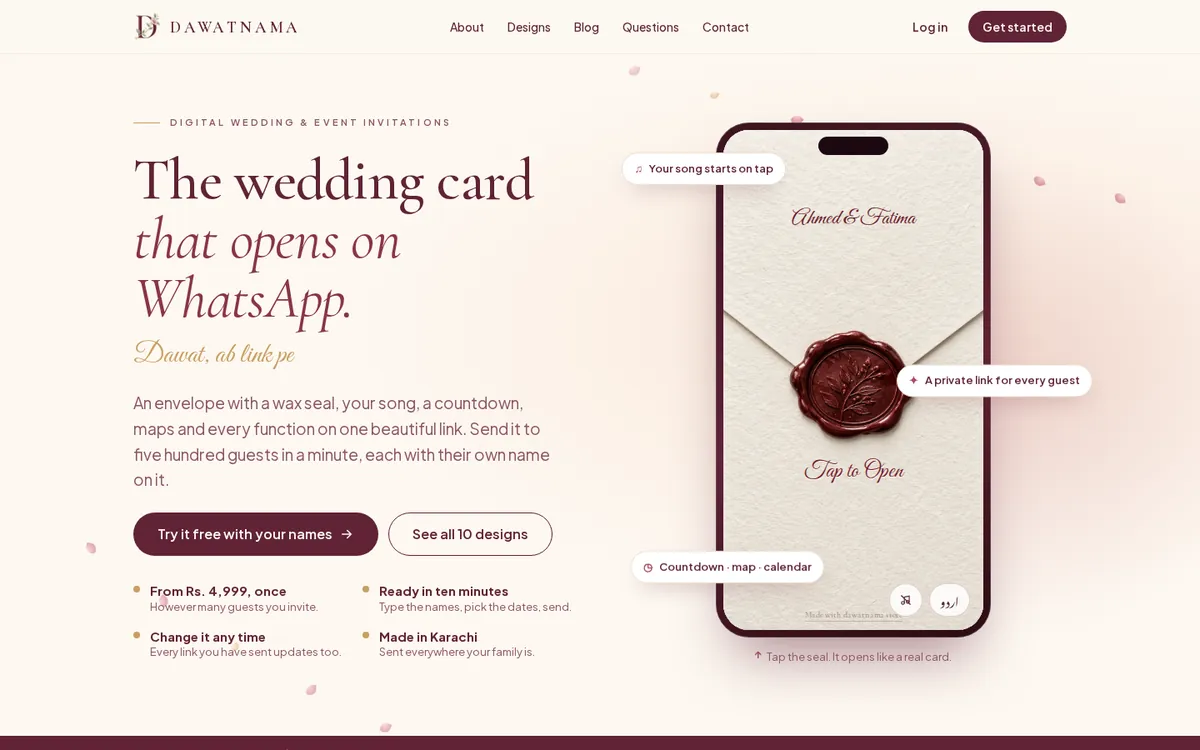
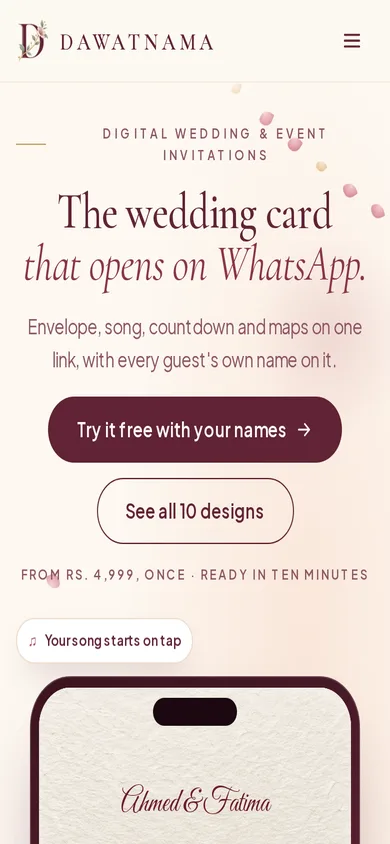
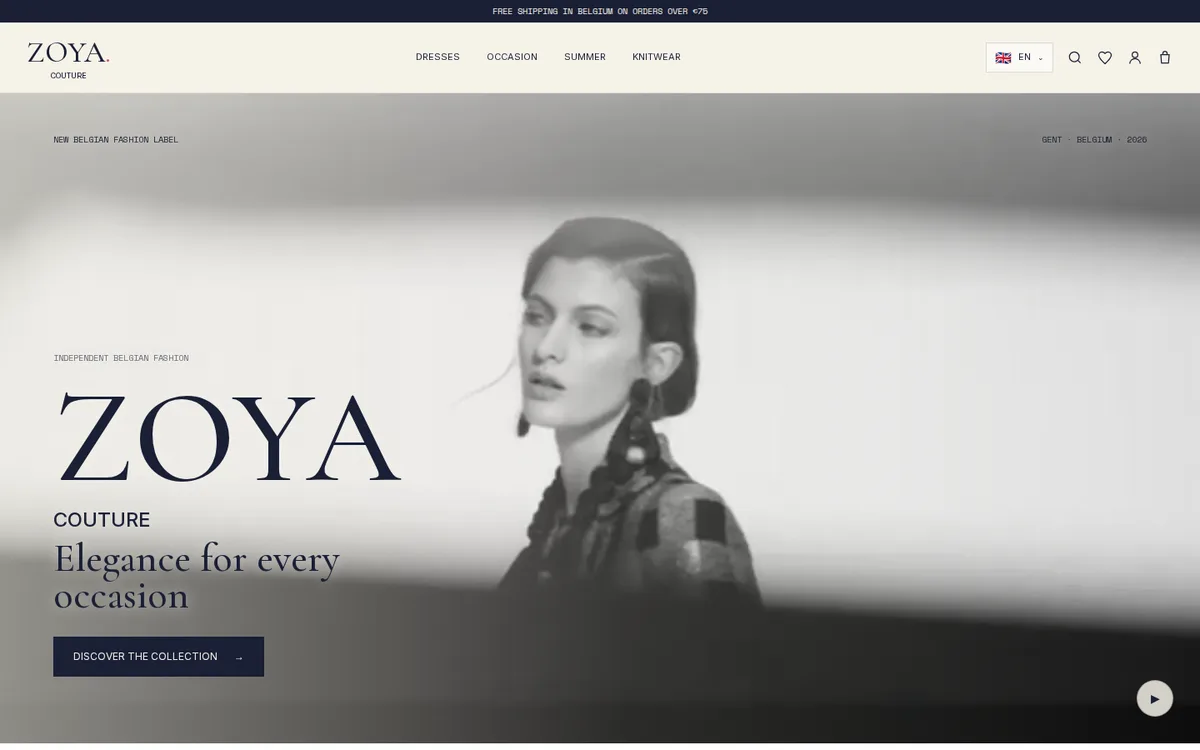
The Roll Palace is a menu and online-ordering website for a rolls-and-burgers restaurant in Keamari, with a POS behind it: website orders land on the same order board as counter and table sales. Dawatnama is a platform where customers design a digital wedding card, add guests and send each one a personal link. Zoya Couture is an online store for a Belgian fashion label in Dutch, French and English. None of these could have come from a theme. Book a demo and we will tell you plainly whether your site needs a custom build or not.
Questions people ask
Is a custom website more expensive than a theme?
Usually, because the design and code are made for you rather than reused. The cost is justified when the site must do something a theme cannot; it is wasted on a simple brochure site.
Does custom mean built from scratch with no tools?
No. Custom sites use well-known frameworks and libraries; what is custom is the design, the workflow and the admin. Ask which tools are used and whether other developers can maintain them.
Can a custom website be edited by my staff?
Yes, through an admin panel built for the pages your staff change. Ask to see it before you sign.
Can a custom site be moved to another developer later?
If the code and hosting are in your name and the tools are widely used, yes. Get this in the written quote.
Is custom website design the same as custom development?
Design is how the screens look and flow; development is the code that makes them work. A custom project includes both, and you should approve the design before development starts.