A shop in Gent sells to neighbours who read Dutch, to customers in Brussels and Liège who read French, and to visitors who read neither. Cross one border and the payment button shoppers look for changes, and so does the VAT. Anyone who wants to sell online in Europe has to build for those differences from the start. This guide covers what each of them asks of the store.
A language is a whole store, not a translated home page
Shoppers leave when the language changes halfway. If the product page is in French and the checkout error appears in English, the sale is in doubt. Each language needs the full route to purchase: menus, product names and descriptions, size guides, cart, checkout, error messages, order emails, delivery and returns pages, and the legal pages.
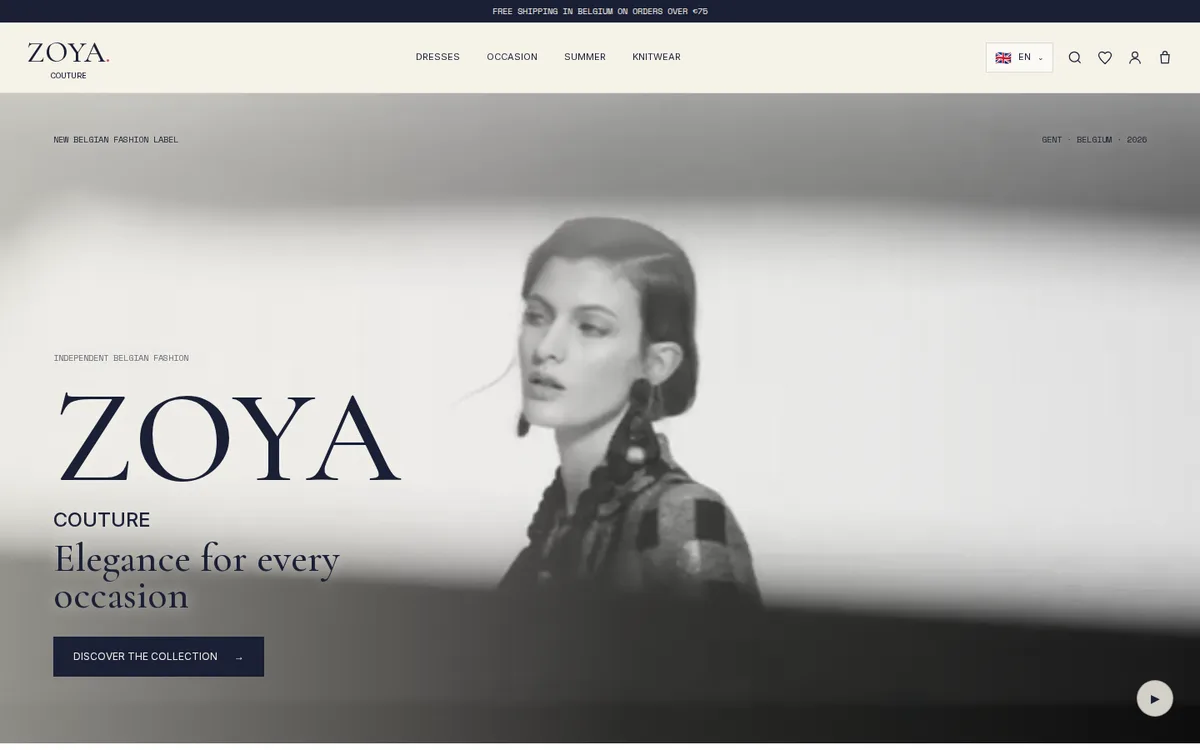
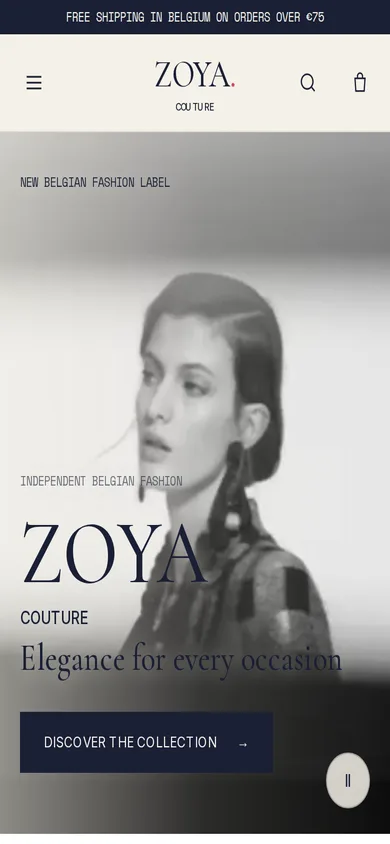
Zoya Couture is the example from our own work: an online store for a new Belgian fashion label, in Dutch, French and English, with collections, wishlist, customer accounts and checkout. The store also carries shipping and returns pages, cookie consent and legal pages for the EU.
Machine translation makes a useful first draft and a poor final one. Have a native speaker read every page a customer will see before launch.
How to structure URLs for each language
Decide the URL structure before design begins, because changing addresses later means redirecting every page and waiting for Google to catch up.
| Structure | Example | Suits | Watch for |
|---|---|---|---|
| Language folders on one domain | yourshop.com/nl/ and yourshop.com/fr/ | One catalogue sold in several languages | A language is not a country: /fr/ serves France and French-speaking Belgium alike |
| Country and language folders | yourshop.com/be-nl/ and yourshop.com/be-fr/ | Stores where prices, VAT or delivery differ by country | More versions to keep in step |
| Separate country domains | yourshop.be and yourshop.nl | Brands with a team or stock in each country | Each domain has to earn its search ranking alone |
Whichever you choose, three rules hold. Every language version has its own URL, so one address never shows different languages to different visitors. The versions point to each other with hreflang tags, which tell Google which page belongs to which language and country. And the language switcher keeps the shopper on the same product instead of sending them back to the home page.
VAT that differs by country
VAT rates and invoice rules differ from one European country to the next, and which country's VAT applies to a cross-border sale depends on your business. The store should therefore hold tax as settings, not as a figure fixed in the code: a rate for each country and product type, a clear statement beside every price of whether VAT is included, and an invoice layout your accountant has approved. We build the settings. Your accountant decides what goes into them. Before you open a new country, confirm with your accountant where you must register, which rates apply and what has to appear on an invoice.
Most EU countries use the euro and others keep their own currency. If you sell into one of those, use that currency everywhere a price appears, the order email included.
Payment methods by country
In several countries the most trusted way to pay is a local method tied to the shopper's own bank, and a store without it looks foreign.
| Method | Where shoppers expect it | What it is |
|---|---|---|
| Debit and credit cards | Everywhere | The baseline every store needs |
| SEPA transfer | Everywhere | A bank transfer in euros |
| iDEAL | The Netherlands | Payment through the shopper's own bank |
| Bancontact | Belgium | The Belgian debit card and payment app |
| Klarna | Several countries | Pay later or in instalments |
Your payment provider decides which of these you can switch on. Ask which methods it supports in each country you sell to, then place a real order with each one before you advertise.
Delivery and returns
- Show the delivery charge and the expected delivery time for the shopper's country before checkout, not at the last step.
- If delivery is free above a certain basket value, say so in the cart.
- Write the returns page in every language: how long the customer has, who pays the postage and where the parcel goes.
- Send order confirmations and tracking messages in the language the customer ordered in.
Consumer rights on returns are set by law and the details matter, so have the policy checked by someone qualified in the countries you sell to.
Consent and privacy
GDPR governs personal data across the EU. For a store, the visible part is the cookie banner: analytics and advertising scripts should wait until the visitor has agreed, and the banner should speak the visitor's language. Behind it sit a privacy policy that says what you collect and why, and a newsletter sign-up that is a separate choice and not a condition of ordering. Ask a lawyer to review the wording for your own case.
How to launch a multilingual ecommerce website in Europe
Pick the first country
Begin where you already have customers, and prepare that market fully.
Fix the URL structure
Choose folders or domains before design starts, with one address per language version.
Translate the whole route
Every page, message and email a buyer meets, read by a native speaker.
Set VAT with your accountant
Rates, price display and invoice layout entered as settings and checked.
Switch on local payments
Add the methods shoppers in that country expect and test a real order with each.
Add the next language
Only when orders in the first market have become routine.
Where Operix stands
These stores are built in Karachi and delivered online. Operix has no European office. Zoya Couture is our one European project so far, and the rest of our portfolio is mostly in Pakistan and the UAE. That is one store, not a long record, and you should weigh it as such. What we can show you is the store itself, working in three languages.
Before choosing a platform, read Shopify vs WooCommerce vs a custom store, because the three handle extra languages very differently, and keep the global ecommerce checklist beside you for each new country. Our pages on website development in Europe and SEO services in Europe describe the build and the search work, and how we work with European businesses explains the remote process. To talk through your own store, contact us.
Questions people ask
How many languages does an online store in Europe need?
Start with the languages of the country you already sell in, and add no more than you can keep up to date. A store for Belgium needs Dutch and French at least; English helps with visitors who read neither.
Should each language have its own domain?
Usually not. Language folders on one domain are simpler to run and keep the site's search strength together. Separate country domains suit a brand with a team or stock in each country.
Which payment methods should a European online store offer?
Cards and SEPA transfer everywhere, then the local method for each country: iDEAL in the Netherlands, Bancontact in Belgium, and Klarna where your shoppers expect it. Your payment provider tells you which it supports.
Can Shopify or WooCommerce run a multi language online store?
Both can, with the right setup or add-ons, and for many small shops that is enough. Building your own store is worth it once languages, pricing or checkout have to behave in ways the platform will not permit.
Who decides the VAT on sales to other European countries?
Your accountant decides where you must register and which rate applies. The store's job is to apply those settings correctly on every order and invoice, so confirm them with your accountant before you open a new country.