A customer walks into an optical shop in Saddar or on Jail Road with a prescription from an eye doctor. She picks a frame, chooses anti-glare lenses, pays an advance, and is told to come back in a few days. The lens order goes to a lab on a paper slip. When she comes back, the slip is missing and nobody remembers which coating she chose. The fix is not complicated: one order record from counter to lab to collection.
The prescription record
Save each prescription against the customer with the date and who wrote it: right and left eye values, add for reading, pupil distance and any notes. The software does not judge the prescription; it stores what the doctor or optometrist wrote. When the customer returns next year, staff see the old prescription and the new one side by side, and the frame and lens she chose last time.
Software stores and prints the prescription you enter. Medical decisions stay with the eye doctor or optometrist.
From counter to lab and back
Select the frame
Scan the frame from stock; it is reserved for this order.
Choose the lenses
Pick lens type, material and coatings, and attach the prescription.
Take the advance
Record the advance and how it was paid, and give the customer an order slip with the promised date.
Send the job to the lab
Print or share the lab order; mark the date sent and the lab's name.
Receive and fit
When lenses return, check them against the order, fit the frame and mark the order ready.
Hand over
Send a WhatsApp message to collect, take the balance and close the order.
Frames, sunglasses and contact lenses
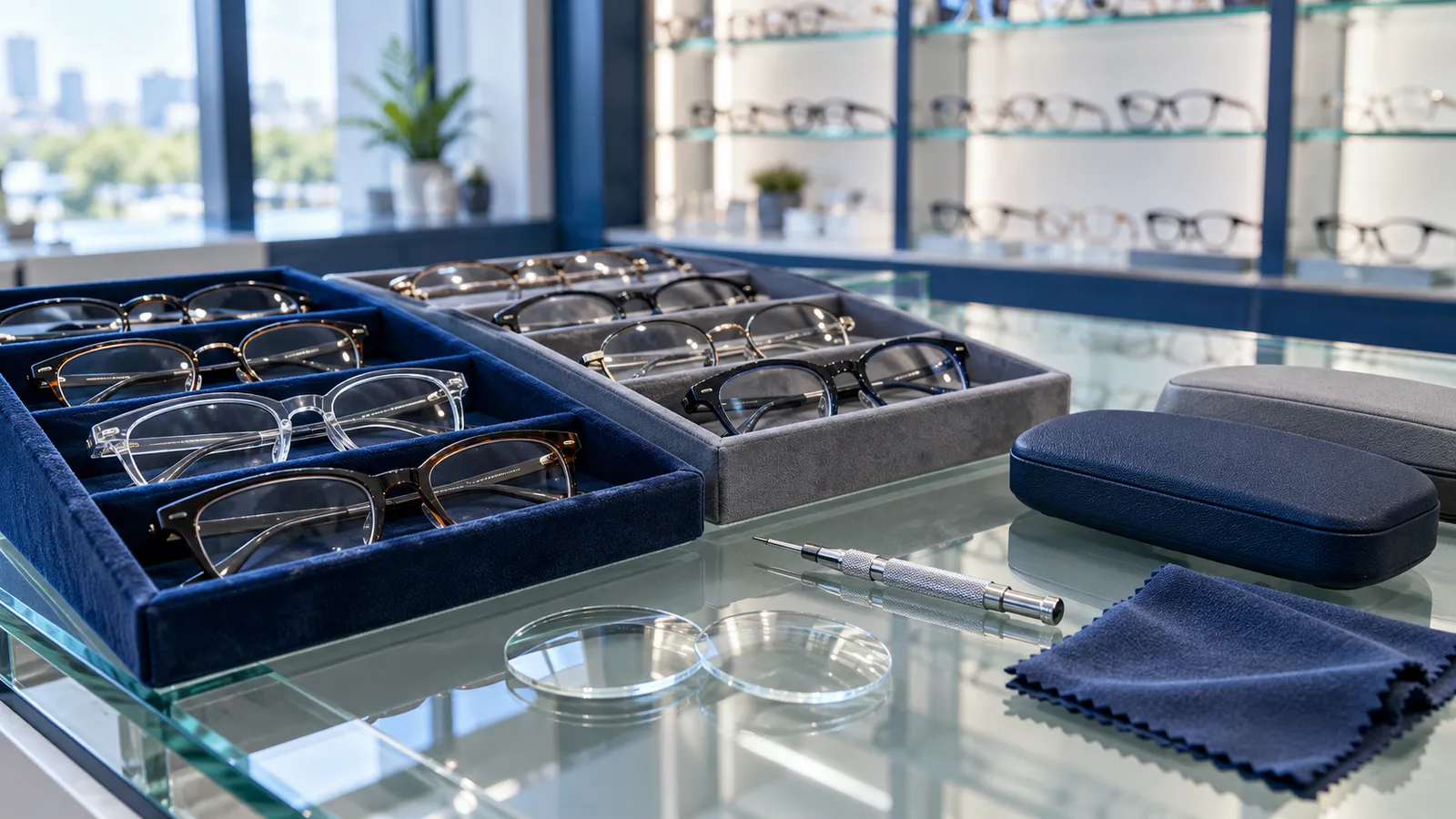
Frames are stock by brand, model, colour and size. Sunglasses are the same, with a seasonal peak in summer. Contact lenses and solutions are different: they carry batch and expiry, so treat them as a pharmacy treats medicine. Our guide to pharmacy software with batch and expiry explains the method.
| Product | Tracked as | Watch for |
|---|---|---|
| Frames | Stock by model, colour, size | Old models taking display space |
| Prescription lenses | Order to a lab, not stock | Lab delays and remakes |
| Ready readers and sunglasses | Stock | Seasonal demand |
| Contact lenses and solutions | Stock with batch and expiry | Expiry dates |
| Repairs | Small job with a charge | Parts such as screws and nose pads |
Remakes and lab accounts
Sometimes lenses come back wrong and go back for a remake. Record the remake with its reason against the lab, so you can see which lab gets it right. Keep a supplier ledger per lab with the jobs sent and their charges, so the monthly bill from the lab can be checked line by line instead of being paid on trust.
Branches and doctors
Optical chains with several branches need one customer file across all of them, so a prescription saved in Clifton is visible in Gulshan. If an eye doctor works from your shop, appointments can be added later; start with prescriptions and orders. For receivables, see invoicing software in Pakistan.
A day at the counter
Most of an optician's day is small work: a screw tightened, a nose pad replaced, sunglasses sold to a walk-in customer, a contact lens solution bought by a regular. These should take seconds at the POS, with quick buttons for common repairs and their charges. The heavier order screen is only for spectacles with prescription lenses, so staff are not filling long forms for a two-minute job.
At the end of the day, two lists matter most: orders promised for tomorrow that have not come back from the lab, and orders ready but not collected. The first tells you whom to chase at the lab; the second tells you whom to remind. Both come straight from the order records, with no register to search.
Corporate and panel customers, where a company pays for its staff's glasses, need a ledger of their own. Each order is billed to the company with the employee's name, and a monthly statement goes out instead of one bill per pair. If you deal with a few such companies, this alone saves hours of reconciling slips at month end.
Frame stock also ages. A monthly list of frames that have not sold in a long time helps you move them to a sale tray or return them to the supplier while they still look current.
Operix builds POS systems in Pakistan for retail and pharmacy businesses, from Old Clifton, Karachi. If your shop also sells cosmetics or sunglasses as fashion, see cosmetics store POS software. Book a demo and bring one order slip and one lab bill.
Questions people ask
Can the software store old prescriptions?
Yes. Every prescription is saved with its date, so staff can see the history and compare old and new values.
Can we track lens orders sent to a lab?
Yes. Each order shows when it went to the lab, which lab, the promised date and whether it came back or needs a remake.
Does it handle contact lens expiry?
Yes. Contact lenses and solutions can be stocked with batch and expiry, and the system lists items nearing expiry.
Do you have an office in Islamabad?
No. Operix works from Karachi and serves Islamabad opticians online, with visits when the project needs them.