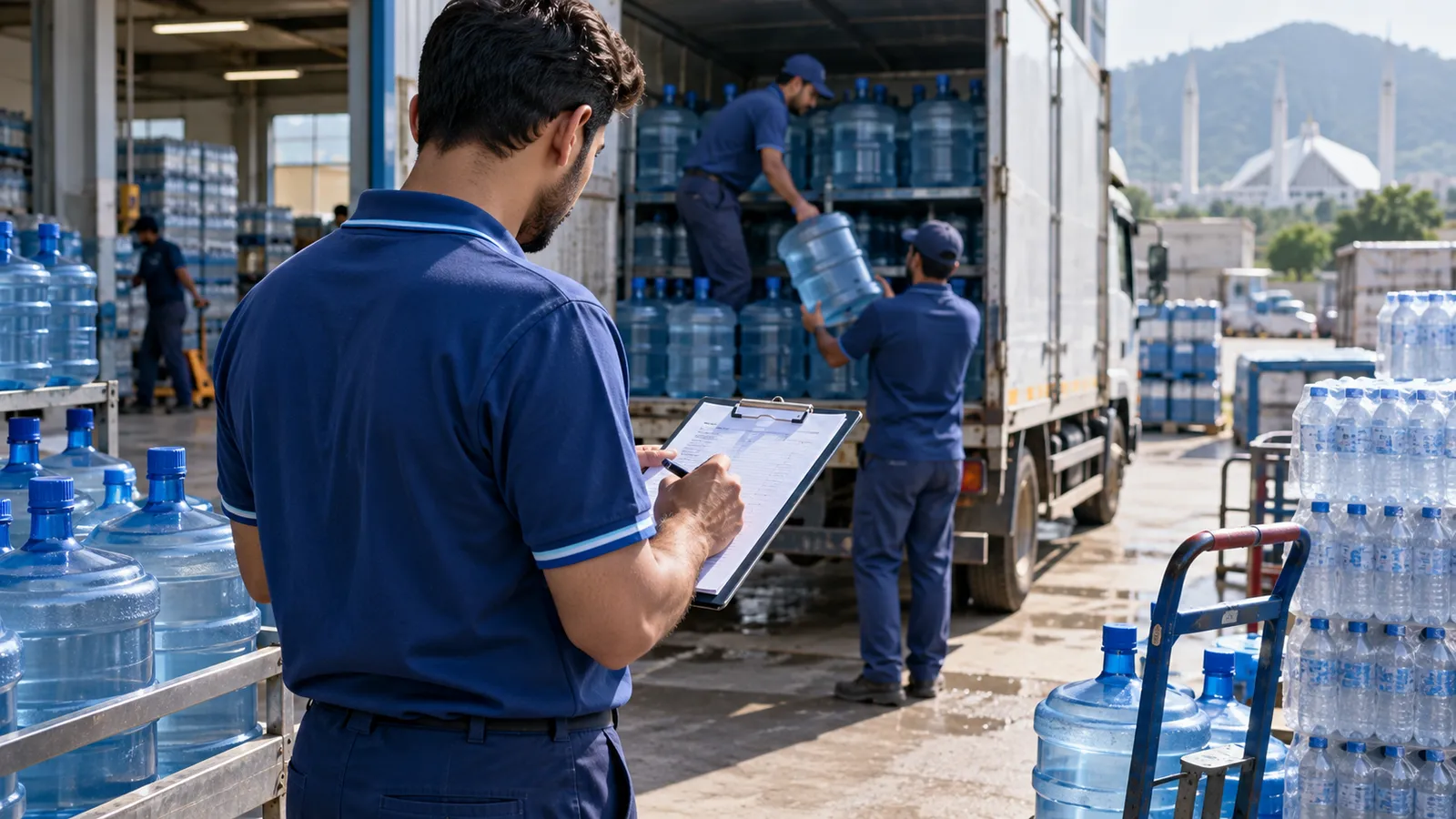
Bottled water plants in Karachi, Lahore, Islamabad and almost every growing town sell two very different ways. Small bottles go to shops and distributors in cartons. Nineteen-litre bottles go to homes and offices on routes, by riders and loaders, and the empties have to come back. Most plants start with a register per route and a WhatsApp group for orders. By the time you run a dozen routes and a few dealers, nobody can say how many bottles are sitting in customers' kitchens.
Production and packing materials
Water costs little; the bottle, cap, label and film do not. A production run records the bottles filled by size, and the system deducts preforms or blown bottles, caps, labels and shrink film by a standard per unit. Rejects, leakers and rewashed bottles are entered too. At month end the store count of caps and labels tells you whether your standards are right or whether material is going missing. Quality tests your plant runs per batch can be recorded against the run, while what the food or standards authority requires is something to confirm with them.
The empty-bottle loop
| Customer | Filled bottles | Empties and deposits | Payment |
|---|---|---|---|
| Home on a route | Delivered by the rider, logged per visit | Empties collected, deposit held, balance per house | Cash, JazzCash, EasyPaisa or monthly bill |
| Office or school | Scheduled deliveries, sometimes dispensers | Empties and dispensers on loan, recorded | Monthly invoice, often on credit |
| Dealer or sub-distributor | Loaded in bulk at the plant | Empties returned in bulk, balance per dealer | Cash or credit with a limit |
| Shop (small bottles) | Cartons via salesman or distributor | Not applicable | Cash or credit |
When a rider delivers two bottles and collects one empty, the customer's bottle balance goes up by one. When it passes a limit, the app shows a warning before the next delivery. That one rule saves more bottles than any amount of shouting at the end of the month.
Routes and riders
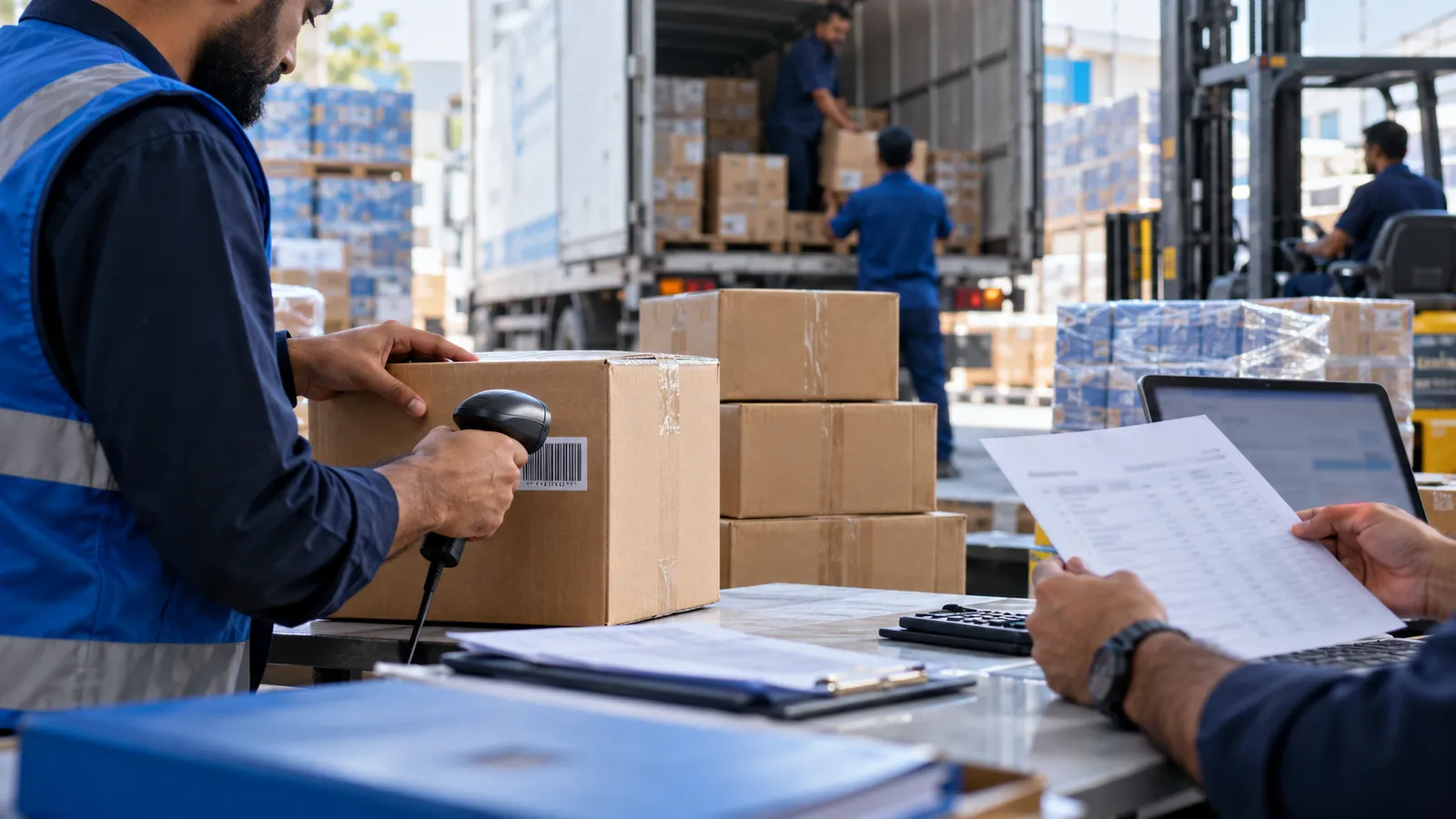
Each route has a list of customers, a day or frequency, and a vehicle. In the morning the loader records filled bottles on the vehicle. The rider's phone app shows the stops, records bottles delivered and empties collected, takes cash or a wallet payment, and works when mobile data drops in a basement or a far block. In the evening the vehicle's filled and empty count is reconciled at the gate. Orders that arrive on WhatsApp are added to the day's route instead of a separate list. For the field-sales side, see our salesman order booking app guide.
Dealers and distributors
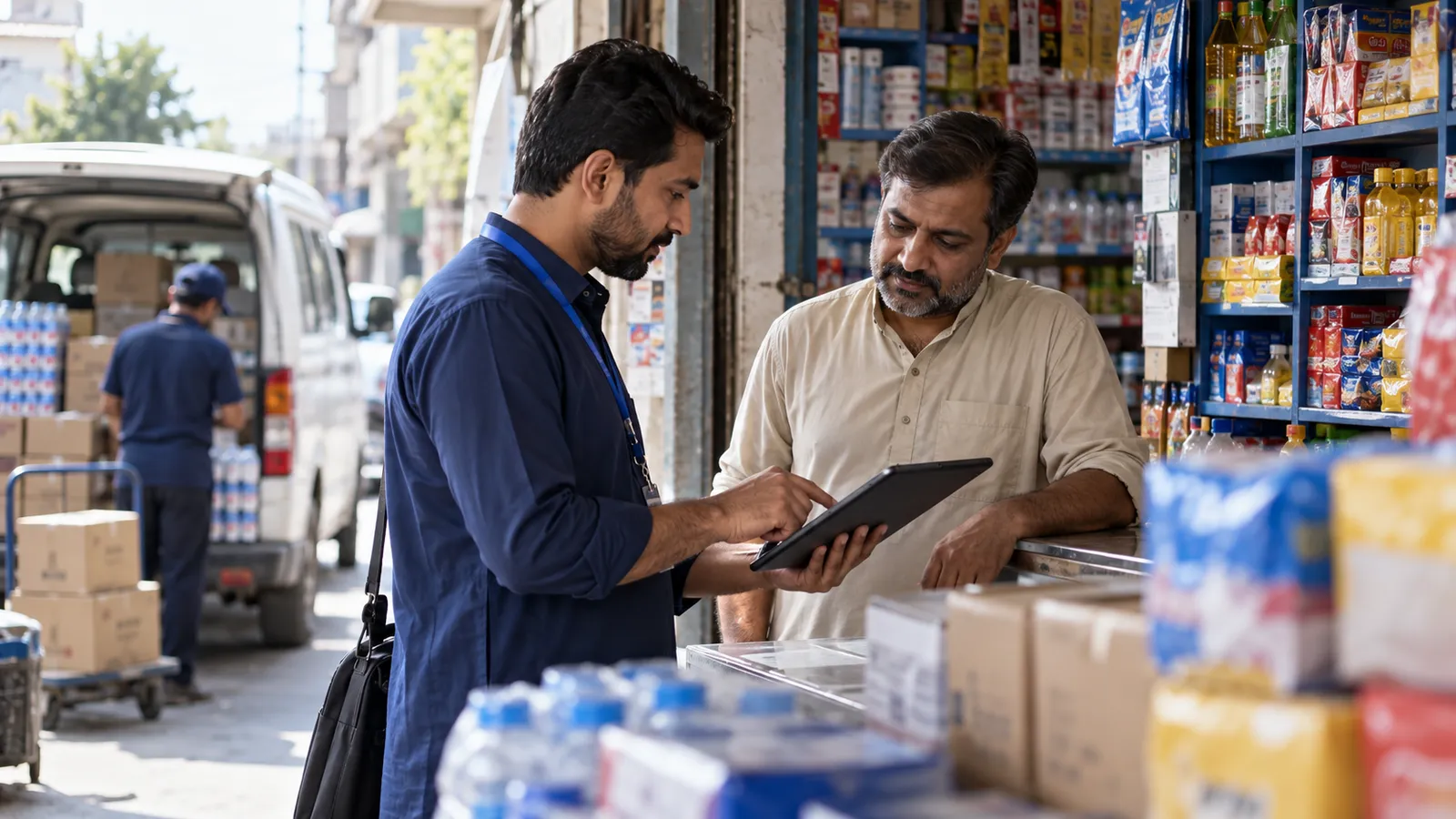
Dealers take filled bottles in bulk, return empties in bulk, and pay on agreed terms. Each dealer has an account for money and an account for bottles, and both appear on one statement. Schemes, rates and credit limits sit with the dealer. Our distribution software guide explains dealer credit and recoveries in more depth.
Count bottles at the plant
Count every filled and empty bottle in the plant and on vehicles on one evening.
Collect balances per route
Ask each rider to list how many bottles each customer holds, from their register.
Agree dealer balances
Confirm bottle and money balances with each dealer and get their agreement in writing or on WhatsApp.
Load opening balances
Enter those balances as the opening position for every customer and dealer.
Run one route on the app
Put one rider on the app for a week, reconcile every evening, then add the other routes.
Summer is the busy season and every route gets heavier, while Ramadan changes delivery times. The software lets you add extra trips to a route for a day without creating a new route, and shows which customers have not ordered for a while so a salesman can call them. Reports worth reading every morning are simple: bottles filled yesterday, bottles out on routes, empties still outside, cash collected per rider, and dealers above their limit. A plant owner who reads those five lines with tea knows more than a long monthly report could tell. Washing and inspecting returned bottles also matters, and rejected bottles should be recorded so the bottle pool shrinks on paper as it does in reality.
A plant we have worked with
Operix built a brand website and a CRM/ERP for Siratim, a bottled water company, covering its customers, orders and deliveries. We build ERP software for Pakistan from Old Clifton, Karachi, on site for Karachi plants and online for other cities, and can add a mobile app for riders. For food plants, see food processing ERP. Book a demo and bring one route register.
Questions people ask
Can riders use the app without internet?
Yes. Deliveries and collections are saved on the phone and sync when the signal returns, so a dead zone does not stop the route.
Can customers order on WhatsApp?
Yes. Orders that arrive on WhatsApp are added to the route for that day, and customers can get a delivery confirmation back.
Can it track dispensers on loan?
Yes. Dispensers and coolers lent to offices or homes are recorded per customer, so they are collected when an account closes.
Do you have an office in Lahore or Islamabad?
No. Operix works from Karachi, with on-site work there. Plants in other cities are served online, with visits when a project needs them.
How much does water plant software cost?
It depends on routes, users, dealers and whether you need a rider app. Operix does not publish prices; you get a written quote after discovery.