The same questions arrive on the business WhatsApp all day. Are you open? Where is my order? Do you deliver to Gulshan? What is the price of the one in the photo? Someone on the counter answers them between serving customers, and after closing time nobody answers at all. Then a vendor offers an AI chatbot that will "handle support". Whether it is worth it depends on which of your messages it would actually be handling.
What a chatbot answers well
- Order status, when the order lives in a system the bot can look into. "Where is my order" becomes a lookup, not a call to the rider.
- Hours, address, delivery areas and payment methods, because the answer never changes.
- Prices and availability that are already on your website. The bot reads what the site shows.
- Standard questions: sizes, return rules, how to pay, how long delivery takes to a given area.
The thread through all four is that the answer already exists somewhere written down or in a system. A bot does not know anything your business has not recorded. If the honest answer to "is it in stock" is that someone has to phone the godown, the bot will either guess or stall.
What it cannot do
A complaint is not a question. "My order came wrong" needs someone who can look at the order, decide what to do and say sorry in a way that sounds meant. A dispute over udhaar needs the ledger open and a person who can be trusted with it. A request for a quote on custom work is an exception every time. A bot that tries to handle these does more harm than silence would: the customer feels fobbed off, and says so to others. The rule is simple: the first sign of a complaint or money goes to a person, with the chat history attached.
The WhatsApp reality in Pakistan and the Gulf
Customers here write in Roman Urdu, in Urdu script, in English and in Arabic, often in one message, with voice notes and photos of the thing they want. They expect a person to be on the other end, because that is what WhatsApp has always been. A bot that can only read tidy English sentences will fail on the first voice note. Ask any vendor to show the bot handling a Roman Urdu message and a photo before you talk about anything else. The difference between the WhatsApp app and the WhatsApp Business API matters too, and our guide to WhatsApp automation for business explains which one a bot needs.
Handover to a person
The handover is the part most demos skip, and it is where chatbots are won or lost. A good handover means the customer types "agent" or asks something the bot cannot answer, and a person picks up the same chat, sees everything the customer already said, and replies without asking them to repeat it. A bad handover means a loop of "I did not understand that" until the customer gives up. That person needs an inbox where every chat, its history and the customer's record sit together, which is what a CRM for teams who sell on WhatsApp provides.
Good fit and poor fit
| Situation | Fit | Why |
|---|---|---|
| Order status, with an order system behind it | Good | The answer is a lookup |
| Hours, address, delivery areas | Good | Fixed answers that never need judgement |
| Prices and stock already shown on the website | Good | The bot repeats what the site says |
| "My order came wrong" | Poor | Needs a decision and an apology from a person |
| Udhaar and payment disputes | Poor | Money and trust; a person with the ledger open |
| Quotes for custom work | Poor | Every answer is an exception |
| A shop with a few chats a day | Poor | A person answers faster than a bot can be set up and kept right |
How to tell whether it helped
Do not take the vendor's figures, and do not invent your own. Before the bot goes live, count for a week: how many messages reach the counter staff, how many are the same few questions, how many arrive after closing, and how many customers wait until morning. Run the same count a month after. If the repeat questions reaching your staff have not fallen, the bot is not helping, whatever its own dashboard says. Also count the customers who asked for a human and the chats that simply stopped; those are the bot's failures, and they are the number to watch.
When a FAQ page and WhatsApp are enough
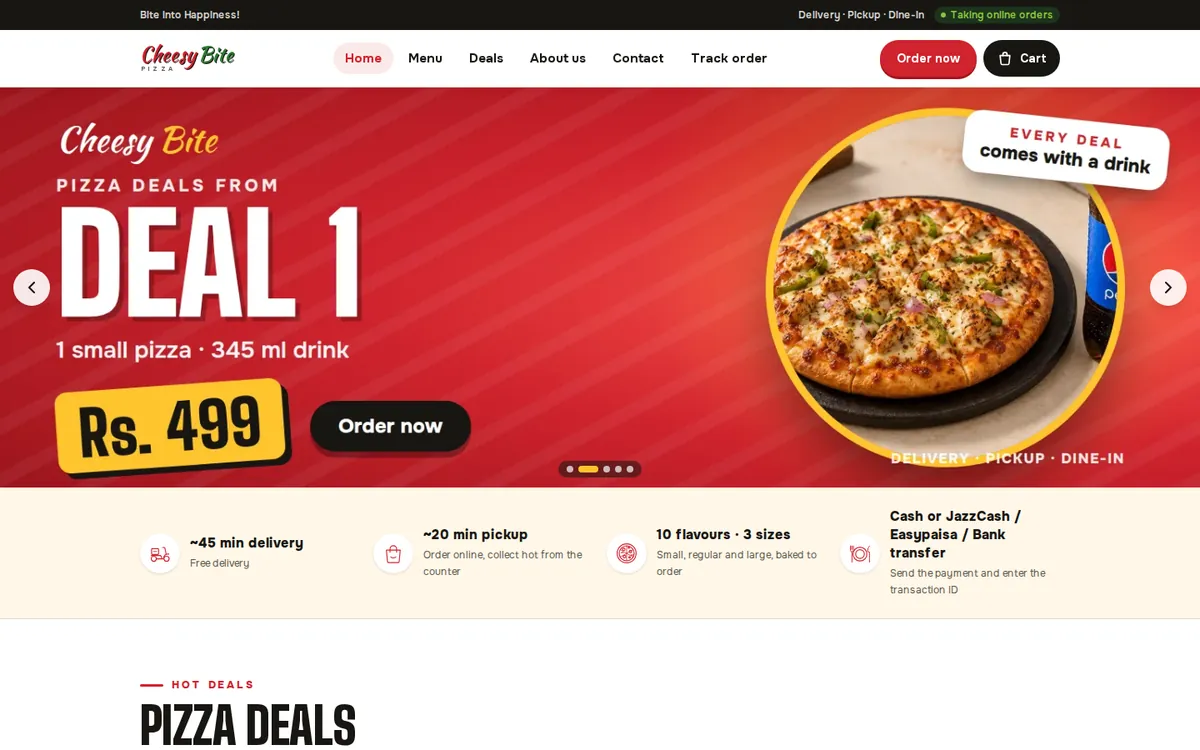
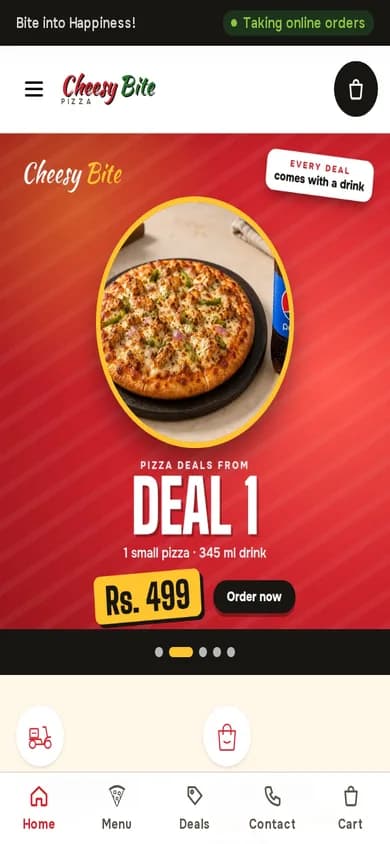
For many businesses the better answer is to remove the question rather than answer it faster. A clear page with hours, areas and prices, a menu or product list customers can order from, and an order tracking link in the confirmation message take away most of the repeat questions. Cheesy Bite, a pizza restaurant, has an online ordering website and a staff dashboard for incoming orders: the question "can I order" becomes an order, with no chat needed. A website built for that plus one person on WhatsApp for the rest is often the whole solution.
If your messages really are high in volume and mostly repeat, a bot in front of a CRM inbox is worth trying, with the handover tested before launch. If you are not sure which side you are on, talk to us with a week of your WhatsApp history in mind, and we will tell you plainly if a bot is not the answer.
Questions people ask
Can an AI chatbot run my WhatsApp support on its own?
No. It can take the repeat questions, such as order status and hours, and it needs a person behind it for complaints, disputes and anything it does not understand. Plan the handover before you plan the bot.
What questions should a chatbot never answer?
Complaints, udhaar and payment disputes, refunds, and quotes for custom work. Each needs judgement and a person the customer can hold to the answer. Send these to a person on the first message, with the chat history.
Does a chatbot work in Urdu, Roman Urdu or Arabic?
Some do, to a degree, and voice notes and photos are harder still. Before buying, ask the vendor to show the bot handling a real Roman Urdu message and a voice note from your own chats.
How do I know whether the chatbot is helping?
Count the repeat questions reaching your staff, and the after-hours messages, before and after. If staff are not answering fewer of the same questions, it is not helping. Watch the number of customers who ask for a human or abandon the chat.
Is a FAQ page enough instead of a chatbot?
Often, yes. A clear page with hours, delivery areas and prices, an ordering website and an order tracking link remove most repeat questions. A person on WhatsApp handles the rest. A bot is for volume on top of that.