Dammam, Khobar and Jubail make up the Kingdom's industrial east: ports, plants, contractors and the suppliers that serve them. A typical sales team here does not chase walk-in customers. It receives requests for quotation from large buyers, prices them against its own suppliers, and waits for a purchase order. Packaged CRMs are built for a different kind of funnel, which is why many Eastern Province companies end up asking for something bespoke.
The sales path a Dammam CRM should follow
- An RFQ arrives by email or a buyer portal, often as a PDF with many lines.
- The team asks its own suppliers for prices and lead times.
- A quotation goes out in SAR with 15% VAT, sometimes in several revisions.
- The buyer issues a purchase order — or the deal is lost, and the reason is recorded.
- The PO is handed to operations and accounts for delivery and invoicing.
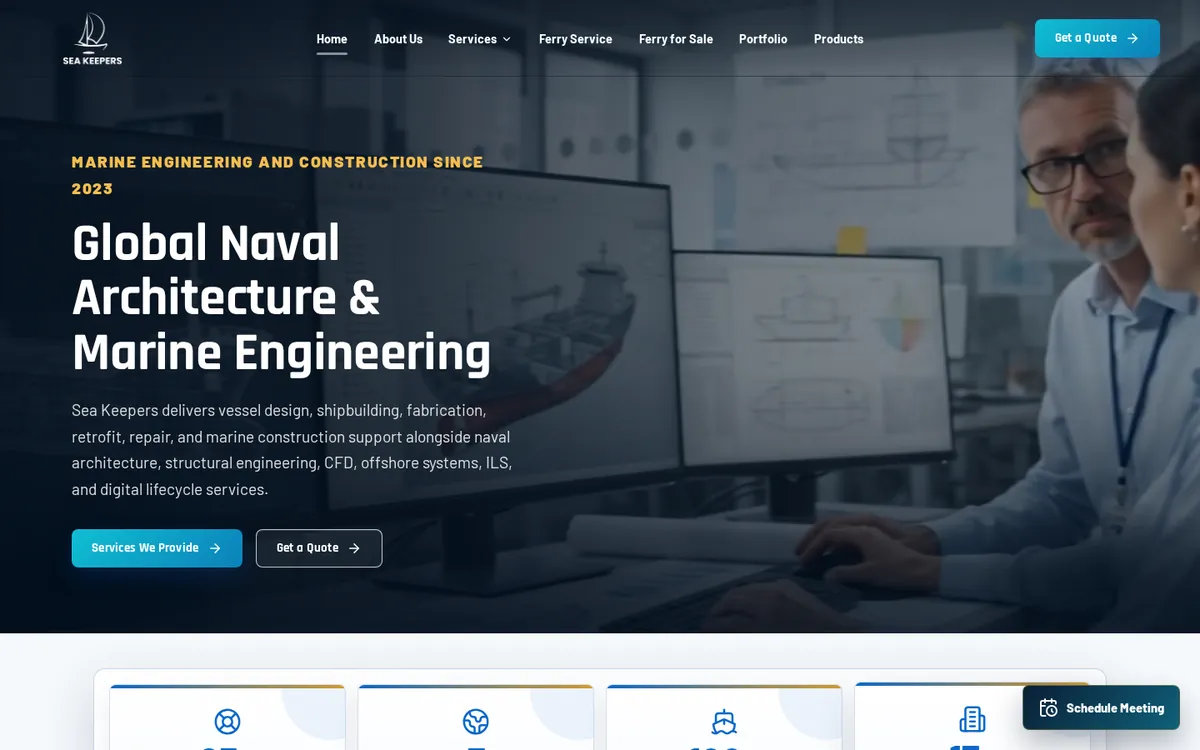
This is the path we built for Sea Keepers, a marine supplier in Karachi whose enquiries arrive by email and end as purchase orders and delivery documents. The buyers differ; the shape of the work is the same.
What to build, and what to skip
| Build | Why | Skip for now |
|---|---|---|
| RFQ register | Every request with due date, buyer and lines | Marketing automation |
| Supplier price requests | Compare your suppliers' prices before you quote | Social media inbox |
| Versioned quotations | Know which revision the buyer accepted | Lead scoring |
| Vendor registration per buyer | A quote to a buyer you are not registered with cannot be awarded | Complex forecasting |
| Won/lost reasons | Learn why prices lose | Mobile app, until the web version is used daily |
Implementation: who does what
Whether you buy a package or have one built, a CRM implementation in Saudi Arabia goes better when the buyer owns three things: a clean customer and supplier list, one person who decides what the screens should do, and a date when the old spreadsheet stops being used. The developer owns the build, the import, training and support. Agree in writing who owns the code and the data.
Where Operix stands
Operix Systems builds CRM software for Saudi Arabia from Karachi, two hours ahead of Dammam. We have no office in the Kingdom and have not yet published a Saudi project; the work you can inspect is in Pakistan. If you sell into Riyadh as well, our Riyadh CRM guide covers tenders and approvals. Book a demo and bring one real RFQ — we will show you how it would move through the system.
Questions people ask
What is a bespoke CRM?
A CRM designed around your own sales steps — RFQs, supplier prices, quotations and purchase orders — instead of a generic sales funnel you have to adapt to.
Can the CRM read RFQs that arrive as PDF?
Yes. RFQ emails and PDFs can be read automatically into draft lines that your team checks, which is how the Sea Keepers system handles enquiries.
Do you work with companies in Khobar and Jubail?
Yes, remotely, the same way as Dammam: video-call discovery, weekly releases and WhatsApp support.
Can it connect to our ERP or accounting?
Yes. A won purchase order can create a sales order or invoice in your ERP through an API or a scheduled import.
How much does bespoke CRM software cost?
It depends on the modules and integrations. Operix does not publish prices; the figure comes in a written quote after discovery.