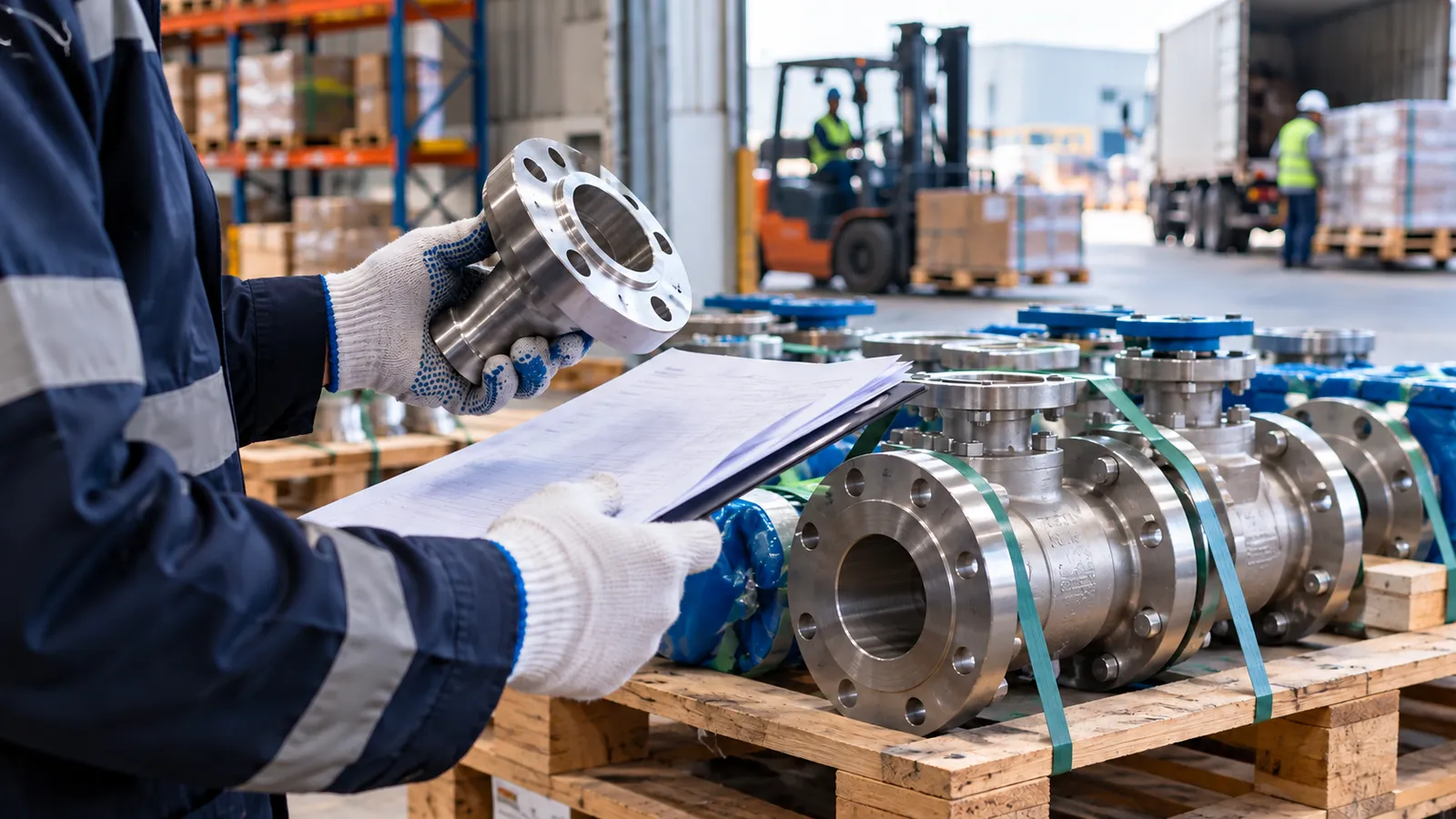
A supplier of valves and fittings in an industrial area of Dammam, a maintenance contractor with crews at Jubail Industrial City, a transport firm moving loads between King Abdulaziz Port and the plants up the coast: the Eastern Province's businesses mostly sell to other businesses, on purchase orders, against vendor registrations, with deliveries to a gate and invoices that must match the PO line by line. When the job costs live in one spreadsheet, the POs in email and the invoices in an accounting package, nobody can say whether last quarter's contract made money.
What industrial buyers ask of their suppliers
- Vendor registration before any order can be placed, renewed on the buyer's schedule.
- A quotation against their RFQ, then a purchase order with their own terms and item codes.
- Delivery to a site or gate with a delivery note the receiver signs.
- An invoice that quotes the PO number and matches it, with 15% VAT and the QR code.
- Documents in Arabic and English, and sometimes a buyer portal where they must be uploaded.
An ERP built for a shop does not know any of this. One built for this trade starts from the PO.
Three Eastern Province businesses, three starting points
| Business | Core need | First report to build |
|---|---|---|
| Trading supplier | Stock by item code, buyer POs matched to deliveries and invoices | Open POs: delivered, invoiced, paid |
| Contractor | Project costing: purchases, labour, equipment and subcontractors per job | Cost to date against contract value per project |
| Logistics firm | Jobs per vehicle and route, fuel and driver costs, customer billing per trip | Margin per customer per month |
| All three | Vendor registrations per buyer, VAT and FATOORA invoices, Arabic and English documents | VAT summary ready for the return |
Project costing for contractors
A contractor's job at Jubail or Ras Tanura has a contract value, a budget and a long list of costs: materials bought for it, crews on site, equipment hired, subcontractors, transport, accommodation. The ERP opens each job as a project, and every purchase order, timesheet and supplier invoice is tagged to one. The owner sees cost to date, invoiced to date and what remains, per project, without waiting for the month end. Variations and extra work are recorded as their own lines so the final account can be defended. Our guide to ERP modules explained shows how projects sit beside purchasing and accounts.
Purchase orders in both directions
You receive POs from buyers and issue POs to your own suppliers, and the two must be linked. A buyer's PO for fittings becomes your sales order; your PO to the manufacturer is tied to it; the goods arrive, are delivered to the buyer's gate with a delivery note, and the invoice is raised against the buyer's PO number. If the buyer short-receives, the ERP shows what is outstanding on both sides, and the supplier's invoice is matched to what actually arrived before it is paid.
VAT, FATOORA and documents in two languages
Every invoice carries 15% VAT and is issued electronically with a QR code under ZATCA's FATOORA rules; businesses are brought into integration with ZATCA's platform in waves, and which wave covers you is a question to confirm with your tax adviser. Quotations, delivery notes and invoices print in Arabic, laid out right to left, with English beside it, because the buyer's engineer and the buyer's accounts department often read different languages. The ERP keeps one layout for each document and you approve it before it is built. Our ERP guide for Saudi Arabia covers the rules in more detail.
List the live projects
Give each contract a code, a client, a contract value and a start date, including the ones half finished.
Agree the cost heads
Materials, labour, equipment hire, subcontractors, transport and site expenses, the same for every project.
Tag purchases to projects
Every purchase order and supplier invoice names a project and a cost head before it can be approved.
Record site labour and hire
Timesheets and hire charges post weekly to the project, so cost to date is never a month old.
Invoice against progress
Raise progress invoices against the buyer's PO, with 15% VAT and the QR code, and record retentions where they apply.
Review every Thursday
Compare cost to date with invoiced to date per project before the week closes.
Where Operix stands
Operix Systems builds ERP software for Saudi Arabia from Karachi, two hours ahead of Dammam, and delivers it remotely: discovery on a video call, every screen approved before it is built, weekly releases on your own projects and suppliers, training on the live system, and support on one WhatsApp number. We have no office in the Eastern Province and no Saudi client yet. The nearest work you can inspect is Sea Keepers, a marine supplier's ERP that runs from the first enquiry email to the final delivery documents, and our logistics page covers transport firms. If the sales side is your problem first, our bespoke CRM guide for Dammam follows the RFQ to the PO. Book a demo with one project's paperwork.
Questions people ask
Do you have an office in Dammam or Khobar?
No. Operix works from Karachi and serves the Eastern Province remotely, with video-call discovery, weekly releases on your own data and support on one WhatsApp number.
Can the ERP serve a contractor working at Jubail?
Yes. Jobs at Jubail, Ras Tanura or anywhere else are projects in the ERP, each with its own costs, POs and progress invoices. Site staff can enter timesheets and receipts from a phone.
Can it track our vendor registrations with each buyer?
Yes. Each buyer record holds the registration status, number and renewal date, and the ERP warns when one is due so a quotation is not blocked.
Can our existing CRM or accounting package connect?
Yes. A won PO can arrive from the CRM, and summaries can post to the accounting package through an API or a scheduled import. The split is decided at discovery.
Can invoices print in Arabic with the QR code?
Yes. Invoices, quotations and delivery notes print right to left in Arabic with English beside it, with 15% VAT and the QR code an e-invoice carries.