A freight forwarder does not sell from a price list. Every job is a quote: this cargo, from this port to that door, under these terms, this week. The website's real job is to produce quote requests that the office can price without a second email asking for the weight. Most logistics sites fail at this in the same way: one services page that lists everything, and a contact form with a name, an email and a message box.
One page per service, written for the shipper's questions
A shipper looking for sea freight to Jebel Ali and one looking to ship a car from Dubai to Karachi are asking different questions, and a page that serves both answers neither. Each service needs its own page: sea freight (full container and groupage), air freight, land transport, customs clearance, warehousing, project cargo, and car shipping if you offer it. Each page answers what a shipper asks before requesting a quote:
- Which routes and ports you actually work, and whether you handle the destination side through your own agents.
- What the quote includes: freight only, or door to door with clearance and delivery.
- Which documents the shipper must provide and which you prepare.
- Transit time in general terms, and what changes it: customs inspection, port congestion, consolidation schedules.
- What you cannot carry, so that a dangerous goods or oversized enquiry starts with a call rather than a form.
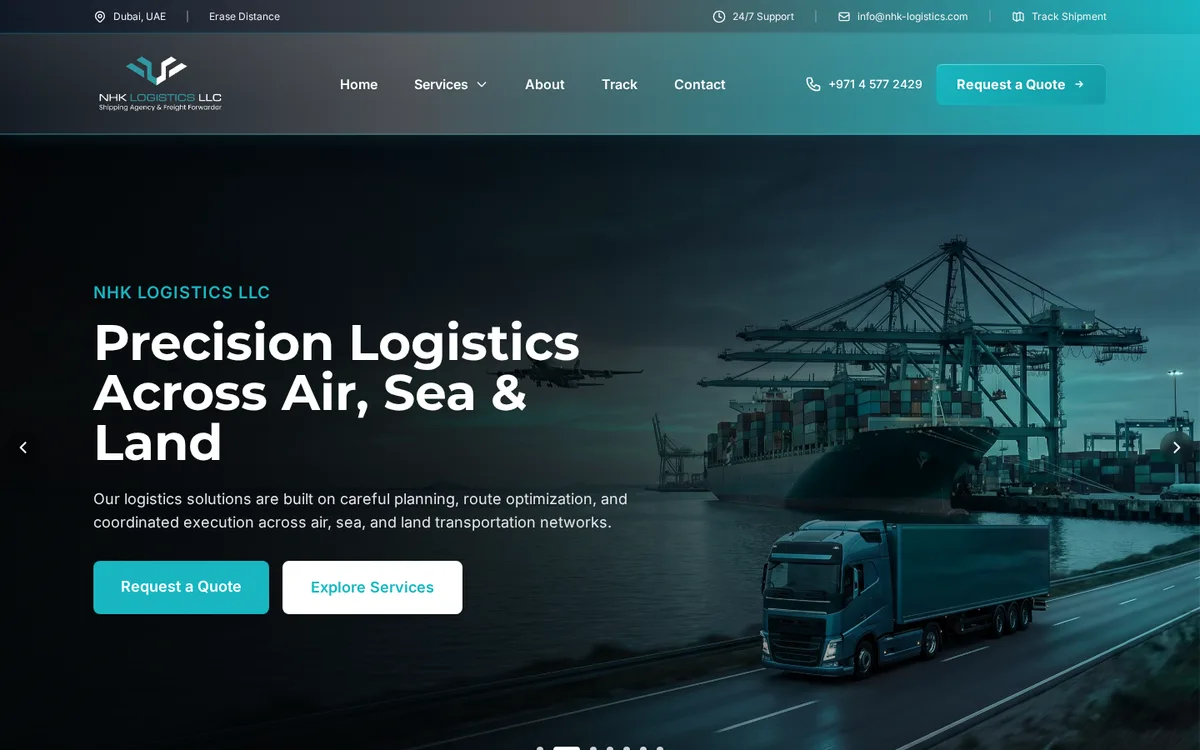
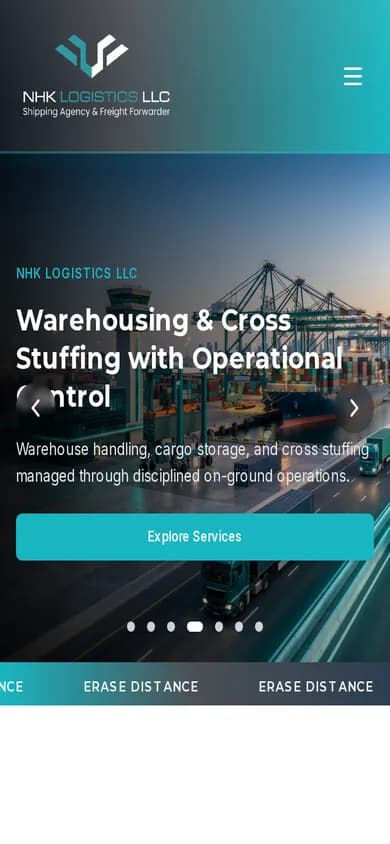
The NHK Logistics site is built this way: a website for a Dubai freight forwarder with a page for every service, shipment tracking and an instant quote form that includes car shipping.
A quote form that collects what the office needs
| Field | Why the office needs it |
|---|---|
| Origin and destination | Port or city at each end, and whether pickup and delivery are required |
| Mode | Sea, air or land, or "advise me", so the right desk receives it |
| Cargo description | What it is, so prohibited, hazardous or perishable goods are caught early |
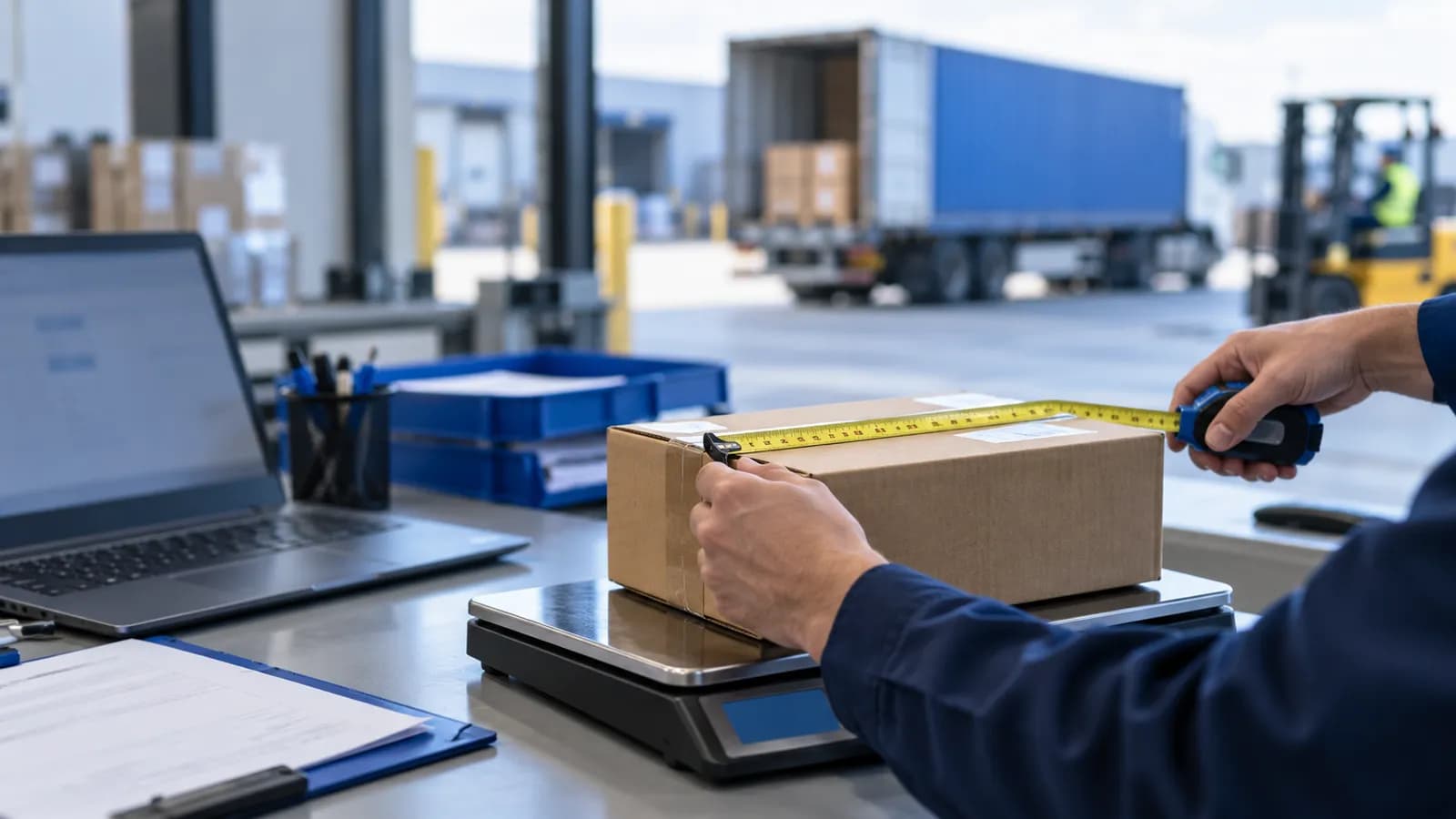
| Weight and dimensions | Chargeable weight for air; container size or cubic metres for sea |
| Packaging | Pallets, cartons, loose or crated; it changes handling and consolidation |
| Incoterm | Who pays for which leg; EXW, FOB, CIF or DAP changes the quote entirely |
| Ready date | When the cargo can be collected, which decides the sailing or flight |
| Contact and company | Phone with country code, email, company name, and how the shipper prefers to be reached |
A car shipping form is different: make, model and year, condition (running or not), chassis number, whether pickup from an address is needed, and how many vehicles. If the form asks for these, the first reply can be a quote. If it does not, the first reply is a list of questions, and the shipper who sent the same request to three forwarders has already heard from one of them.
Tracking that stops the "where is my shipment" calls
A tracking page is the second reason a shipper visits. At its simplest it is a field for the booking or container number that shows the status your operations team records: booked, collected, departed, arrived, cleared, delivered. It does not need live vessel positions on day one. It needs to be updated, which means the status your operations staff change in their system must be the status the page shows. If tracking and operations are two separate records, the page goes stale within a month and the calls return.
WhatsApp for the cargo that cannot wait
Urgent air freight, a stuck container, a vehicle at the port: these do not go through a form. Put a WhatsApp button on every service page with a pre-filled line that names the service, and route it to the desk that handles it rather than a general number. Say the hours the number is answered and the time zone. A WhatsApp line answered in office hours and a form for everything else is a better promise than a round-the-clock claim that is not kept.
What the office does with the request
The form is only the start. A quote request should land in one place that the sales desk works from, with the shipper's details, the route and the cargo already in fields rather than pasted from an email. The desk prices it, sends the quote and sets a reminder to follow up; if the quote is accepted, the booking is created from the same record rather than retyped. That is the sales end of the systems described in our guide to ERP for logistics companies, and the point where a CRM earns its place: it is how the forwarder learns which routes bring quotes that convert and which bring enquiries that never book.
Before the site goes live
Submit every form yourself and check where the request arrives and how it looks. Test the tracking page with a real number. Open each service page on a phone on a slow connection, because the shipper standing in a yard is on one. The remaining launch checks are in our website launch checklist.
Our web development service builds logistics sites with a page per service, a quote form designed with your operations desk and a tracking page connected to your records; the processes behind it are on our logistics industry page. Book a call with your current site and a sample quote request, and we will show you what the form should have asked.
Questions people ask
What pages does a logistics website need?
One page per service (sea, air, land, customs, warehousing, project cargo and car shipping where offered), a quote request page, a tracking page, an about page with licences and memberships, and a contact page with office hours. A single services page is the most common weakness.
What should a freight quote form ask?
Origin and destination, mode, a cargo description, weight and dimensions, packaging, incoterm, ready date and contact details with a country code. For vehicles: make, model, condition, chassis number and pickup. With these, the first reply can be a quote instead of a list of questions.
Do we need live tracking on the website?
Not at first. A page that shows the status your operations team records against a booking number removes most "where is my shipment" calls. Live vessel or flight data can be added later if customers ask for it.
Should quotes go to WhatsApp or the form?
Both, with a rule. Urgent cargo and quick questions go to a WhatsApp line answered in office hours; everything else goes through the form so the request arrives with the details filled in. State the hours on the page so the promise is one you keep.
Can the website quote automatically?
For a few fixed lanes with set rates, such as car shipping on a regular route, an instant estimate is possible. For general freight the rates change too often, so the form collects the details and a person prices it. Promise a reply time rather than an instant figure.