A restaurant group in Jeddah wants customers to reorder in two taps. A clinic in Riyadh wants patients to book without phoning. A wholesaler in Dammam wants its salesmen to book orders from the shop floor. Each of them is about to search for mobile app development in Saudi Arabia and receive quotes that are hard to compare. This guide covers the decisions that are particular to the Kingdom, so you can brief any developer properly.
iPhone and Android, together
Customers in the Kingdom carry both iPhones and Android phones, and a business cannot choose one and ignore the other. Launching on a single platform means telling part of your audience to wait. For most business apps the practical route is one shared codebase that produces both versions, so a new feature reaches both stores on the same day. Two separate native apps make sense for a narrower set of products, and native versus cross-platform apps explains which. Either way, publish under your own company's App Store and Google Play accounts so the listing belongs to you.
Arabic-first screens
An Arabic mobile app is not an English app with the text swapped. The whole screen reads from the right: the back arrow points the other way, tabs are ordered from the right, lists align right, and a swipe that meant "next" now means "previous". Some things stay put, such as the digits of a phone number, a map and playback controls.
Arabic words can be shorter or longer than their English equivalents, so buttons and labels need room to grow, and the typeface must stay readable at small sizes. This is design work, not a setting to switch on at the end. On a project where UI/UX design starts in Arabic, the English version follows easily. The reverse order is how apps end up with clipped labels and menus on the wrong side.
Sign-in by mobile number
People in the Kingdom are used to opening an app with a mobile number: type the number, receive a one-time code by SMS, enter it, and the account is open. There is no email to confirm and no password to forget. For the business it also means every account is tied to a number that can be reached.
It needs planning. The codes are sent through an SMS provider that your company signs up with, and that account takes time to arrange. The app has to handle the awkward cases: a code that arrives late, a customer who changes number, someone requesting codes again and again. And a mobile number is personal data. The Personal Data Protection Law (PDPL) governs how it is collected and used, so state clearly what you do with it and ask your lawyer what applies to your app.
Payments: mada, Apple Pay and STC Pay
An app that sells needs the payment methods Saudi buyers reach for: mada, Apple Pay, STC Pay and credit cards. All of them come through a payment gateway that your business contracts with. The developer connects the app to that gateway and never holds your money. Start the gateway application early, because the app cannot be tested end to end without it. If the app issues invoices, they have to agree with your e-invoicing system, with VAT at 15% shown the same way in both.
| Decision | Usual choice in the Kingdom | What to prepare |
|---|---|---|
| Platforms | iPhone and Android from one codebase | Company developer accounts on both stores |
| Language | Arabic first, English second | Arabic copy and a named reviewer |
| Sign-in | Mobile number with a one-time code | An account with an SMS provider |
| Payments | mada, Apple Pay, STC Pay and cards | A payment gateway application |
| Back office | Admin panel linked to stock, orders or bookings | The system the app must read from |
| Personal data | Collect the minimum, hosting agreed per project | Legal advice on the PDPL if the data is sensitive |
Working with a remote team
Having an app built by a team outside the Kingdom works when the project is visible. Ask for a build you can install on your own phone at a fixed point every week, a named person who answers messages, and designs approved before code is written.
The calendar deserves a moment of thought. The Saudi working week runs Sunday to Thursday, while a team abroad may keep a different one. Agree in writing which days overlap, when the weekly review call happens, and who can be reached on a Sunday. A two-hour time difference, as with Karachi, leaves most of the day shared.
Name the one job
Write the single task the app must do well on launch day: order, book or collect.
Cut the first version
List what can wait; our guide to the features a first version needs helps you choose.
Start the accounts
Open the store developer accounts, and apply to the payment gateway and the SMS provider.
Prepare the Arabic content
Product names, descriptions and messages in Arabic, checked by a native speaker.
Fix the meeting rhythm
One review call a week, on a day both teams work.
Where Operix stands
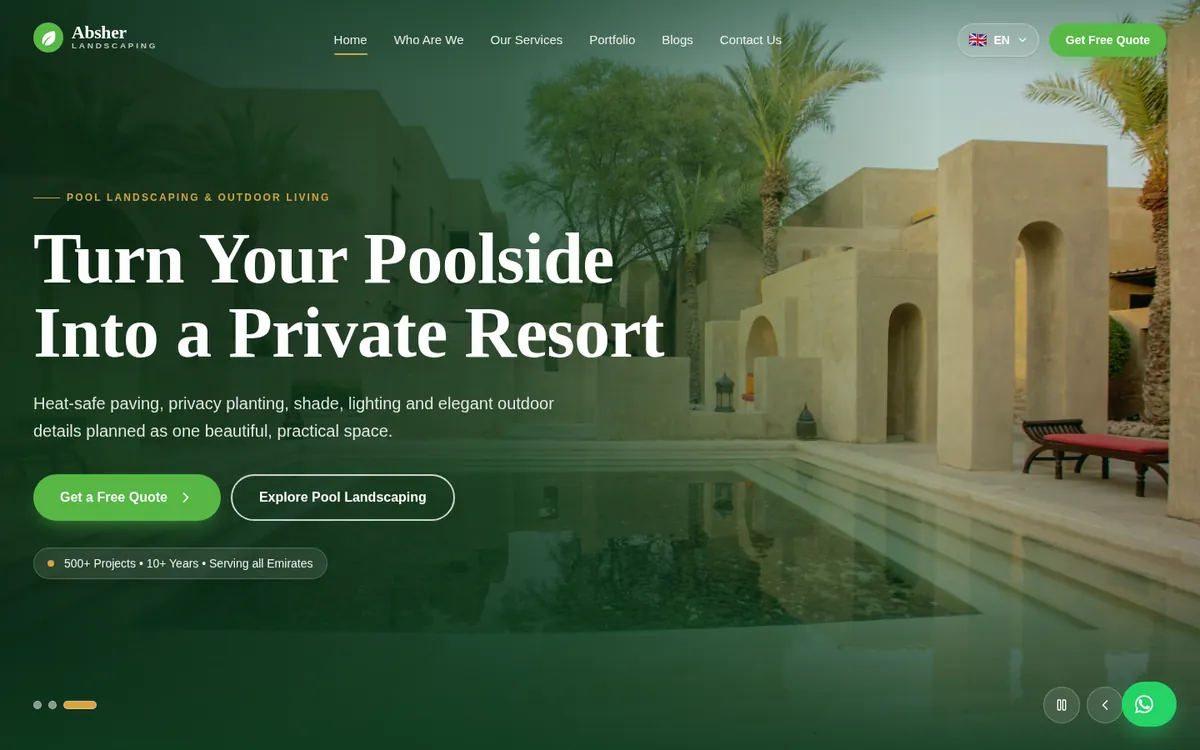
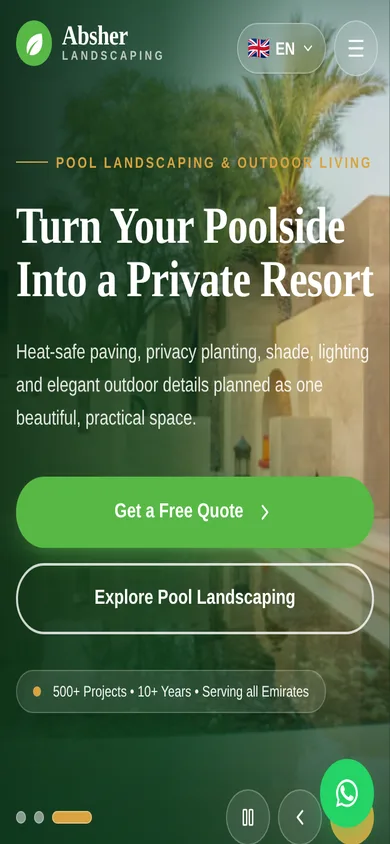
Operix Systems builds mobile apps for Saudi businesses from Karachi, two hours ahead of the Kingdom. We have no office in Saudi Arabia and no published Saudi project yet. Our Gulf work so far is for the UAE: Absher Landscaping is a website, not an app, built in English, Arabic, Chinese and Russian, and it is where our right-to-left layouts can be checked today.
The project runs online from the first call to store submission, with every screen shown before it is built. If you need a team that can visit your office each week, look locally. If a remote team with a small time gap suits you, read how we work with clients in Saudi Arabia and book a demo.
Questions people ask
Should a Saudi app launch on iPhone or Android first?
Both together where possible. Customers in the Kingdom use both, and one shared codebase lets the two versions launch on the same day.
Does the app have to be in Arabic?
For a local audience, yes, with English as the second language. Design the Arabic screens first, because a right-to-left layout is difficult to add to a finished English app.
How do customers sign in?
A mobile number and a one-time code sent by SMS is the usual way. Your company needs an account with an SMS provider, and the number is personal data covered by the PDPL.
Which payment methods should the app accept?
mada, Apple Pay, STC Pay and cards, through a payment gateway your business contracts with. Apply early, since testing depends on it.
Can a team in Karachi build an app for a Saudi company?
Yes. Operix works remotely, two hours ahead, with weekly builds on your phone and review calls agreed around the Sunday-to-Thursday week. We have no office in the Kingdom and no published Saudi app yet.