
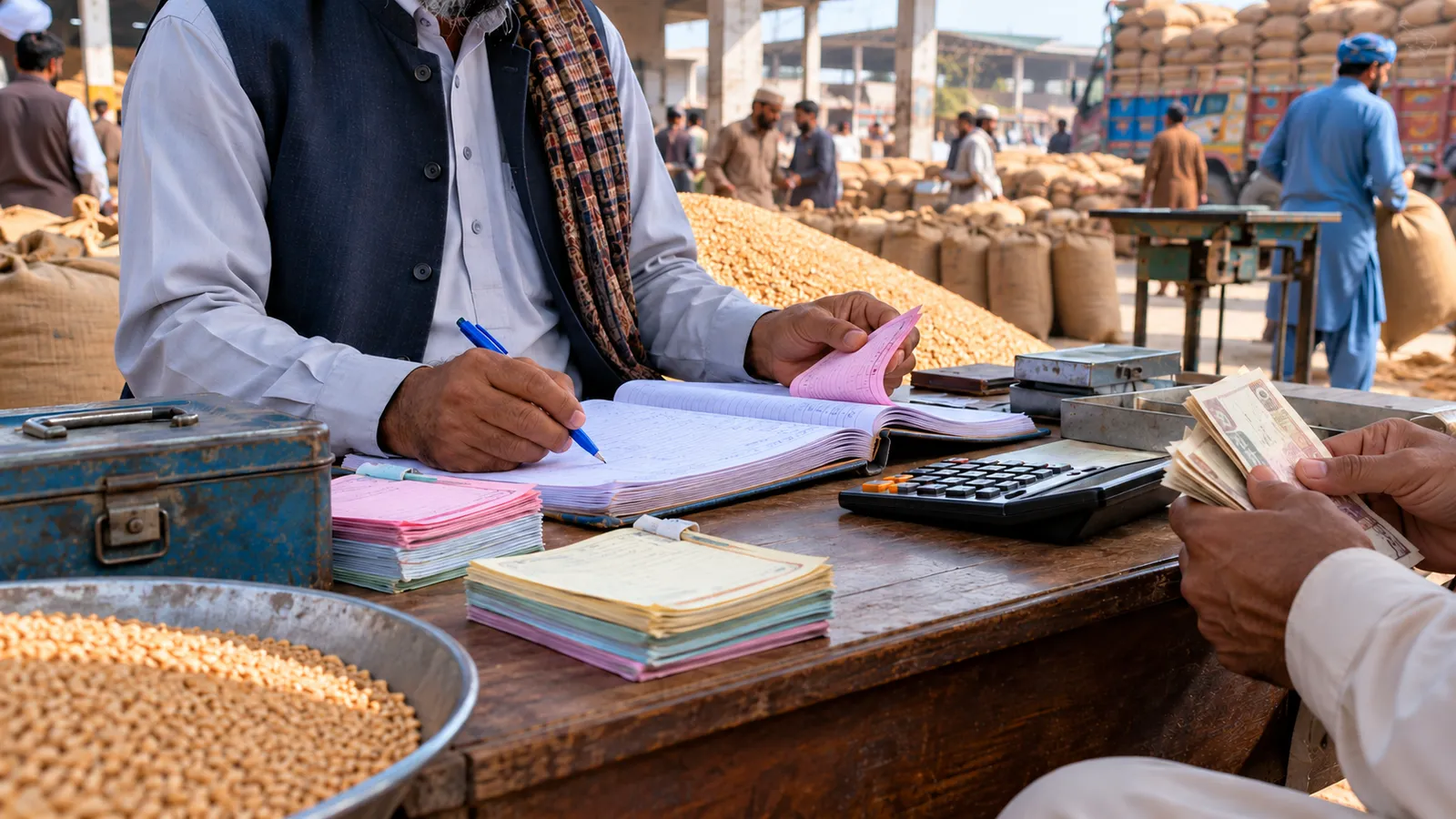
In a grain, fruit, vegetable or sugarcane mandi, the arhti stands in the middle. Farmers bring their produce to his shop, he sells it by auction or agreement to buyers, takes his commission and deductions, and pays the farmer. Many farmers took an advance from him months earlier for seed, fertiliser or a family need. Many buyers take goods on credit. The munshi writes it all in the bahi, and by evening the parchis have to agree with the cash.
One sale, one parchi
The base record is the parchi: one lot from one farmer sold to one buyer, with the commodity, the bags, crates or weight, and the rate. Entered on a tablet or phone at the shop, it does two things at once: it adds to the farmer's account and to the buyer's. The printed parchi or a WhatsApp copy goes to both.
Commission and deductions
Every mandi has its own customs: the arhti's commission, labour, weighing, market fee and other charges, some paid by the farmer and some by the buyer. These should be set once per commodity and applied to every parchi. The farmer's slip then shows gross sale, each deduction and the net amount, which is what he trusts.
| Mandi | How produce is counted | What the software must handle |
|---|---|---|
| Grain | Bags and weight | Moisture or quality cuts, weighing charges, bulk buyers |
| Fruit and vegetables | Crates, baskets, daily auction | Many small lots a day, fast entry, rates changing by the hour |
| Sugarcane | Weight per trolley | Weighbridge slips, mill or buyer payments arriving later |
Farmer advances
Advances are what tie a farmer to an arhti. The system records each advance with its date and purpose, and when the farmer's crop is sold, the arhti decides how much to recover from the sale. The farmer's account shows advances, sales, deductions, recoveries and the balance either way. Some arhtis also keep a running account for farmers who sell through them every season, so the balance carries from one crop to the next. Whatever terms you agree with farmers are your business and theirs; the software records them clearly so both sides can see the same figures. If you also sell seed, fertiliser and pesticide to farmers, read agri input dealer software.
Buyer credit and recoveries
Buyers, whether retailers, traders, mills or exporters, often take produce today and pay over days or weeks. Each buyer needs a ledger and a credit limit, with a warning when a new parchi would cross it. A daily recovery list shows who is overdue. Payments by cash, cheque, bank transfer, JazzCash or EasyPaisa are posted against the buyer, and returned cheques go back onto the ledger.
Check all parchis are in
Make sure every sale of the day has been entered, including those written on paper in a rush.
Prepare farmer slips
Print or send each farmer's slip with gross sale, deductions, any advance recovery and the net amount.
Pay farmers
Record each payment to a farmer, in cash or by transfer.
Post buyer receipts
Enter what each buyer paid today and note promises for tomorrow.
Match the cash
Compare cash in hand with the day's cash receipts and payments, and record any difference.
Speed in the mandi
A fruit and vegetable mandi moves fast in the early hours. The entry screen must take a parchi in a few taps: farmer, buyer, commodity, quantity, rate. Common farmers and buyers should appear as you type, and the screen should work in Urdu. If two munshis enter at once, each parchi should carry the name of the person who entered it. Internet in mandis is often weak, so entries are saved on the device and synced later.
Taxes and market fees on mandi trade depend on the province and the market committee. What applies to your shop is for you to confirm with your tax adviser and the market committee.
Storage and transport
Arhtis who hold produce in cold stores or send it to other cities can link to cold storage software and goods transport software. The ledger side, with parties, credit and recoveries, follows the same discipline as wholesale software.
How Operix builds it
Operix Systems builds ERP software in Pakistan from Old Clifton, Karachi. We start from your bahi and parchi book, design every screen with you, release weekly on your own data and train your munshi in Urdu. Arhtis in Punjab and Sindh are served online, with visits when the project needs them. The distribution industry page shows how we handle credit trade. To discuss your shop, contact us.
Questions people ask
Can the software work in Urdu?
Yes. Entry screens, parchis and farmer slips can be in Urdu. Owners who prefer English reports can have them from the same data.
Can commission differ by commodity?
Yes. Commission and each deduction are set per commodity, and per party if needed. Every parchi applies them automatically.
Does it handle farmer advances?
Yes. Advances are recorded on the farmer's account and can be recovered from crop sales. The farmer's slip shows the recovery on the day it is made.
Do you have an office in Multan or Faisalabad?
No. Operix works from Old Clifton, Karachi. Arhtis outside Karachi are served online, with visits when the project needs them.