
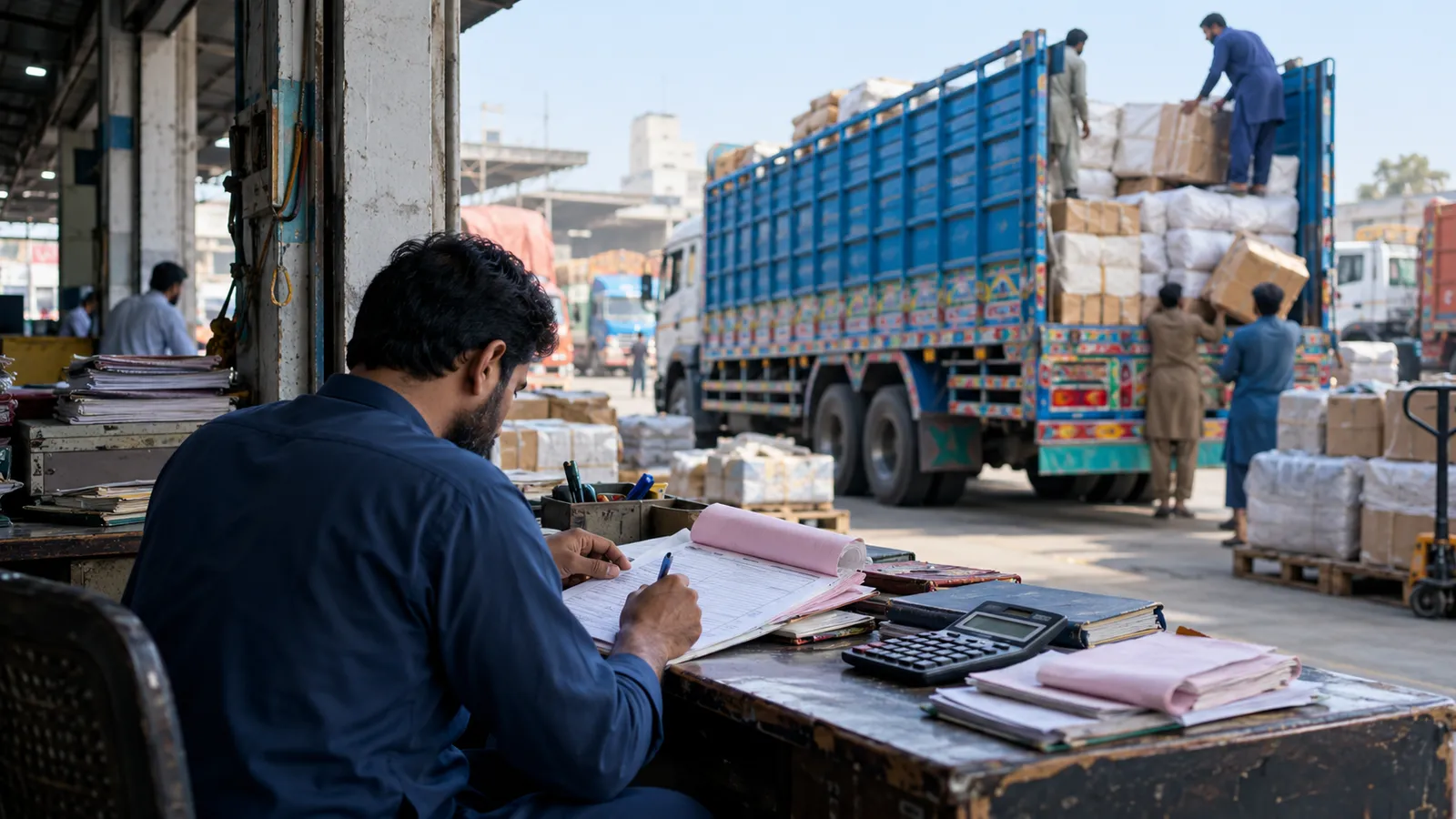
A goods transport company on a busy freight road in Karachi, or a booking office in Lahore's or Faisalabad's goods markets, runs on bilties. Parties book consignments for upcountry, a munshi writes the bilty, trucks are loaded at night, and drivers take advances for diesel and the road. Weeks later someone tries to work out whether that trip made money. Without a system, the answer is a feeling.
Bilty, trip and truck: the three records
Everything in a transport business fits three records. The bilty is one consignment: sender, receiver, goods, packages, weight, freight and whether it is paid or to pay. The trip is one truck's journey, carrying many bilties. The truck is the vehicle, own or hired, with its documents, maintenance and history. Get these three right and the reports follow.
| Record | Holds | Answers |
|---|---|---|
| Bilty | Sender, receiver, goods, packages, weight, freight, paid or to pay | Where is my consignment, and what is owed on it? |
| Trip | Truck, driver, route, bilties loaded, diesel, tolls, advances | Did this trip make money? |
| Truck | Owner, documents, maintenance, trips over time | Which trucks earn and which cost? |
Diesel, advances and driver hisaab
Diesel is the largest running cost and the easiest to leak. Each fill should be recorded against the trip, with the pump slip. Driver advances for the road, tolls, loading and unloading charges go to the same trip. When the driver returns, his hisaab is settled: advance given, expenses shown, balance returned or paid. For hired trucks, the trip records the freight agreed with the truck owner and what was paid. Maintenance, tyres and repairs go against the truck rather than the trip, so a costly month in the workshop does not make one trip look like a loss.
Freight paid and freight to pay
Some parties pay at booking, some on delivery, and regular parties on credit. Each bilty marks which. Freight to pay is collected by your office at the destination, and the system shows what each destination office should have collected. Credit parties get ledgers and statements, sent on WhatsApp.
Confirm deliveries
Mark each bilty on the trip delivered, with any shortage or damage noted.
Collect the slips
Enter diesel slips, toll receipts and loading charges the driver brings back.
Settle the driver
Set the advance against expenses and record the balance returned or paid.
Check freight recovery
See which to-pay bilties were collected at the destination and which are pending.
Close the trip
Close it so its freight, costs and profit flow into the truck and monthly reports.
Warehouses and party stock
Many transporters also keep goods in a warehouse before or after the journey. That stock belongs to the parties, not to you, so it is held per party: goods received with a receipt, goods sent out with a gate pass, storage charges by period. A party can be sent its stock statement at any time. If storage is your main business and the goods need cold, read cold storage software instead.
Tracking and phones
Trackers on trucks are common now, and the trip record can carry the tracker link or reading. Drivers with phones can send photos of delivered bilties. Neither is required on day one: a clean bilty and trip register already tells you more than most transporters know today. Once trips are recorded properly, the monthly report per truck shows freight earned, diesel, repairs and driver costs side by side. That is usually the first time an owner sees clearly which trucks are worth keeping on a route and which should be sold or moved to shorter work.
If you carry parcels for online stores with cash on delivery, the work is different: riders, runsheets and COD settlement. See courier management software.
Related guides
Our broader ERP for logistics companies guide covers fleets, maintenance and accounts. Wholesalers who send goods by your trucks track the bilty from their side, as described in wholesale software. Branch offices in several cities each need their own cash, recoveries and staff logins, so plan them as branches from the start rather than adding them later.
How Operix builds it
Operix Systems builds ERP software for Pakistan from Old Clifton, Karachi. We start with your bilty book and one month of trips, design every screen with you, release weekly on your own data and train munshis in Urdu or English. The logistics industry page shows what we cover. To discuss your trucks and routes, book an ERP demo.
Questions people ask
Can the bilty be printed in Urdu?
Yes. The bilty and other printouts can be designed in Urdu, English or both, to match the format your parties know.
Does it work for hired trucks as well as our own?
Yes. Each trip records whether the truck is own or hired. For hired trucks, the agreed freight to the owner and payments are tracked per trip.
Can destination offices use it?
Yes. Each office logs in to see bilties arriving, mark deliveries and record freight collected. Weak internet is handled by saving and syncing later.
Do you have offices in Lahore or Faisalabad?
No. Operix works from Old Clifton, Karachi. Karachi transporters get on-site setup; companies elsewhere are served online, with visits when needed.