
Nobody hires an engineering consultancy from a home page. The visit that matters comes from a procurement engineer at an EPC contractor, an operator or a developer who has a scope in hand, a shortlist to fill and a deadline. They open your site with their questions already written down. The site either answers them in a few minutes or the tab closes and the next name on the list gets the enquiry.
Who visits, and what they are trying to settle
Three kinds of reader arrive. A tendering or procurement engineer checking whether you can go on a bidders' list. A project manager who needs a specific analysis, survey or design package and wants to know whether you have done one before. And, later, a senior person checking the firm before a contract is signed. None of them is browsing. Each wants to settle the same things: what you do, to which standards, with what software, who in the firm will do it, and what you have done before that resembles their job.
What a technical buyer looks for
- A page for each service, not one page listing all of them. A structural assessment is a different purchase from a mooring analysis, and each needs its own scope, deliverables and method.
- The codes and standards you design to, named exactly, and the software you use, named by product. A buyer looking for a firm that works in a particular package leaves when the page says only "industry-standard tools".
- Project references with the asset type, the scope you delivered and the client's sector. Named clients where you are allowed to name them; asset and scope where you are not.
- The people. Lead engineers with their discipline, registration or chartered status and specialisms are what a tender evaluator scores.
- A company profile that downloads as a PDF and can be attached to an internal email. Buyers forward profiles; they rarely forward links.
- Registrations, certifications and insurance stated plainly, with a contact for copies.
Why technical articles earn more trust than a brochure
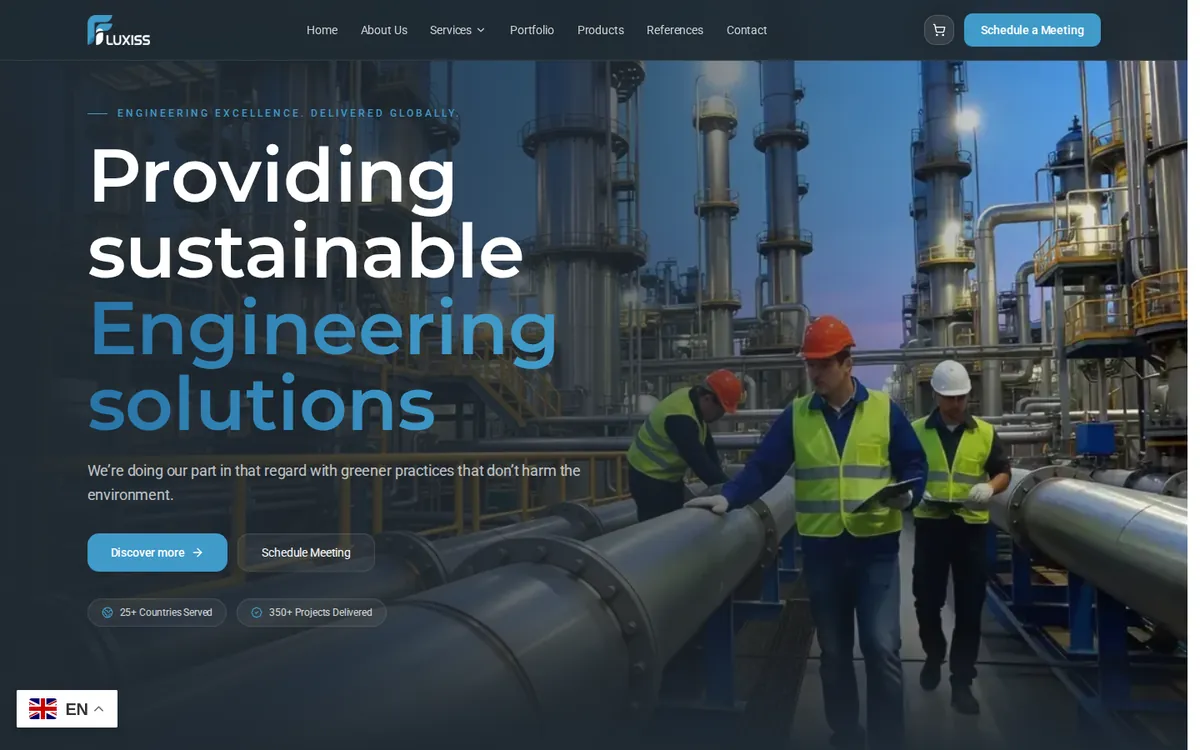
A consultancy's product is judgement. A brochure claims it; an article shows it. A short piece explaining how you approach a fatigue assessment, what goes wrong in an installation analysis or how you choose between two survey methods tells a buyer more about your competence than any line on an About page. It is also what Google serves when an engineer types the problem rather than the service name. The Fluxiss website takes this route: a site for an offshore and structural engineering consultancy that carries technical articles on its specialist services alongside the service pages.
The articles do not need to be long or frequent. One per service, written by the engineer who does the work and edited for plain reading, is worth more than a weekly feed of conference photographs.
How to structure the service pages
| Page | What it must answer |
|---|---|
| Home | What the firm does, in which sectors and where, with the services in most demand one click away |
| Service page, one per service | Scope and deliverables, method in outline, standards and software, the inputs you need from the client, reference projects |
| Projects | Asset type, location, scope delivered, period where allowed, and the services involved |
| Team | Each lead engineer's discipline, registration, specialisms and the services they lead |
| Capability statement | One downloadable profile covering all of the above, dated and version-numbered |
| Quality and compliance | Certifications, quality system, insurance, and who to ask for documents |
| Articles | How the firm thinks about specific technical problems, written by the people who solve them |
| Request a proposal | What to send (scope, drawings, deadline), who will reply and within what working time |
The enquiry path for an RFQ
A technical buyer rarely fills in a name, email and message box. They have a scope document, drawings and a date. The request page should accept attachments, ask for the asset type, the service required and the required date, and say who replies and within what working time. Copy the request to a named engineer, not to an info@ inbox that is read on Mondays. If the firm works across time zones, state the office hours and the time zone on the page. A WhatsApp number helps with the quick "can you do this" question that comes before a formal RFQ; a phone number that is answered helps more.
Speed matters here in a plainer sense too. Service pages with large drawings and renders load slowly on site Wi-Fi and on a phone at a yard; the link between website speed and enquiries applies to consultancies as much as to shops.
Where to start if the current site is a brochure
- Split the single services page into one page per service, each with scope, standards, software and references.
- Write one technical article per service, by the engineer who leads it.
- Add a team page with registrations, and a dated capability statement to download.
- Replace the contact form with a request-a-proposal page that accepts files and names who replies.
- Open the site on a phone over a slow connection and fix whatever is heavy.
Much of this is what any corporate buyer checks before calling a supplier; our guide to B2B websites for corporate buyers covers the registration, address and policy pages that sit behind it. Our web development service builds consultancy sites with this structure, with every page designed and shown before it is built. Send us your current site and we will say which of the questions above it already answers.
Questions people ask
What pages does an engineering consultancy website need?
One page per service, a projects page, a team page with registrations, a downloadable capability statement, a quality and compliance page, technical articles and a request-for-proposal page. A single services page that lists everything is the most common weakness.
Should we name our clients on the website?
Name them where the contract allows it, and describe the asset type, scope and sector where it does not. A reference without a client name is still useful to a buyer; a reference with a name you were not cleared to use is a problem with that client.
Do technical articles really bring enquiries?
They bring the right ones. An engineer searching for a specific problem finds the article, reads how you think, and arrives at the request page already half convinced. One well-written article per service is enough to start.
Can a small consultancy with few staff still look credible?
Yes, if the site is honest. A clear list of the services you do, the standards you work to, the named engineers who lead them and a few real references reads better than vague claims about a global team. Say what you do not do as well.
Does Operix build engineering websites from Karachi?
Yes. Consultancy sites are designed and built at our Karachi office and delivered online to clients anywhere, with the structure above and an articles section your engineers can add to themselves. Support runs on one WhatsApp number.