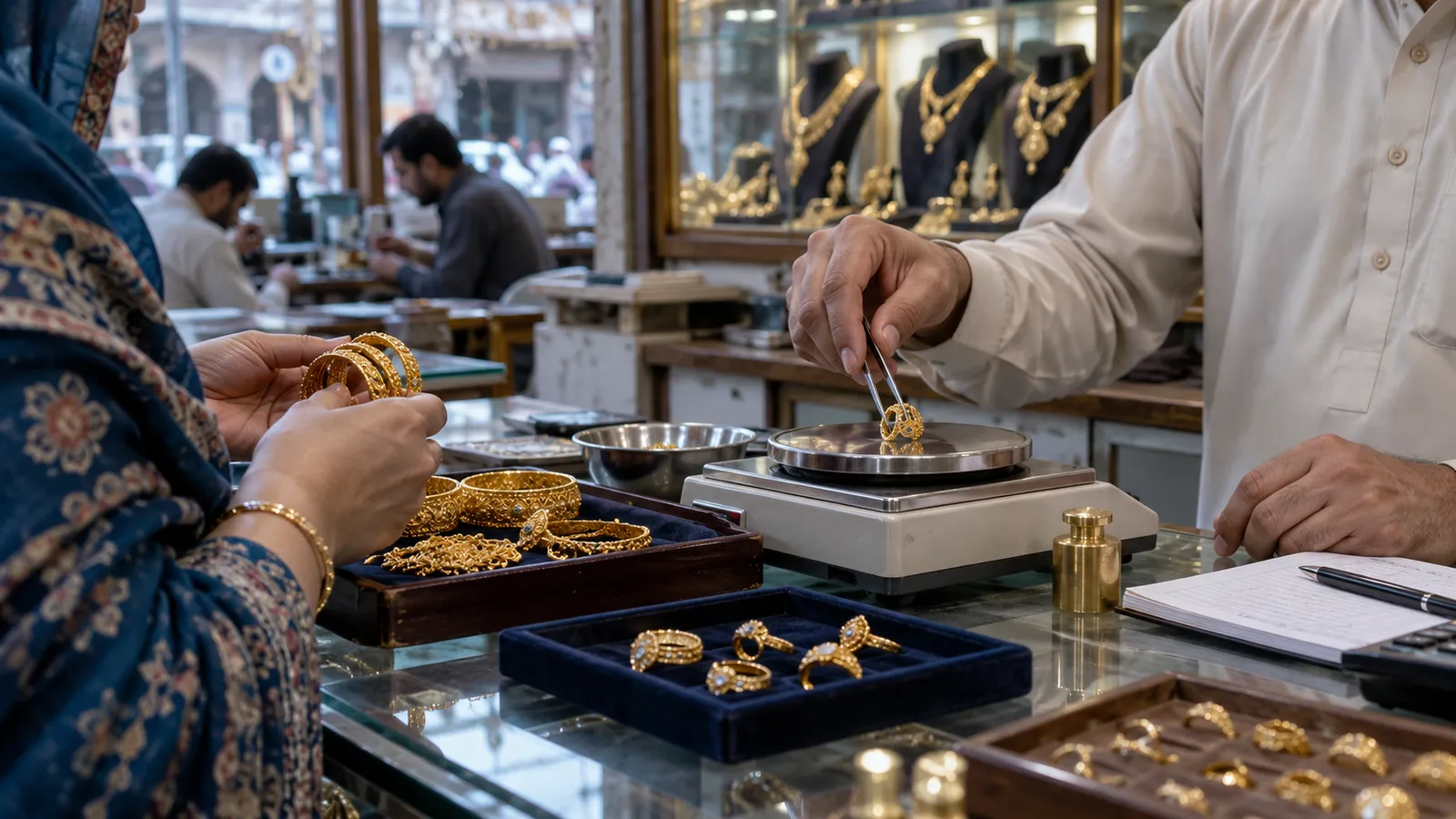
A jeweller in Karachi's Sarafa Bazaar or Lahore's Anarkali starts the day by setting the gold rate, and every price in the shop moves with it. A customer brings her mother's old bangles to exchange for a new set, a karigar returns three rings and owes you a few grams from the last batch, and the wedding season order book is full. All of it is measured in tolas and grams, not just rupees.
How a piece is priced
The software should hold the gold rate per tola for the day, entered once each morning, and work out every bill from it. The price of a piece is built from parts, and the bill should show each one:
- Gross weight and net gold weight, in tola, masha and ratti or in grams, whichever you use.
- Purity or karat, which sets the gold value at today's rate.
- Making charges, either per tola, per gram or a fixed amount per piece.
- Stones, pearls or other work, priced separately.
- Any wastage or polish allowance you charge.
Because the rate changes, the price tag on a piece should show weight and making, not a fixed rupee figure. The POS calculates the rupee amount at the counter.
Karigar hisaab in weight
This is where most jewellers keep a separate register. You give a karigar gold by weight, he returns pieces by weight, and the difference is wastage you agreed on or gold he still holds. The software should keep a gold account per karigar alongside a cash account for labour. Each issue and return is entered with weight and purity, so at any moment you can see how much of your gold sits with each karigar and which orders he is working on.
| Account | Kept in | Typical entries |
|---|---|---|
| Customer | Rupees, sometimes gold | Sales, advances on orders, old gold received |
| Karigar | Gold weight and rupees | Gold issued, pieces returned, wastage, labour |
| Shop stock | Pieces and weight | Pieces made, bought, sold, melted |
Old gold exchange
Weigh and test
Weigh the old piece and check purity, then enter both against the customer.
Apply the buying rate
Value the old gold at the day's buying rate and any deduction you apply.
Select the new piece
Scan the tag of the new piece; the system prices it at the day's selling rate with making charges.
Settle the difference
The bill shows old gold value, new piece price and the balance the customer pays or receives.
Move the old gold
The old piece enters stock as old gold, ready for melting or resale.
Orders, advances and the wedding season
Bridal orders are booked months ahead with an advance, sometimes paid in gold. The order record should hold the design, the estimated weight, the advance, and whether the rate is fixed today or set on delivery. Link the order to the karigar who makes it, so you can see where it stands without a phone call.
Tags, stock and security
Every piece gets a tag with a barcode or code number, weight and making. A daily stock check by tag, even of the display only, catches problems early. Limit who can change the gold rate, edit a bill or delete a sale; see roles and permissions in business software and business software security basics.
POS or ERP?
A single counter that sells ready pieces needs a jewellery POS with rate-based billing and tags. Once you run karigars, make to order, buy old gold in volume or have more than one shop, the karigar accounts and stock in weight make it an ERP job. Read ERP modules explained to see how the parts fit.
Silver, stones and repairs
Many jewellers also sell silver, artificial jewellery and loose stones, and take repair work such as resizing, polishing and replacing a broken clasp. Silver can follow the same weight-based pricing with its own rate. Artificial pieces are ordinary stock. Repairs are small orders with a token, the piece's weight recorded when it comes in and again when it goes out, so there is never a question about gold going missing in the workshop.
Customers increasingly ask for a printed bill that shows weight, karat and making charges separately, especially for wedding sets. A clear bill builds trust, and it protects you when the customer returns years later to exchange the piece. Keep a copy of every bill against the customer, searchable by name or phone number, so the original weight and purity are on record.
Operix builds ERP software in Pakistan and POS systems from Old Clifton, Karachi, close enough to Sarafa Bazaar for on-site setup. Other cities are served online. See our work for retail, or book a demo and bring one karigar's register.
Questions people ask
Can the software update all prices when the gold rate changes?
Yes. You enter the rate per tola once each day and every bill is calculated from it, using each piece's weight, purity and making charges.
Can it keep karigar accounts in gold weight?
Yes. Each karigar has a gold account and a cash account, so issues, returns, wastage and labour are all recorded.
Does the software show gold rates?
No. You enter your own rate each day. The software does not fetch or publish market rates.
Do you have an office in Lahore?
No. Operix works from Karachi and serves Lahore jewellers online, with visits when the project needs them.
How much does jewellery software cost?
It depends on counters, branches, karigar accounts and order tracking. Operix does not publish prices; you get a written quote after a discovery call.