
A Belgian fashion label sells in Dutch, French and English. A UK retailer wants to open to Ireland, the Netherlands and Germany. Both come to the same question: should the site be one domain with languages inside it, or a domain per country, and how do you stop Google showing the French page to a Dutch shopper? This guide answers that, explains hreflang without the jargon, and covers the parts owners forget: VAT display, payment methods and what AI assistants do with a site in three languages.
One domain with language folders, or a domain per country
Four ways are usual. None is wrong; each costs a different effort to keep up.
| Option | Example | Good for | Cost of running it |
|---|---|---|---|
| One domain, a folder per language | shop.com/nl/, shop.com/fr/, shop.com/en/ | One company, one stock, several languages, as a Belgian store has | Lowest: one site, one set of settings, one search history |
| One domain, a folder per country | shop.com/be-nl/, shop.com/nl/, shop.com/uk/ | Different prices, VAT or delivery terms by country | Moderate: more pages to keep in step, but one domain |
| A domain per country | shop.be, shop.nl, shop.co.uk | Separate companies or teams per country, each with its own stock and marketing | Highest: each domain builds its own reputation from zero and needs its own upkeep |
| Subdomains | nl.shop.com, fr.shop.com | Rarely the best choice for a small business | Behaves much like separate domains for search |
For most small and medium businesses the first option is right: one domain, a folder per language, and the country handled inside the shop's settings. Move to country folders when prices, VAT or delivery genuinely differ. Buy a country domain only when there is a team in that country to run it.
hreflang in plain words
When you have the same page in Dutch, French and English, Google needs to know they are versions of one page and which reader each is for. hreflang is a short label in the page code that says: this is the Dutch version for Belgium, this is the French version for Belgium, this is the English version for everyone else. Each version points at the others. Without it, Google may treat the three as competing pages, show the wrong language in the wrong country, or fold them into one result. With it, a search in Antwerp shows the Dutch page and a search in Liège shows the French one.
hreflang does not translate anything and does not rank a page higher. If the pages themselves are thin, hreflang will not help.
Translating a page is not writing for a market
A translated page carries the words across, not what people in that country search for, how they describe the product, or what they expect at checkout. A Dutch shopper in the Netherlands expects iDEAL; one in Belgium expects Bancontact; a UK shopper looks for cards, Apple Pay or Google Pay, PayPal and often Klarna. Cards and SEPA transfers work across the EU. Write the key pages for each market with someone who sells there, and translate only the long tail of product descriptions where the budget does not stretch.
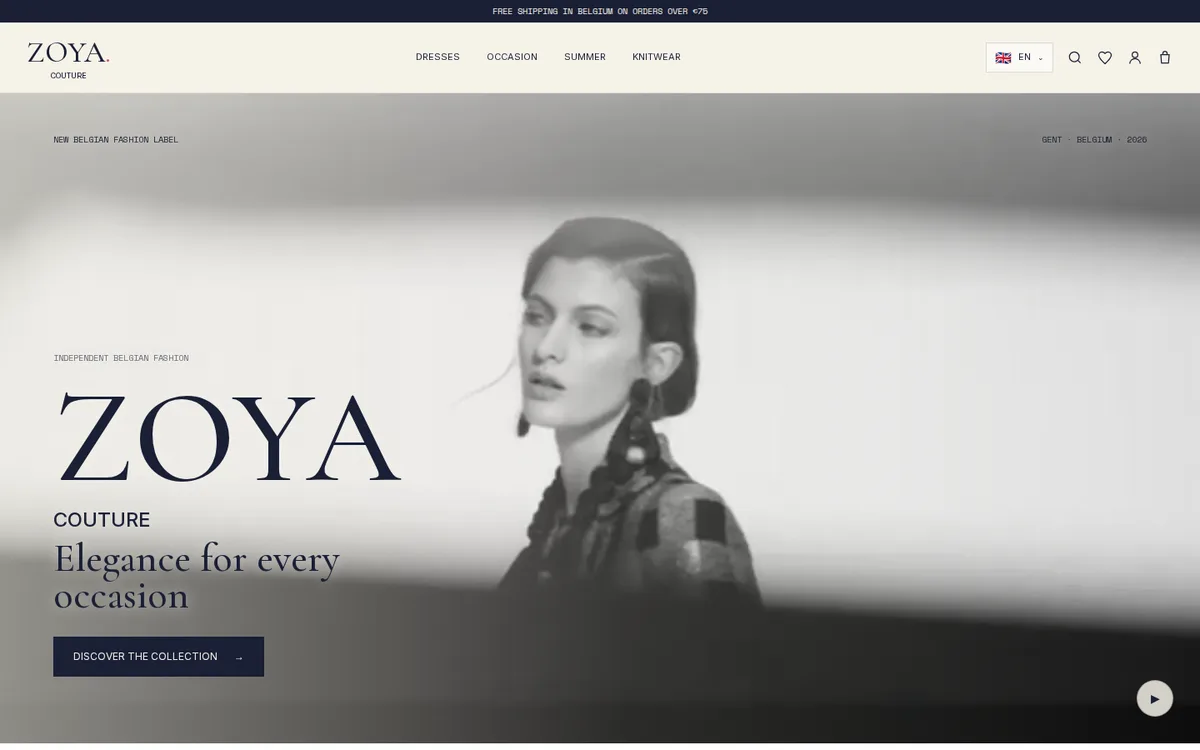
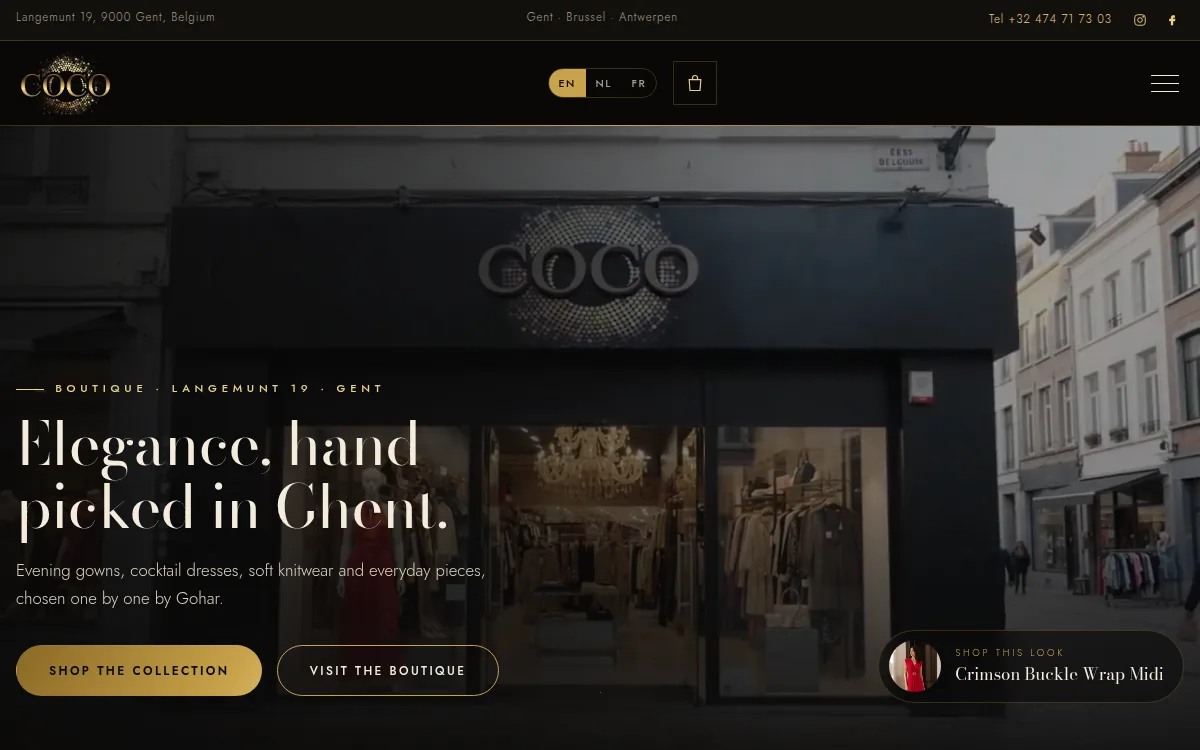
The Zoya Couture store was built in Dutch, French and English for a new Belgian label, and the COCO by Gohar boutique site in Ghent runs in English, Dutch and French. In both, each language has its own pages rather than one page with a language switch. Our guide to multilingual ecommerce for Europe covers the shop side: VAT settings, delivery, returns and consent.
Currency, VAT and prices shown per country
Most EU countries use the euro; the UK uses pounds. VAT rates and invoice rules differ by country inside the EU, and the UK applies a standard rate of 20%, administered by HMRC. For search this matters plainly: a page with the wrong currency or no VAT line looks foreign, and a foreign-looking page earns fewer clicks and fewer sales. Show the currency the reader expects, state whether VAT is included, and keep the per-country pages consistent with the invoices you actually issue. Who must register for VAT where, and what an invoice must contain, is a question for your tax adviser.
Personal data is covered by GDPR across the EU and by UK GDPR and the Data Protection Act in the UK, so consent banners and privacy pages also need a version per language.
AI assistants and a site in several languages
ChatGPT, Gemini and Perplexity answer in the language of the question, and they draw on pages in that language. A French question about a boutique in Ghent is answered from French pages; if your French pages are thin or machine-translated, the answer comes from someone else's. The rules are the same as in one language: answer-first paragraphs, a page per service or category, FAQs and consistent business facts, in each language. Our guide to being recommended by ChatGPT, Gemini and Perplexity sets out that work; do it once per language, not once for the site.
Steps to launch a second language
Choose the structure
A folder per language on your existing domain, unless prices or VAT force country folders.
List the pages that matter
Home, main categories, best-selling products, delivery, returns, contact and the about page.
Write, do not only translate
Have the key pages written by someone who sells to that market, using the searches they would use.
Set currency, VAT and payments
Per country: the currency shown, whether VAT is included, and the local payment methods.
Add hreflang and sitemaps
Every version of a page points at the others, and each language has its own entry in the sitemap.
Check Search Console per language
Look at impressions by country and language, and fix pages that appear in the wrong market.
Operix builds and promotes multilingual sites for Europe and the UK remotely from Karachi; our SEO services for Europe and web development for the UK pages say how the work runs across the time difference. If you are weighing a second language or a second country, contact us and we will say whether a folder or a domain suits you.
Questions people ask
Should I use a separate domain for each country?
Only when each country has its own team, stock or marketing. For one company selling into several countries, a folder per language on one domain is easier to run and builds one reputation instead of several.
What does hreflang actually do?
It labels each language and country version of a page so Google shows the right one to the right reader. It does not translate anything and does not improve rankings on its own; the pages still have to be worth showing.
Can I just machine-translate my site?
You can for long product descriptions where the budget is tight, but not for the pages that bring people in. Those should be written for the market by someone who knows how customers there search and buy.
Do AI assistants work with a multilingual site?
Yes. They answer in the language of the question and draw on pages in that language. A thin French section means French questions are answered from other sites, so each language needs its own answer-first pages and FAQs.
How do I show the right currency and VAT per country?
Set the currency and VAT display per country in the shop, state clearly whether prices include VAT, and keep the page consistent with the invoice you issue. Who must register where is a question for your tax adviser.