
Customers now expect to order medicine the way they order food: search, add, deliver. Large chains already offer it, and neighbourhood pharmacies can too, within their own delivery area. The website is the easy part. Keeping stock, price and prescription checks right is what makes it work.
What the site needs
| Feature | What it does | Note |
|---|---|---|
| Medicine search | Find by brand, formula or company | Handles spelling mistakes |
| Categories | Medicines, baby care, personal care, devices | Non medicine items sell well online |
| Prescription upload | Customer sends a photo | Pharmacist approves before dispatch |
| Cart and checkout | Cash on delivery and online payment | Short form, phone number first |
| Delivery areas | Shows where and when you deliver | Set a minimum order if needed |
| Order tracking | Status by SMS or WhatsApp | Reduces calls |
Stock must match the shop
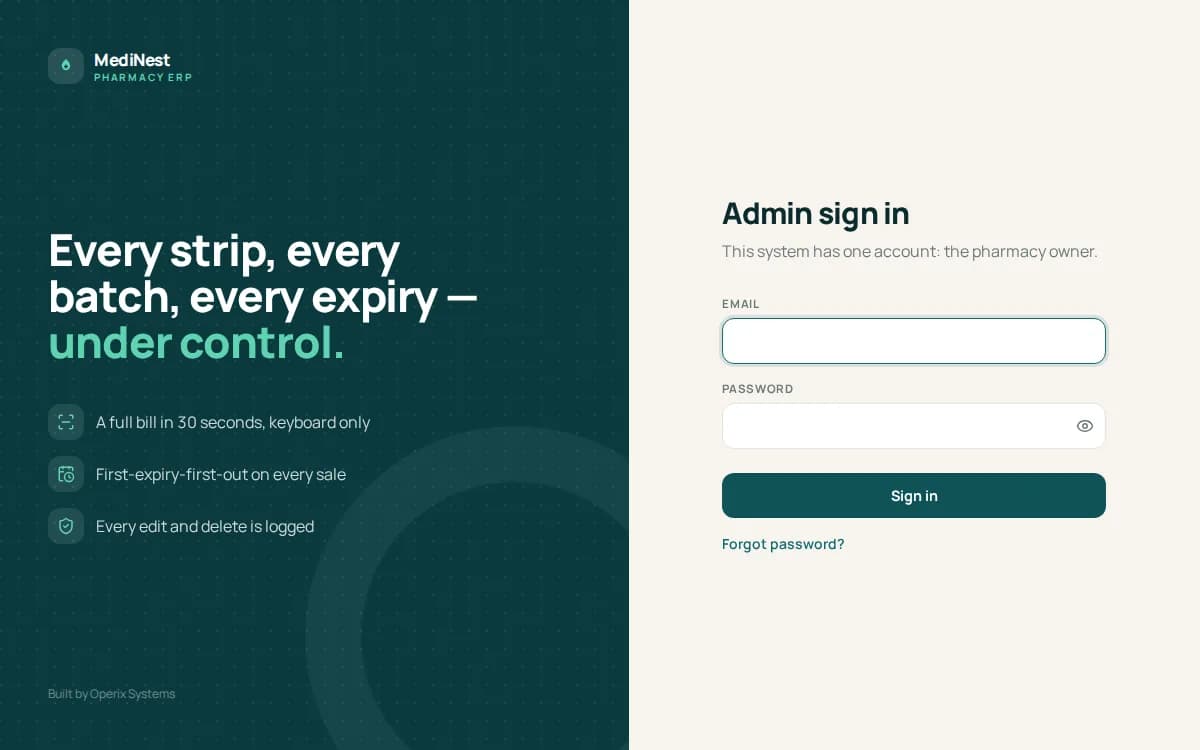
A pharmacy carries thousands of items with batches and expiry dates. Keeping a second list for the website is not realistic. The site should read products, prices and stock from the pharmacy system and send orders back into it. MediNest Pharmacy is a pharmacy system we built, and our guide on pharmacy software with batch and expiry explains what that system tracks.
Prescriptions and substitutes
- Mark which products need a prescription.
- Hold those orders until a pharmacist has seen the upload.
- If a brand is out of stock, call the customer before offering a substitute.
- Keep a record of the prescription with the order.
- Do not list medicines you are not allowed to sell online.
Selling medicines is regulated. Licensing, which medicines may be sold online and how prescriptions are handled should be confirmed with your drug inspector or a legal adviser before launch. This guide covers the software, not the law.
Delivery
Begin with your own riders in a radius you can serve reliably, and state the timing honestly. Items that need cold storage need their own handling. Cash on delivery is expected; see cash on delivery ecommerce website.
Website, app or both
Start with a website that works well on phones, because new customers find you through search and maps. An app helps later for repeat customers who reorder monthly medicines. See healthcare app development.
Common mistakes
- Thousands of products uploaded once and never updated.
- Showing items as available when the shelf is empty.
- No pharmacist step for prescription medicines.
- Promising citywide delivery without riders to do it.
- A long checkout that asks for details the rider does not need.
Steps to plan it
Check your pharmacy software
Find out whether it can share products, prices and stock.
Decide the catalogue
Which categories go online first.
Set the prescription process
Who checks uploads and how fast.
Fix delivery area and timing
Start small and widen later.
Confirm the rules
Licence and online selling requirements, in writing.
Operix Systems builds pharmacy systems and the sites connected to them from Karachi. See the POS system and ecommerce website development pages, with starting prices on the pricing page.
Questions people ask
Can a small medical store sell online?
Yes, within its own delivery area, provided it meets the licensing rules. A simple catalogue with WhatsApp ordering is a reasonable first step before a full store.
Can the website use the stock from my pharmacy software?
Usually yes, if the software can share data. This is the first thing to check, because it decides whether the site can stay accurate.
How do prescription medicines work online?
The customer uploads a photo of the prescription, a pharmacist checks it, and only then is the order packed. Orders without a valid prescription are declined.
Should I sell on a delivery app or my own site?
A delivery app brings quick orders but takes commission and owns the customer. Your own site builds repeat customers. Many pharmacies use both.