You are opening a clinic in Jeddah, a contracting firm in Riyadh or an online shop that delivers across the Kingdom, and you need a website. Three agencies send three proposals, all written in English, all showing an English homepage with a small language switch in the corner. That is the first thing to question. Your local customers will read the Arabic page, so website development in Saudi Arabia should begin there.
Arabic first, not Arabic later
Arabic runs from right to left, and a page built for it is not an English page seen in a mirror. The menu starts on the right. Form labels sit to the right of their fields. A progress bar fills towards the left, while a phone number, a price in digits and a video player keep their usual direction. Arabic script also needs a typeface chosen for it and more line height than Latin letters, or it looks cramped on a phone.
Then there is the wording. Arabic copy translated line by line from English reads stiffly, and customers notice. Ask who writes the Arabic, and have a native speaker on your own team read every page before launch. The English version is the second language, written for residents and overseas partners who prefer it. It deserves the same care, not an automatic translation.
| Part of the site | Arabic first | Translated later |
|---|---|---|
| Layout | Drawn right to left from the first sketch | English layout flipped by a setting |
| Text | Written in Arabic for the reader | Translated line by line from English |
| Typeface | Arabic font chosen for small screens | Whatever the English font falls back to |
| Forms | Labels, errors and confirmations in Arabic | Arabic labels with English error messages |
| Search | Arabic titles and headings on their own pages | English pages with Arabic text pasted in |
Personal data, the PDPL and where the site is hosted
A website starts collecting personal data the moment it has a contact form: names, mobile numbers, email addresses, sometimes a home address. In Saudi Arabia the Personal Data Protection Law (PDPL) governs how personal data is handled. For a website owner the sensible habits are plain ones. Ask only for what you will use. Tell visitors, in Arabic, what you collect and why. Keep form submissions where only the people who need them can open them, and decide how long you hold them.
Hosting is the question that follows. There is no single answer for every site, so it is decided per project: what data the site holds, who it is about, and which outside services the site depends on. A brochure site with an enquiry form is a different case from a clinic's booking system or a store with customer accounts.
If your site will hold sensitive personal data, such as health or financial details, take legal advice on the PDPL before the hosting is chosen. A developer can build what your lawyer specifies, and should not be the one deciding it.
mada in the checkout
If the site sells, the payment page decides whether a visitor becomes a customer. Saudi buyers expect to pay with mada, Apple Pay, STC Pay or a credit card. These are offered through a payment gateway that your business contracts with, and the gateway has its own approval process, so apply while the site is still being designed. Show prices in SAR and make it clear whether VAT at 15% is included. The order confirmation should agree with what your invoicing system issues, and if you also run a shop counter, the store and the till should sell from one stock list.
Speed on a phone
Expect visitors to arrive on a phone, often from a link shared on WhatsApp, Instagram or Snapchat, and often on mobile data. Heavy sliders, uncompressed photos and video that plays on load make people leave before the page appears. Ask for images sized for the screen, fonts loaded sparingly (Arabic font files can be large), and pages that send real text to the browser instead of an empty shell. How website speed affects sales explains what to measure.
SEO in Arabic and English
People in Riyadh search in Arabic, in English, and sometimes in both within the same hour. The two languages are not one keyword list translated. An Arabic searcher may use a different word for your service altogether, with spellings an English speaker would never guess. Each language needs its own research, its own titles and headings and its own address on the site, with tags that tell Google which version is which.
If customers visit a branch, a Google Business Profile for each location matters as much as the site: the name, address and phone written the same way everywhere, in both languages. Our page on SEO services in Saudi Arabia covers this work, and the website launch checklist lists what to verify before the site goes live.
List the pages
Write down the pages you need and mark which exist in Arabic, in English or in both.
Name your Arabic reviewer
Choose the person on your team who approves the Arabic wording.
Decide what data you collect
For each form, write what you ask for and who is allowed to see it.
Apply for the payment gateway
If you sell online, start the application now, not after the design is finished.
Ask for the Arabic design first
Approve the Arabic homepage on a phone before any English page is drawn.
Where Operix stands
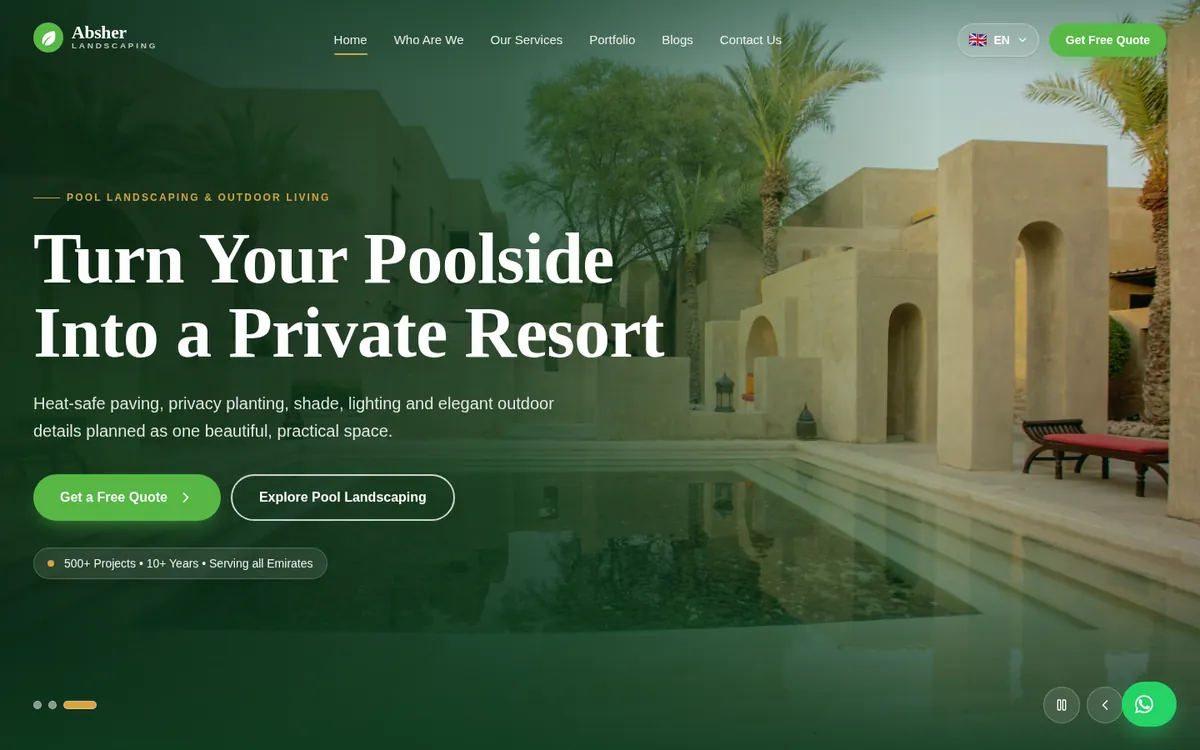
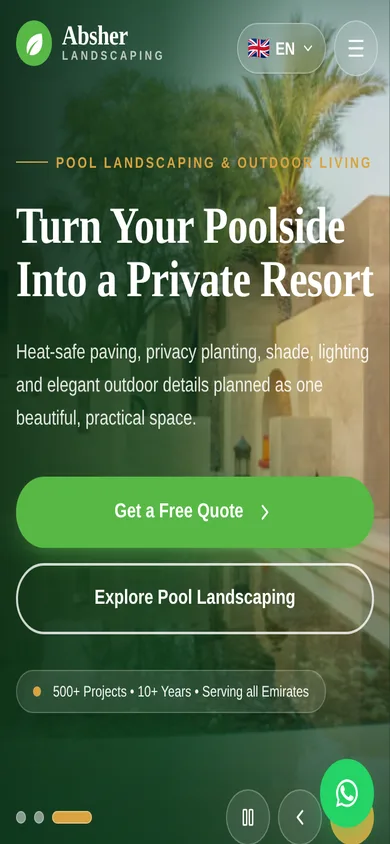
Operix Systems is a software company in Karachi, two hours ahead of Saudi Arabia. We offer website development for Saudi Arabia remotely: we have no office in the Kingdom and no Saudi website in our portfolio yet. The closest work we can show is in the UAE. Absher Landscaping is a website for a UAE landscaping company in English, Arabic, Chinese and Russian, so right-to-left pages are something we have shipped, for a neighbouring market.
Meetings happen on video, designs are approved screen by screen, and questions go to one WhatsApp number. If you would rather sit across a table from your agency, choose one in your city. If remote suits you, see how we work with Saudi businesses and tell us about the site you need.
Questions people ask
Should a Saudi website be in Arabic or English?
Arabic first, with English as the second language. Local customers read Arabic, while residents and overseas partners often prefer English, so a serious site carries both.
Does a website have to be hosted in Saudi Arabia?
It is decided per project, according to the personal data the site holds. For sensitive data, take legal advice on the PDPL before choosing where it is hosted.
Can an online store take mada payments?
Yes, through a payment gateway that supports mada and that your business has an account with. Ask the gateway which other methods, such as Apple Pay and STC Pay, come with the same account.
Can a company in Pakistan build a website for a Saudi business?
Yes. Operix works remotely from Karachi, two hours ahead, with designs approved on video calls. We have no office in the Kingdom, and our published Arabic website is for a UAE client.
How much does a website cost in Saudi Arabia?
It depends on the number of pages, the languages, whether the site sells online and what it connects to. Operix does not publish prices; you get a written quote.