Most owners come to custom software after trying the other route. They bought a package, bent their process to fit it, and found the staff still keeping a sheet on the side for the things it could not do. This guide covers when building your own is the better choice, how the work should run, and what must be in your hands when it is finished.
When custom software is worth it
Packaged software is made for the average company in your trade. Custom software is made for yours. That only matters in the places where you are not average.
- Your pricing, approvals or paperwork follow rules no package offers, and those rules are part of why customers stay with you.
- Two or more systems hold the same record, and someone retypes between them every day.
- The business runs across branches, godowns or countries and needs one set of figures.
- You have already paid for a package, and the team works around it rather than in it.
If none of these fit, a package will serve you well. Our checklist of signs you need custom software includes the cases where a spreadsheet is still enough, and custom ERP versus off-the-shelf compares the two routes.
How custom software development in Pakistan should run
Software houses describe their process in different words, but a project that ends well tends to pass through the same stages. This is the order we follow at Operix, and a fair yardstick for any company you speak to.
Discovery
The builders sit with the people who will use the system, not only the owner, and write down how an order, a purchase or a job really moves today.
Design
Every screen is drawn and shown to you before it is built. Changing your mind costs least at this point, so take the time to do it.
Weekly releases
Each week you receive a working piece to click through, loaded with your own items and customers rather than sample data.
Data move
Item lists, customers, suppliers and opening balances come across from Excel or the old software, and the totals are checked with you.
Training
Staff learn on the live system, in Urdu or English, each role on its own screens.
Go-live and support
The old register is closed, and questions and fixes go to one known contact rather than whoever picks up the phone.
Payment should follow the same stages. A written quote that ties each payment to a milestone you can see protects both sides.
What the client has to bring
A software company cannot build your process without you. Expect to give three things: time from the people who do the work, one person who can decide when two departments disagree, and your existing lists, however untidy. A project waiting for an answer from the client stands still, however good the developers are.
What you should own at the end
Buyers forget to ask about this, and it is the hardest thing to fix afterwards. A system you cannot move, open or copy is rented, whatever the invoice said.
| Asset | What to ask for | Why it matters |
|---|---|---|
| Source code | A full copy in a repository your company controls | Another developer can continue the work if you ever change supplier |
| Hosting account | Opened under a company email, with the builder added as a user | The system keeps running if the relationship ends |
| Domain name | Registered to your company, with renewals billed to you | Nobody else can let it lapse or hold it back |
| Database and backups | Regular copies you can download, in a standard format | Your customer and stock history stays yours |
| Admin logins | The top-level login held by the owner or a director | You decide who gets in and who is removed |
| App store listings | Apps published under your own Google Play and App Store accounts | Updates and reviews stay with your brand |
Put these six lines in the quote before work starts. Asking for them after a disagreement is far harder than asking on the first day.
Mistakes that repeat
- Describing the system in one line. "An ERP like the big companies have" is not a scope. List the screens, the reports and who uses each.
- Building everything before using anything. Go live with one module, let people work in it daily, then add the next.
- Leaving staff out until training day. The storekeeper and the accountant know the exceptions that break a design.
- Moving dirty data. Duplicate customers and wrong units in the old sheet become duplicate customers and wrong units in the new system.
- Nobody in charge on the client side. When questions from the builders sit unanswered for a week, the timeline slips by more than a week.
What decides the cost
We do not publish prices, and nobody can quote custom work honestly without knowing its size. The figure depends on the number of modules, the users and branches, the systems to be connected and the data to be moved. Ask also about the bills that continue once the system is live; software cost after launch explains what they are.
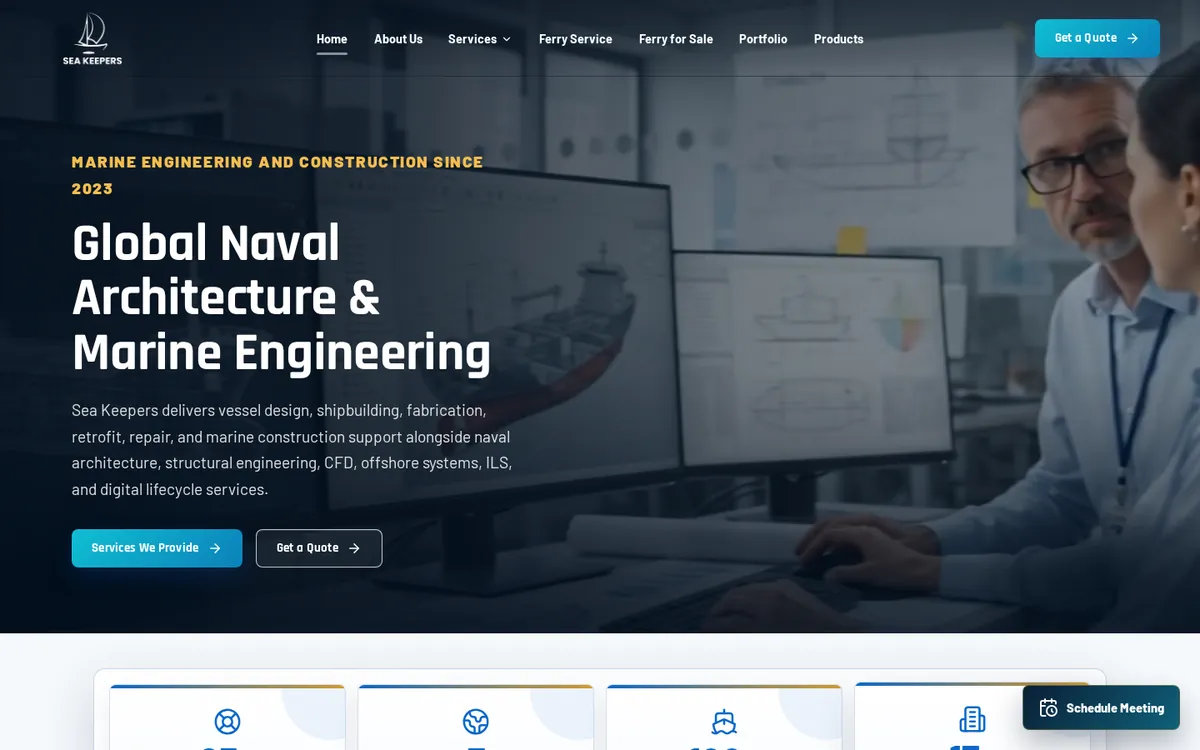
Operix builds ERP software and websites and online stores from Old Clifton, Karachi, for clients across Pakistan and the UAE. The Sea Keepers ERP is an example of custom work: it runs that company's jobs from the first enquiry email to the final delivery documents. To talk through your own process, book a demo.
Questions people ask
What is custom software development?
It is software designed and built for one company's process, rather than a ready product sold to many. You decide what the screens, approvals and reports look like, and the result should belong to your business.
How long does a custom software project take?
It depends on the modules, the branches and the data to be moved. A sound plan sets the timeline module by module in the written quote, with the first module going live while later ones are still being built.
Who owns the source code?
That is decided by your agreement, so settle it before work starts. Ask for a full copy of the code in a repository your company controls, and for the hosting and domain to be registered in your name.
Is custom software better than a package?
Only where your process is unusual. For standard needs such as bookkeeping, a package is quicker and safer. Custom work pays where a package would push staff back to side sheets.
How much does custom software cost in Pakistan?
It depends on modules, users, branches and integrations. Operix does not publish prices; you receive a written quote with milestone payments after a discovery call.