
You have seen an Odoo demo, a partner has quoted for customising it, a cousin's company runs a custom ERP, and your accountant says the current software is fine. The question is not whether Odoo is good. It is which of four options fits your business for the years ahead, and there is a way to decide it on paper.
What are the alternatives to customising Odoo?
| Option | What it means | Fits when |
|---|---|---|
| Standard Odoo | Odoo's own modules, configured but not changed | Your process is close to the textbook and someone can administer it |
| Customised Odoo | Standard Odoo plus Studio changes or custom modules | The gaps are few and narrow, and you accept the upgrade cost |
| Another package | A different ERP or accounting package, configured | A package built for your industry already exists |
| Custom ERP | Software built around your process, owned by you | The workflow is what makes the business different |
A fifth option is honest too: keep the current system and add one integration or one small tool where it hurts. How far Odoo can be changed before you are really building software is explained in Odoo standard vs custom.
How standard is your process?
Walk one order through the business and note every place where you would say "but we do it differently". A trading company with purchase, stock, sales and invoicing usually finds few. A manufacturer with its own costing, a travel agency with vouchers and visas, or a procurement firm answering tenders finds many. Few differences point to standard Odoo or another package; many point to a custom ERP. The ERP audit method works for this even before you have an ERP.
Who will administer it?
Odoo rewards a company with someone who learns it properly: configuring, adding users, fixing a report. Without that person, every small change becomes a ticket to the partner. A custom ERP is administered by the developer who built it, usually under a support agreement. Decide which arrangement you can sustain, because it decides the running cost more than the licence does.
How much will you change over time?
Customised Odoo is cheapest on day one and dearest over the years if you keep changing it, because custom modules must be migrated at every upgrade and Odoo Online cannot run them at all. A custom ERP changes at the cost of the developer's time, with no upgrade tax, but you depend on that developer. Standard Odoo and packaged software change least and cost least to keep, as long as you accept their way of working. The platform comparison is in Odoo vs custom ERP.
What must it integrate with?
- Your bank and payment methods, and in Pakistan whatever FBR sales tax reporting your tax adviser says applies.
- A POS, an online store or a sales app that already exists.
- Your accountant's package, if the accounts will stay there.
- Customers' or suppliers' systems, such as tender portals.
List these before the demo. A package that cannot connect to them is not an option whatever its price, and a custom ERP that must connect to many of them needs that in the quote.
Who owns the result?
With Odoo you own your data and any custom modules you paid for, but not the platform. With a custom ERP you should own the code and the database outright, with the right to take them elsewhere; check the contract says so. With a package you own data exports and little else. Ownership matters most when you plan to run the business for a long time or to sell it.
How do I score the options?
Write the five answers
Process fit, administrator, rate of change, integrations and ownership, in a page each.
Score each option
Mark each of the four options as good, acceptable or poor on each answer.
Price the running cost
Licences, support, upgrades and the administrator's time for the years ahead, not only the build.
Ask vendors the same questions
Give the Odoo partner and the custom developer the same list and compare written answers.
Run your own order
Have each finalist run one of your real orders on their system with your items.
Decide and write it down
Record why you chose, so the decision can be revisited without starting over.
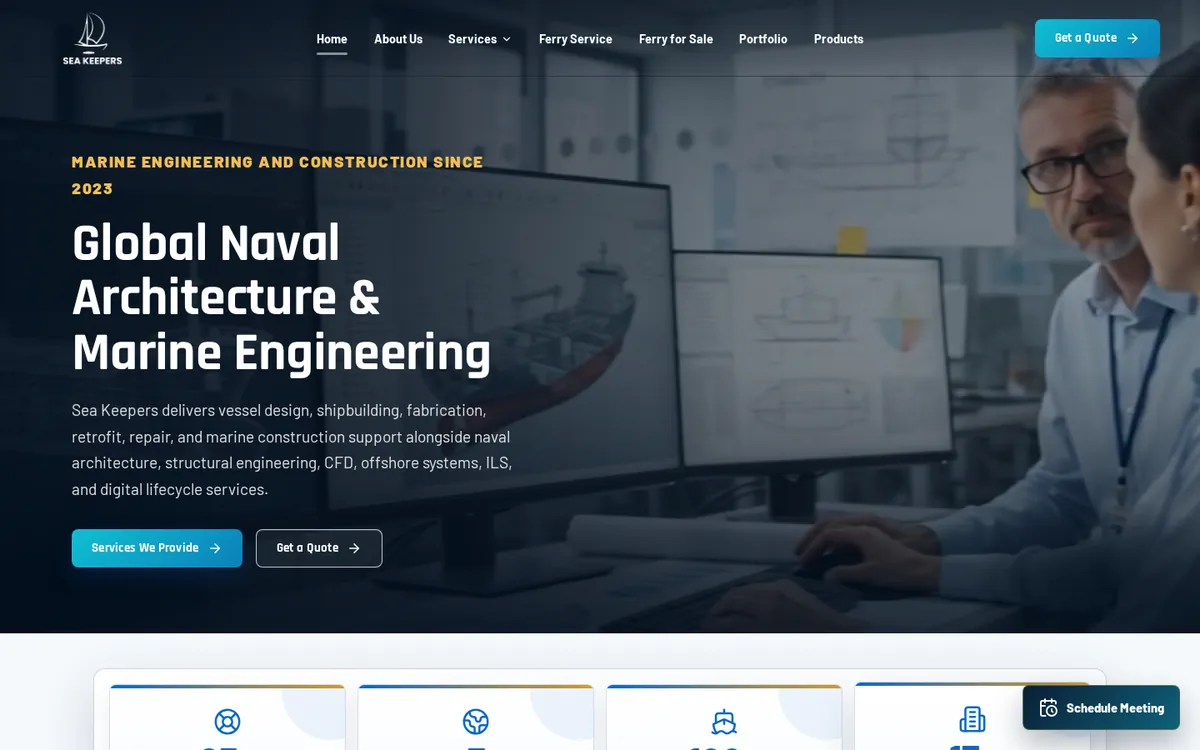
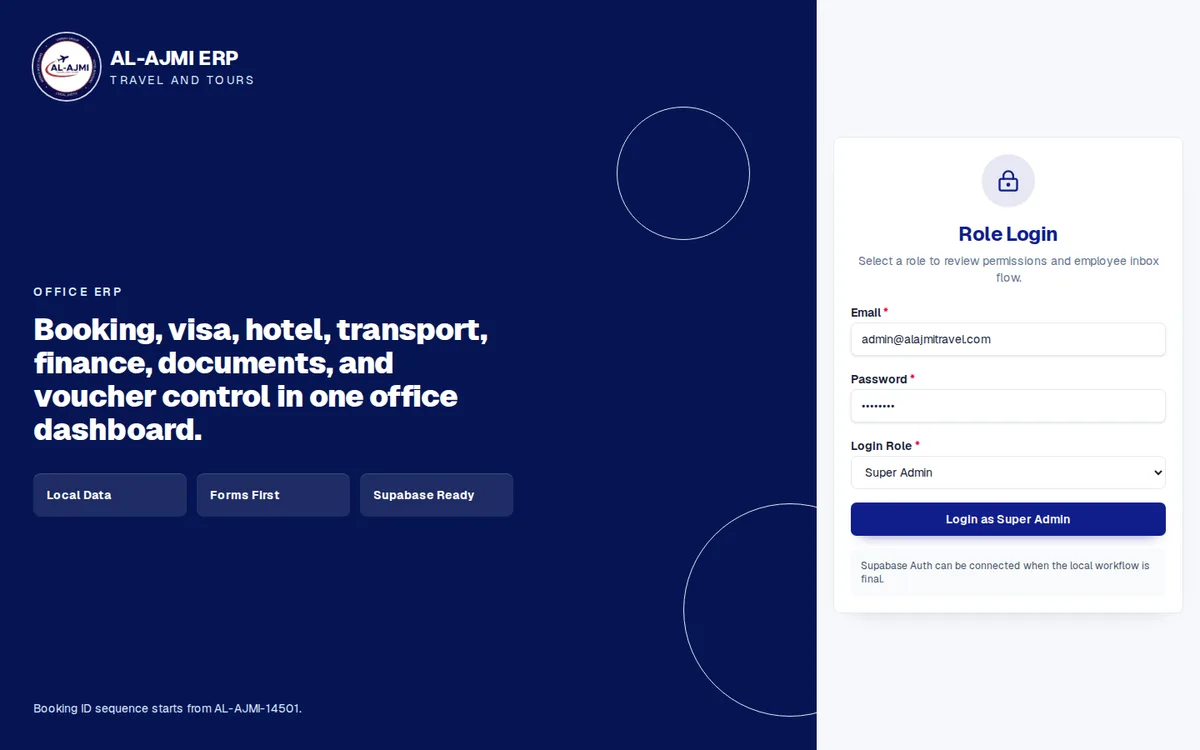
We build custom ERPs and say when a package would do. Sea Keepers runs on an ERP that follows their work from the first enquiry email to the final delivery documents, and Al Ajmi Travels on an office ERP for bookings, visas, hotels and vouchers; both are processes a standard package would have handled badly. If your process is closer to standard, custom ERP vs off-the-shelf is the fairer read. Our ERP software page explains how we work, and a demo on your own order is the quickest test.
Questions people ask
Is Odoo customisation cheaper than a custom ERP?
Usually at the start, because the standard modules already exist. Over the years it depends on how much you customise and how often you upgrade. Price the running cost, not only the build.
Can we start with standard Odoo and build custom later?
Yes, and it is often the sensible order. The risk is customising piece by piece until you have the upgrade cost of custom with the limits of a package; set a point at which you reconsider.
Who should make this decision?
The owner or managing director, with the person who will administer the system and the accountant. Not the vendor.
Do we need an Odoo partner or a custom developer to decide?
Neither, for the decision. Use both for quotes once you have the five answers written down.
What if we already run Odoo and it hurts?
Audit it first. Often the fix is configuration or one integration rather than a new system.