
Someone you trust has recommended Odoo. A software company has offered to build an ERP around your business. Both can work and both can fail, and the deciding factor is not the software. It is how standard your business is, and how much of the system you want to own and change yourself.
Already on Odoo and deciding how much to change it? Odoo standard vs custom walks the ladder from configuration to custom modules and what each costs at the next version.
What Odoo is
Odoo is a widely used open-source ERP platform. It comes as modules: sales, purchasing, inventory, accounting, manufacturing, HR, a website builder and more, all sharing one database. A business installs the modules it needs, configures them, and brings in a partner for anything beyond configuration. It has a large community, partners in many countries and regular releases. None of that is in dispute. The question is whether its model of a business matches yours closely enough.
When a platform fits
- Your processes are standard: quotation, order, delivery, invoice, with nothing unusual in between.
- You have, or will hire, someone in-house who can administer the system, manage upgrades and talk to a partner.
- You are willing to change your process to match the platform where the two differ.
- You want modules you would never build yourself, such as a website or a helpdesk, on the same database.
- You trade mainly with companies that work the same way, so standard documents are enough.
When a custom build fits
- Your workflow is the business: route-based udhaar recovery, a chandler's enquiry email with hundreds of lines, a travel agency's vouchers and visas.
- Pakistani specifics matter every day: FBR sales tax invoice formats, provincial services tax, salesmen's schemes, challans in your own layout.
- You need a POS, a salesman app or a customer app built by the same team on the same database, not connected afterwards.
- You do not want to follow upgrade cycles or depend on a partner for each change; you want the people who built it to keep changing it.
- Your staff will use it on patchy internet and shared phones, and the screens must be as simple as the register they replace.
Odoo vs custom ERP compared
| Odoo (platform) | Custom ERP | |
|---|---|---|
| Fit to your process | Good for standard flows; unusual ones are customised within its model | Follows your process from the start |
| Time to first use | Shorter for standard modules | Longer; the first module goes live while the others are built |
| Changes later | Through a partner or your own developer, keeping pace with upgrades | Through the team that built it, on your timeline |
| Local formats | Through partners or custom work on top | Part of the scope from day one |
| Ownership | Open-source software you run; customisations are yours | Code and data can be yours by contract |
| Upgrades | Regular releases; customisations must keep up | Only when you ask for a change |
| Main risk | Your process bends to the platform | You depend on the builder's quality and continuity |
The questions that decide it
- Write down the three things your business does differently from a textbook trading company. If the list is empty, a platform is probably right.
- Name the person in your company who will administer the system a year from now. No name means you will depend on a partner either way.
- Ask each vendor to show your most unusual document, such as your challan or recovery sheet, in their system. Watch how much is configuration and how much is apology.
- Ask what a change costs, in time and money, after go-live. Both routes have a pattern; make sure you understand yours.
Do not choose by the demo. Every platform demo is a standard business and every custom demo is a finished client. Choose by your own three unusual things, shown in each system.
What Operix builds, and when we say no
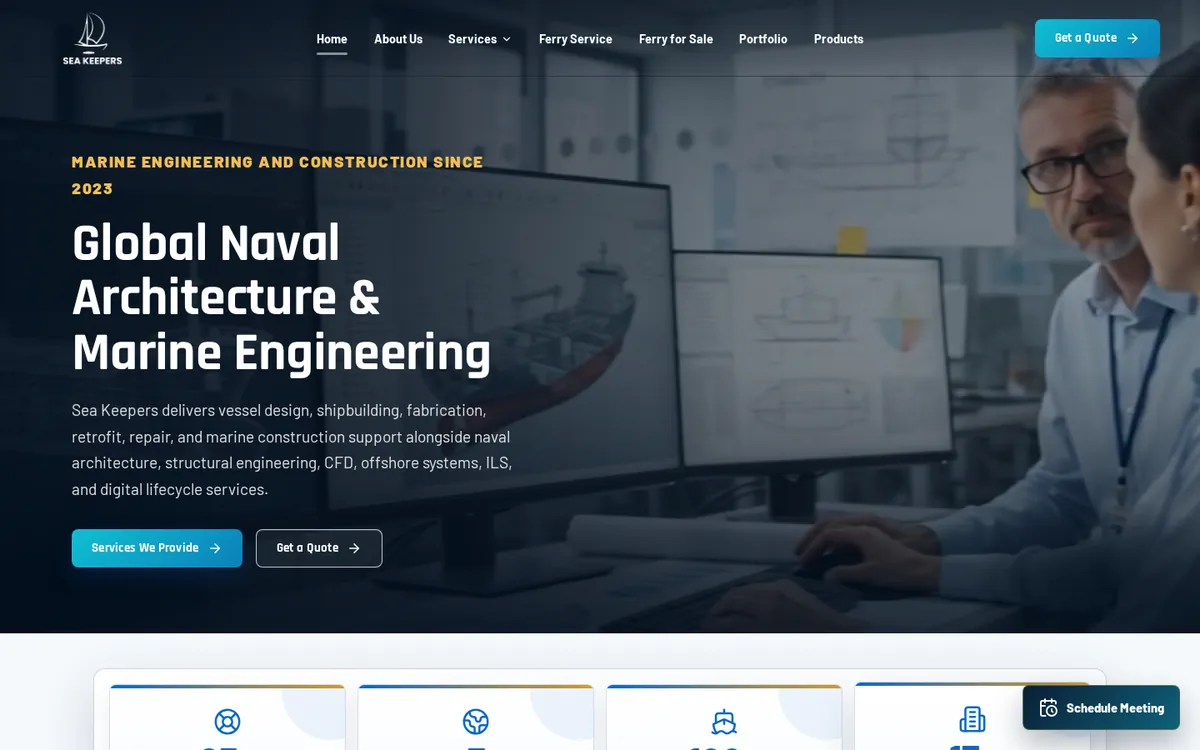
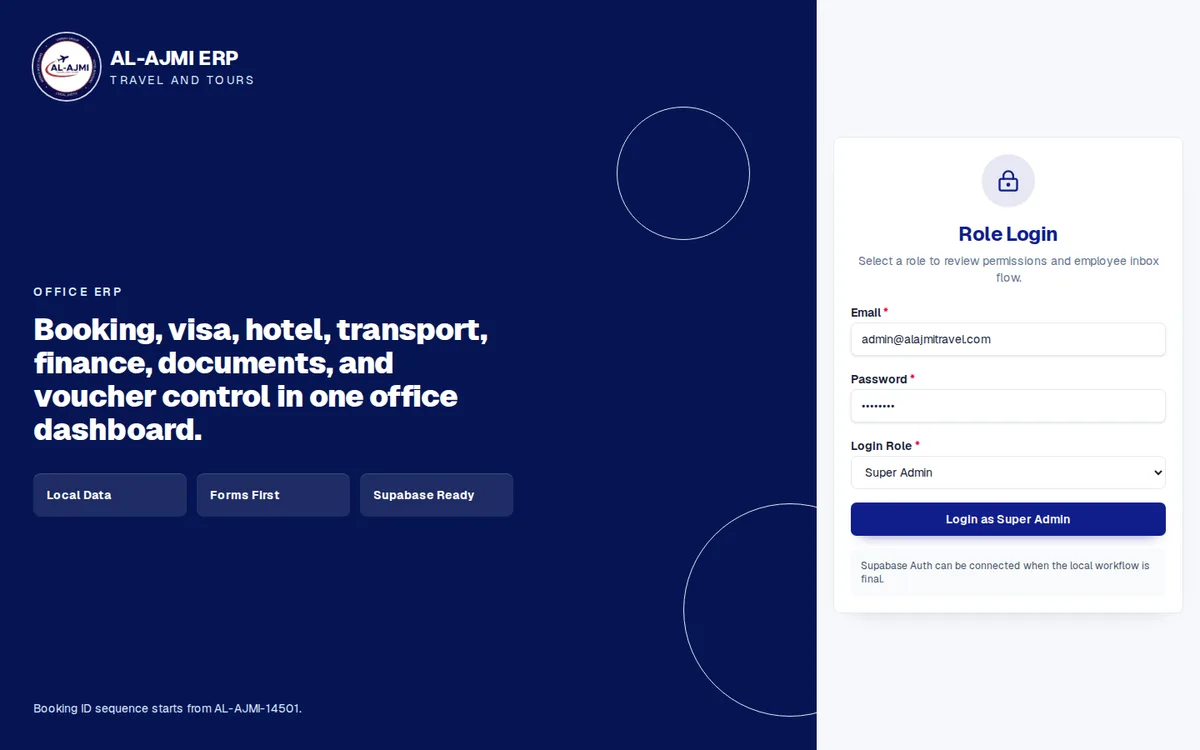
Operix builds custom ERP software on the client's own data, with every screen shown before it is built and the first module released while the rest is in progress. The Sea Keepers system runs a marine supplier's work from the first enquiry email to the final delivery documents, and the Al Ajmi Travels ERP holds bookings, visas, hotels, transport, finance and vouchers in one dashboard. Both are workflows that no standard module describes, which is why they were built. If your answers above point to a platform, we will say so in the discovery call rather than build what you do not need.
For the wider trade-off, read custom ERP vs off-the-shelf. Before signing either way, read why ERP projects fail, because most of the causes apply to a platform and a custom build alike. To test the fit on your own process, book a demo and bring the three unusual things.
Questions people ask
Is Odoo free?
Odoo has a community edition that is open source and an enterprise edition with more features and support. Running either still costs implementation, hosting and a partner's time, so compare the total over a few years, not the licence alone. We do not state Odoo's prices; check its website.
Can a custom ERP be as complete as Odoo?
In the modules you need, yes, and often simpler because it leaves out what you do not. It will not have the breadth of a platform with dozens of modules, so if you expect to add a helpdesk, a website and e-learning next year, weigh that.
Does Operix implement Odoo?
Operix builds custom ERP, POS and CRM systems. If a discovery call shows that a platform fits you better, we say so. We would rather lose a project than build a copy of something you could have configured.
Can we move from Odoo to a custom ERP later, or the other way?
Yes, in either direction, as long as the data can be exported cleanly: items, customers, suppliers, balances and open orders. The cost is in cleaning and mapping the data, and in retraining staff, not in the software itself.
Which is better for a distributor in Pakistan?
It depends on how your routes, schemes and udhaar recovery work. A distributor with standard order and invoice flows can run on a platform; one whose salesmen, routes and credit rules are the business usually needs a custom build with a salesman app on the same data.