
A company in Karachi starts selling to Dubai, then Riyadh, then London. The website gains an Arabic version, a page for each market and a second currency. Six months later the Dubai phone number is wrong, the Arabic pages still list last year's services, and enquiries from the UK arrive at midnight and are answered the next afternoon. Nothing broke. Nobody was looking after it. Global website operations is the name for that looking after.
What the work actually is
| How often | What is checked | Who usually does it |
|---|---|---|
| Every day | The site is up and the forms deliver | A monitoring service, with one person alerted |
| Every week | New enquiries from each market were answered | The sales lead for that market |
| Every month | Search results, speed and enquiries, country by country | Whoever owns the website |
| Every quarter | Each market's pages read against what is true today | A person who knows that market |
| When something changes | A price, address, service or law: the page and every language version | The page's named owner |
One site or one per country
| Setup | What it looks like | Good when | Work to run it |
|---|---|---|---|
| Folders on one domain | yoursite.com/ae/ and yoursite.com/uk/ | The same company sells much the same thing everywhere | Least: one site to update |
| Country domains | yoursite.ae and yoursite.co.uk | Each country has its own team, offer or legal entity | Most: every site is updated on its own |
| No market pages | A single set of pages for everyone | You serve one market and ship abroad now and then | Little, but local searches are harder to win |
Most businesses we meet belong in the first row. Whichever you choose, each country or language version needs an address of its own, and the versions are tied together with hreflang tags so Google shows the right one to the right searcher. Our guide to bilingual SEO in Dubai explains how that pairing works for English and Arabic.
Languages are pages to maintain
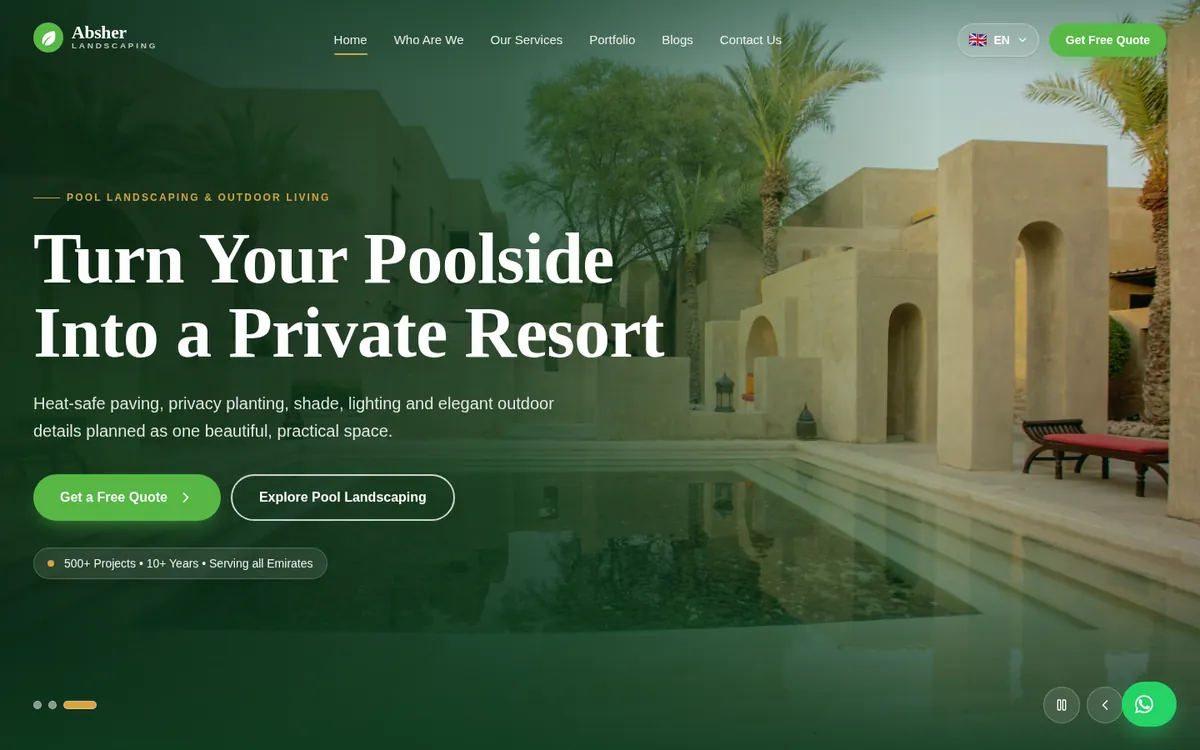
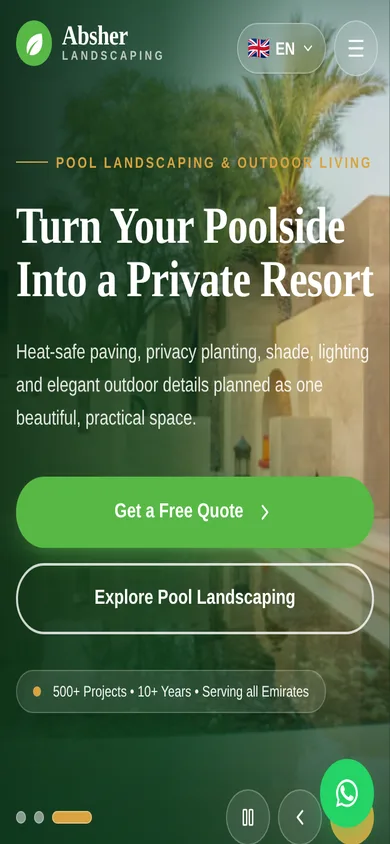
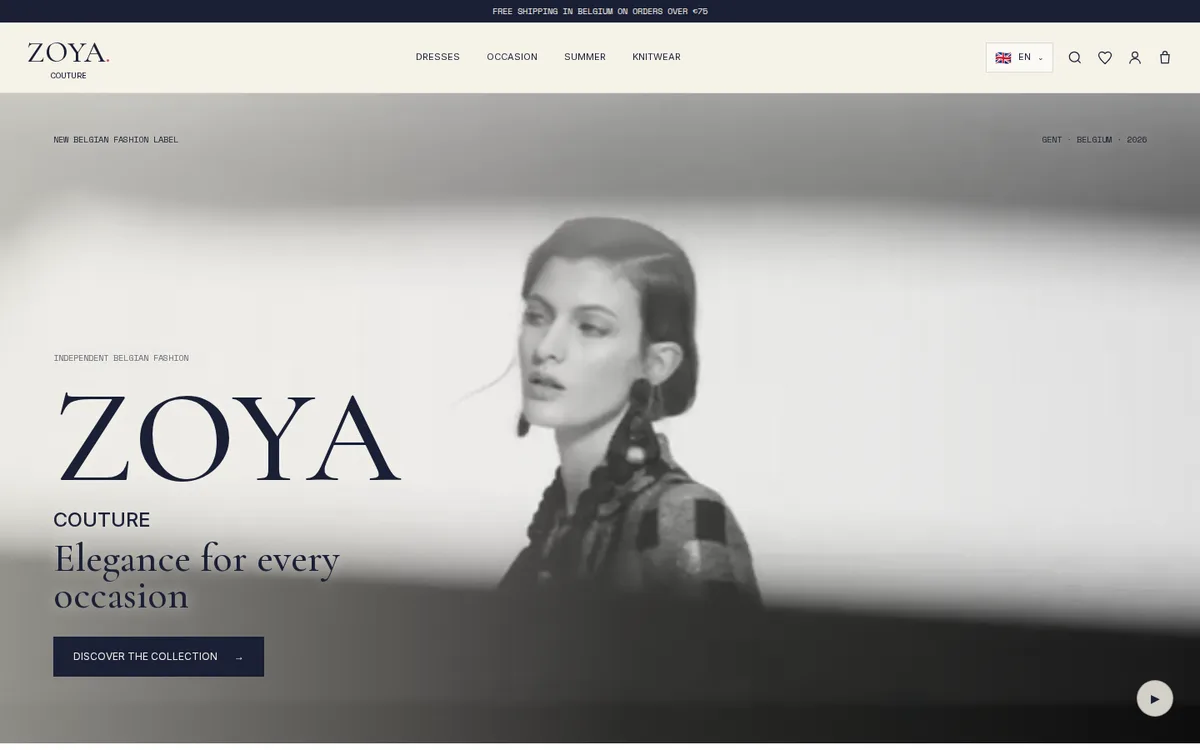
A translated page is correct on the day it is published. After that it is only as good as the routine behind it. When the English page changes, someone has to be told that the Arabic, French or Dutch version is now behind, and someone who reads that language has to approve the update. Without a named reader for each language, the versions drift apart within months. Absher Landscaping, a website we built for a UAE landscaping company, runs in English, Arabic, Chinese and Russian, and the Zoya Couture store sells in Dutch, French and English. Each added language is a set of pages that someone must own.
Local details that must stay true
- Prices in the local currency, and whether tax is included.
- A phone and WhatsApp number that someone answers during that country's working hours.
- The address, or a plain statement that the market is served remotely.
- Payment and delivery methods that country really uses.
- Legal pages that name the right company and the right law.
Tax is a common trap. The UAE charges VAT at 5%, Saudi Arabia at 15% and the UK at a standard rate of 20%, so a price page that is right for one market is wrong for the others. If the site also takes orders, work through the global ecommerce checklist one market at a time.
Speed where the customer is
A site hosted close to your office can feel quick to you and slow to a buyer on another continent. A content delivery network serves pages and images from a location near each visitor, which removes most of the distance. What remains is the weight of the page itself. Test on a phone from each market, or with a testing tool set to that region, and read why website speed costs enquiries for what to fix first.
Privacy and cookie consent
Rules on personal data differ by market. GDPR governs personal data across the EU, the UK has its own version, and Saudi Arabia has the Personal Data Protection Law. In practice the site needs a consent banner that behaves correctly for each region, a privacy page that says what is collected and where it is kept, and a record of who can see enquiry data. What your business must do in each country is a question for a lawyer there. The website should make their answer easy to switch on.
Enquiries across time zones
An enquiry answered the next day is often an enquiry lost. Each form should record which market it came from and reach a person who is awake. From Karachi the Gulf is easy: the UAE is one hour behind and Saudi Arabia two. The UK and the USA need a plan, such as an instant acknowledgement that says when a reply will come, and one person who covers the late hours on set days. Test every form in every market each month. A broken form does not complain.
List every page by market
A sheet with the page, its market, its language and the date it was last checked.
Name an owner for each
One person per page or per market, and a second who covers their leave.
Fix the calendar
Monthly numbers and quarterly page reviews, on dates that are in the diary.
Split the reports by country
Search Console filtered by country, analytics by market folder, and enquiries tagged at the form.
Write the change rule
When a price, address or service changes, every language version is updated before the change is announced.
Review after three months
See which markets earn their upkeep and which pages nobody visits.
Where Operix stands
Operix builds websites for businesses that sell in more than one country and supports them after launch, remotely from our office in Karachi. Upkeep of the platform itself, such as updates, backups and monitoring, is covered in website maintenance after launch. If your site serves several countries and nobody can say who owns which page, book a demo and we will go through it with you.
Questions people ask
What does global website operations mean?
The regular work of keeping one website accurate and fast in every country it serves: page ownership, language versions, local details, speed, consent, enquiry handling and a report for each market.
Do we need a separate website for each country?
Usually not. One site with a folder for each market is the least work to run. Separate country domains make sense when each country has its own team, offer or legal entity.
Who should be responsible for each market's pages?
A named person who knows that market, with someone to cover their leave. Pages without an owner are the ones that go out of date.
How do we keep translated pages up to date?
Record every change to the main page, mark the other language versions as behind, and have a reader of each language approve the update before it goes live.
How much does it cost to run a website in several countries?
It depends on the number of markets, languages and pages, and on how often they change. Operix does not publish prices; you receive a written quote after we review the site.