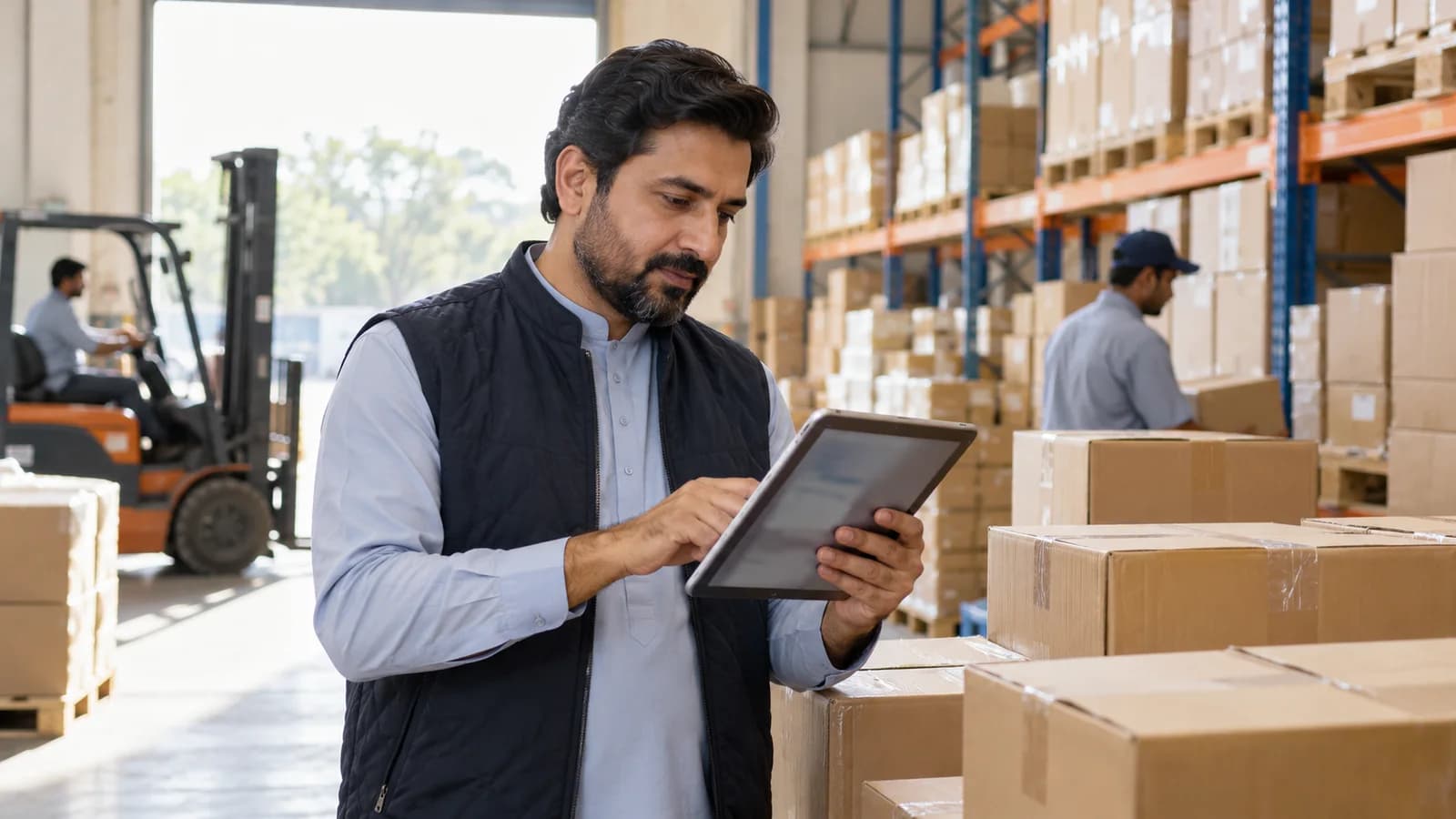
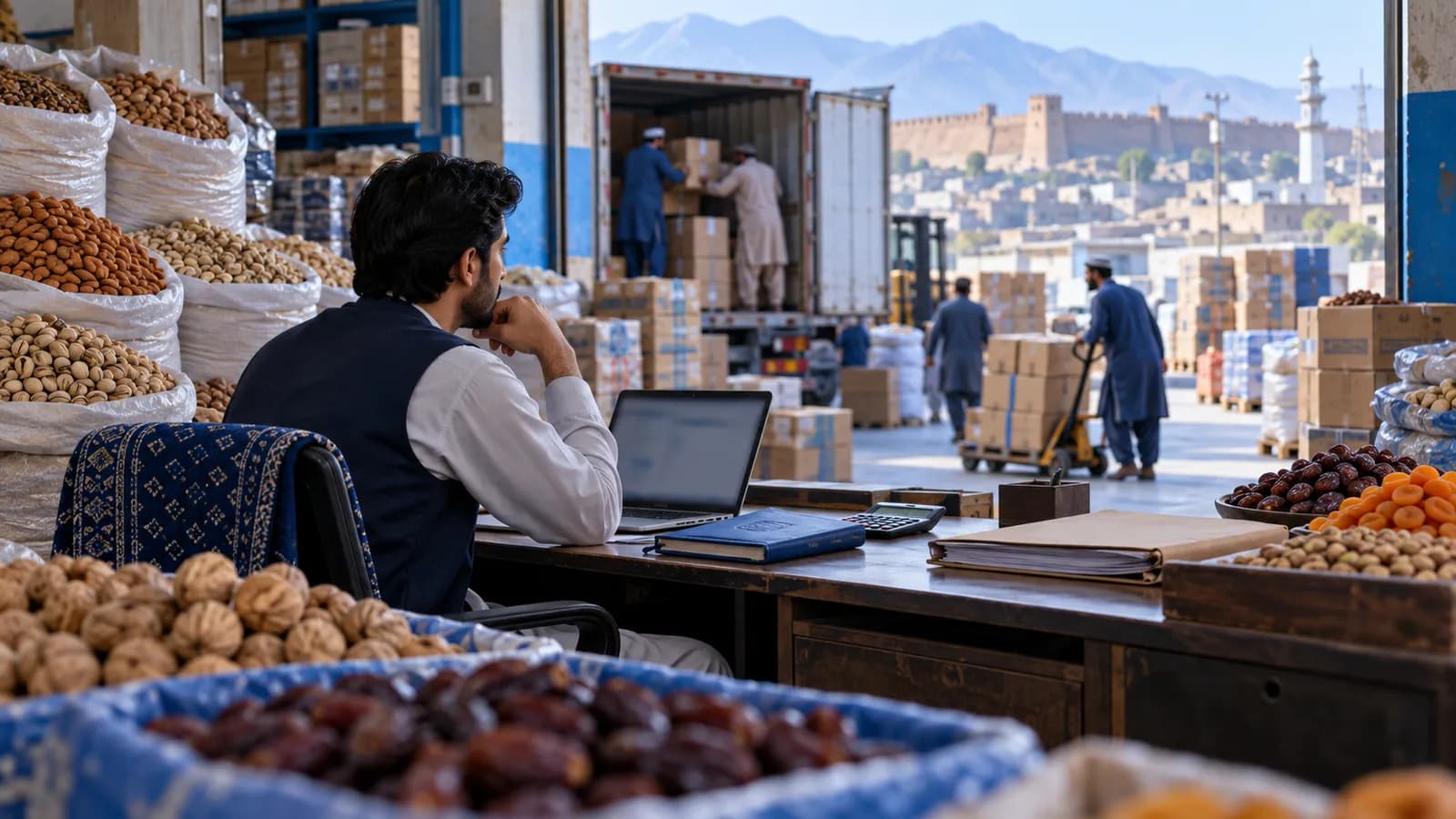
A wholesale house in Peshawar does not trade the way a shop in Karachi does. Dry fruit comes in by the consignment and goes out by the bag. Cloth, tyres and electronics move both ways through the border, with parties in Jalalabad and Kabul on one side and retailers in Mardan, Swat, Kohat and Bannu on the other. A single deal can be agreed in dollars, paid in afghanis and sold on in rupees. The ledger for all this is usually a set of registers and one trusted munshi, and the owner knows his position by memory rather than by report.
What is different about trade in Peshawar
Four things stand out. Deals cross currencies, so every party's balance has to be kept in the currency it was agreed in. Goods arrive in lots, each with its own cost, grade and season, and are sold in pieces of those lots. Credit runs long, down a chain from importer to wholesaler to district retailer. And every consignment travels on a bilty with a transporter who is as much a party to the trade as the buyer. Most wholesale software built for Pakistan handles udhaar and cartons; a Peshawar trader needs the currencies and the lots on top.
More than one currency on one deal
The software must record each transaction in the currency it happened in, keep each party's ledger in the currency agreed with that party, and, when a balance is settled in a different currency, convert at the rate agreed on that day and post the difference as exchange gain or loss. The rate itself is yours to enter; the system remembers which rate was used for which settlement so that nobody argues about it afterwards. The same applies to the landed cost of a lot bought abroad, which our guide to import and export software covers in more detail.
Record the purchase in its own currency
The supplier's invoice is entered in dollars, or whatever was agreed, against the supplier's dollar ledger.
Receive the goods by lot
The consignment enters the godown as a lot with its own cost, grade and date, not as a top-up to a single item figure.
Record the sales in rupees
Each sale to a retailer takes stock from a named lot and raises the retailer's rupee balance.
Settle in the currency actually paid
When the supplier is paid in afghanis, or in rupees, the receipt is entered in that currency at the rate agreed that day.
Let the system post the difference
The gap between the rate at purchase and the rate at settlement lands on the ledger as gain or loss, with the two rates shown.
Party ledgers and udhaar across the districts
Retailers in the districts buy on credit and pay on their own calendar. The ledger has to show each party's balance, how old each unpaid invoice is, and what the agreed limit is, so that the next order can be held when the limit is reached. Salesmen or agents who visit the districts need to see the balance before they take the next order, and recoveries they collect should be entered the same day. A statement a retailer can be sent on WhatsApp ends most arguments before they start.
Godown stock by lot
A single stock figure per item is not enough when two lots of the same item carry different costs and grades. The system should hold each lot separately, with its godown, its landed cost and the quantity still in hand, so the margin on a sale is calculated against the lot it came from. The unit differs by trade, and the table below sets out what each one usually needs.
| Trade | Stock unit | What the records must show |
|---|---|---|
| Dry fruit | Lot by grade and season, sold by bag or kilo | Cost per lot, wastage, what is left of each grade |
| Cloth | Thaan and metre, by quality and design | Cut lengths against each thaan, remnants |
| Tyres | Piece, by size and brand | Stock by size across godowns, age of stock |
| Electronics | Piece, by model, often with a serial number | Which serial went to which party, warranty dates |
Bilty and transporter
Each consignment should carry its bilty number, the transporter, the vehicle, the freight and who bears it, and the date it left. When the goods arrive, the receipt is entered against that bilty, so a shortage shows up as a difference between what was sent and what was received, with the transporter's name beside it. The transporter's own account then shows freight owed and paid, the same as any other party. Our guide to goods transport software describes the transporter's side of the same record.
How Operix works with Peshawar
Operix is in Karachi and has no office in Peshawar. The work is done online: a discovery call about how your deals, lots and bilties move today, every screen shown before it is built, weekly releases on your own parties and stock, and training on the live system in Urdu or English, with support on one WhatsApp number. The same ERP software for Pakistan that serves distributors elsewhere is built out for currencies and lots; our distribution page shows the order booking and recovery side. To see a cross-currency deal entered from purchase to settlement on your own figures, book a demo.
Questions people ask
Can the software keep a party's account in dollars or afghanis?
Yes. Each party's ledger is kept in the currency agreed with that party, and the rupee books are kept alongside. A settlement in a different currency is entered at the rate agreed that day, and the system shows the difference.
How does it show exchange gain or loss?
When a balance recorded at one rate is settled at another, the difference is posted to the ledger as gain or loss, with both rates and both dates shown against it. The rates are entered by you; the software does not fetch them.
Does Operix have an office in Peshawar?
No. Operix is on I.I. Chundrigar Road, Karachi, and serves Peshawar online: demos, weekly releases on your own data, training in Urdu or English, and support on one WhatsApp number. Visits can be arranged when a project needs them.
Can retailers in the districts see their own ledger?
Yes, through a statement sent on WhatsApp or a login limited to their own account. Salesmen and agents visiting the districts see each party's balance and ageing before taking the next order.
Does it handle bilty and transporters?
Yes. Each consignment carries its bilty number, transporter, vehicle and freight, goods are received against the bilty so shortages show, and the transporter has a ledger of freight owed and paid like any other party.